Sexy Art for Women.

Female Erotica and Feminine Beauty.

Contents.

“Sex is the most important sort of adult play. If you can't relax HERE you never will.” Alex Comfort the author of The Joy of Sex. Improve your Love Making with Nude Art. Make Love more often! Boost your sex drive here! “Sex is the most important sort of adult play. If you can't relax". Sex and Love share the same part of the brain. Therefore the more sex you have the more you BOTH fall in Love.

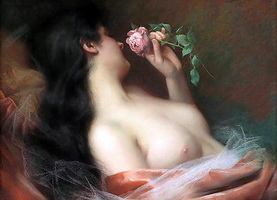
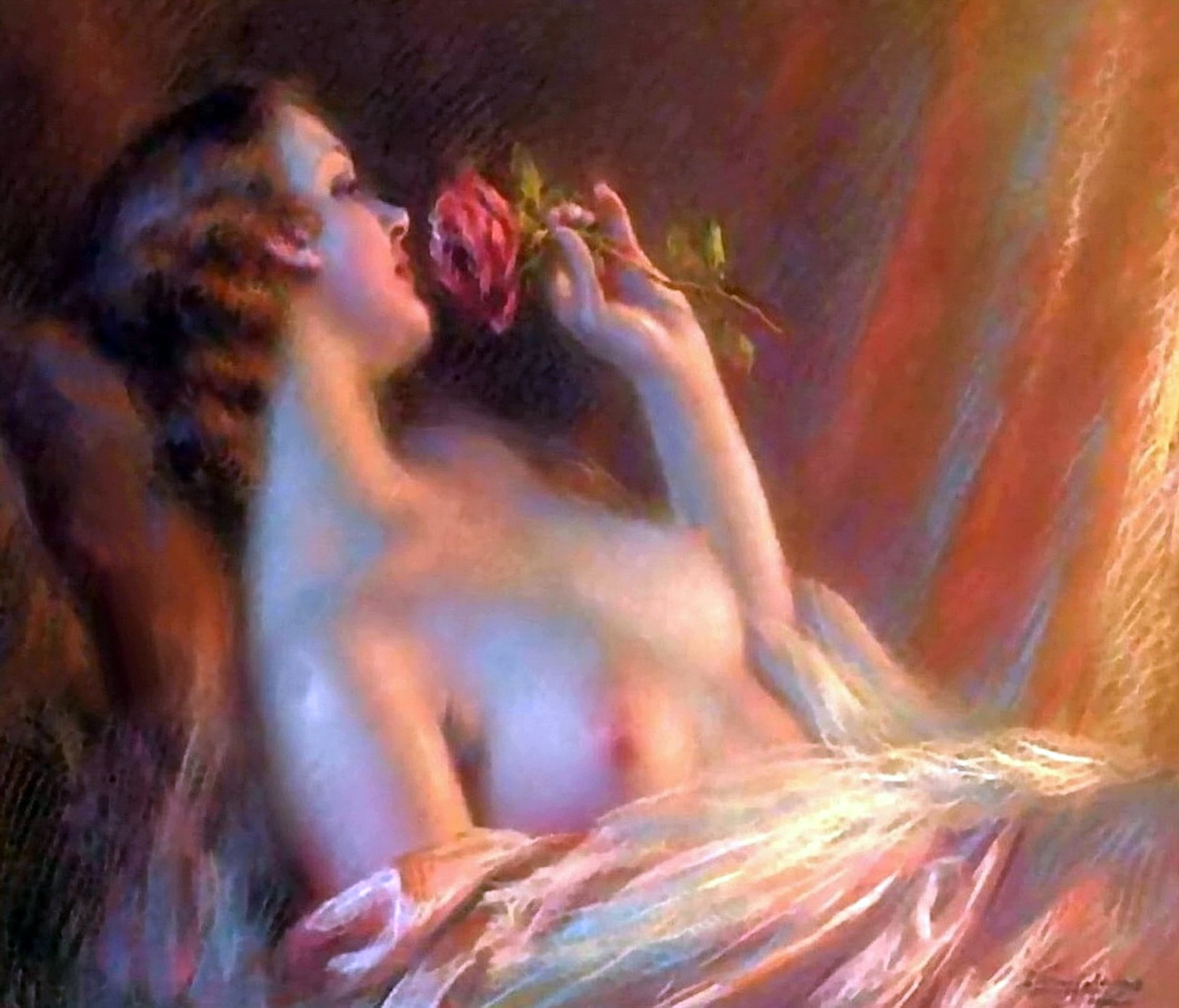
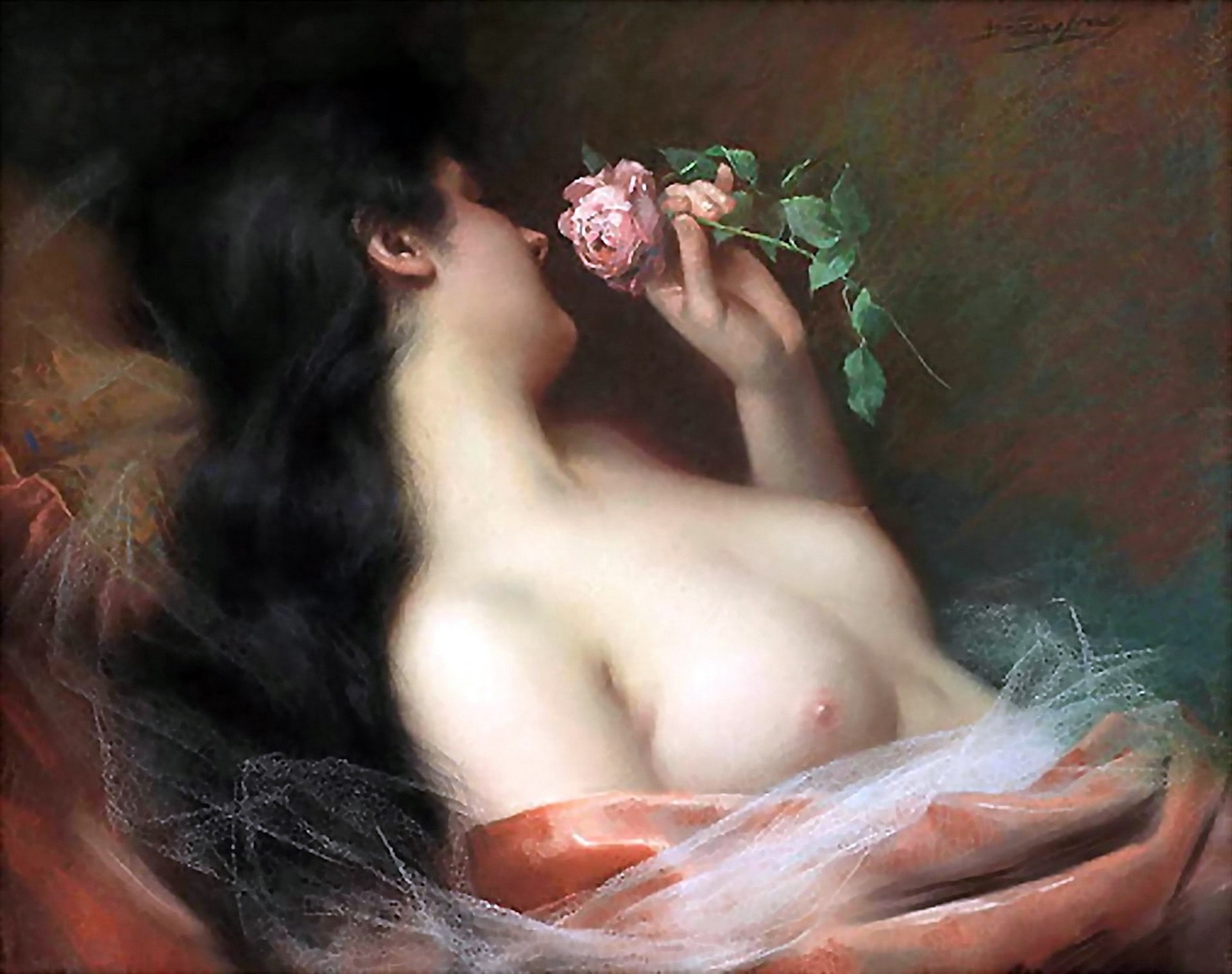
A nude girl holding a pink rose. She is smelling the lovely flower and looking very happy with with her present from her lover.

The Flower Delphin Enjolras.

Find many more Delphin Enjolras. on here for your enjoyment. A bare chested woman flaunting her breasts and nipples while smelling a pink rose. The way to a woman's heart is with flowers. Red roses are the symbol of love. Boost your chances of lovemaking by buying her some flowers. That's right supercharge your love life by buying the love of your life some flowers. Then you'll put a smile on your face. Sex and love share exactly the same part of the brain, so the MORE you make love the more you BOTH fall in love. If you want more flowers, then indulge in more sexual activity and watch the flowers arrive by the truck load! So starting tonight. Go for it! Rinse and repeat.

This post contains affiliate links, we may receive a commission if you make a purchase using these links.

25 more paintings
of nude women
below.

Sexy Art for Women page 3 with sexy paintings of horny nude women and lusty ladies Discover many seductive paintings of arousing naked females for your pleasure Be happy with lovely paintings of hot girls

Lite erotic art 1 Find pretty paintings of lovely ladies and beautiful naked women. That's right! Horny artwork for boosting a girls desires for sexual pleasure. That's right! Horny artwork for boosting a girls desires for sexual pleasure.
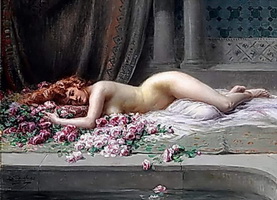
Sensuous paintings of feminine beauty and lovely nude ladies with flowers and roses.
Paintings of very famous lesbians and their lovers.
Venus the Goddess of Love along with lust, desire, and sensual pleasures.

A red rose says, "I Love You!"

Red roses are the flowers of love. Enjoy this stunning picture of a beautiful flower
Red roses are the flowers especially when you feel romantic and looking to impress your lovely lady.

Many women threw their panties that they were wearing on the stage for Tom Jones & Rod Stewart.

Boost your lovemaking by looking at nude art. That's right! The more you look at nude art, the more turned-on you will get. If you have issues when you were younger, looking at paintings of naked women will slowly help you heal. Don't rush in at a 100 mph, slowly does it. Mind you, horny women might find they are blowing a fuse or two by looking at nude art. Anyway, I hope you enjoy checking out the many paintings of hot sexy nude girls and steamy women.

 
Quiver Music
 
Quiver Music Love Songs


A beautiful painting of a lovely lady catching her stunning feminine beauty in a portrait.

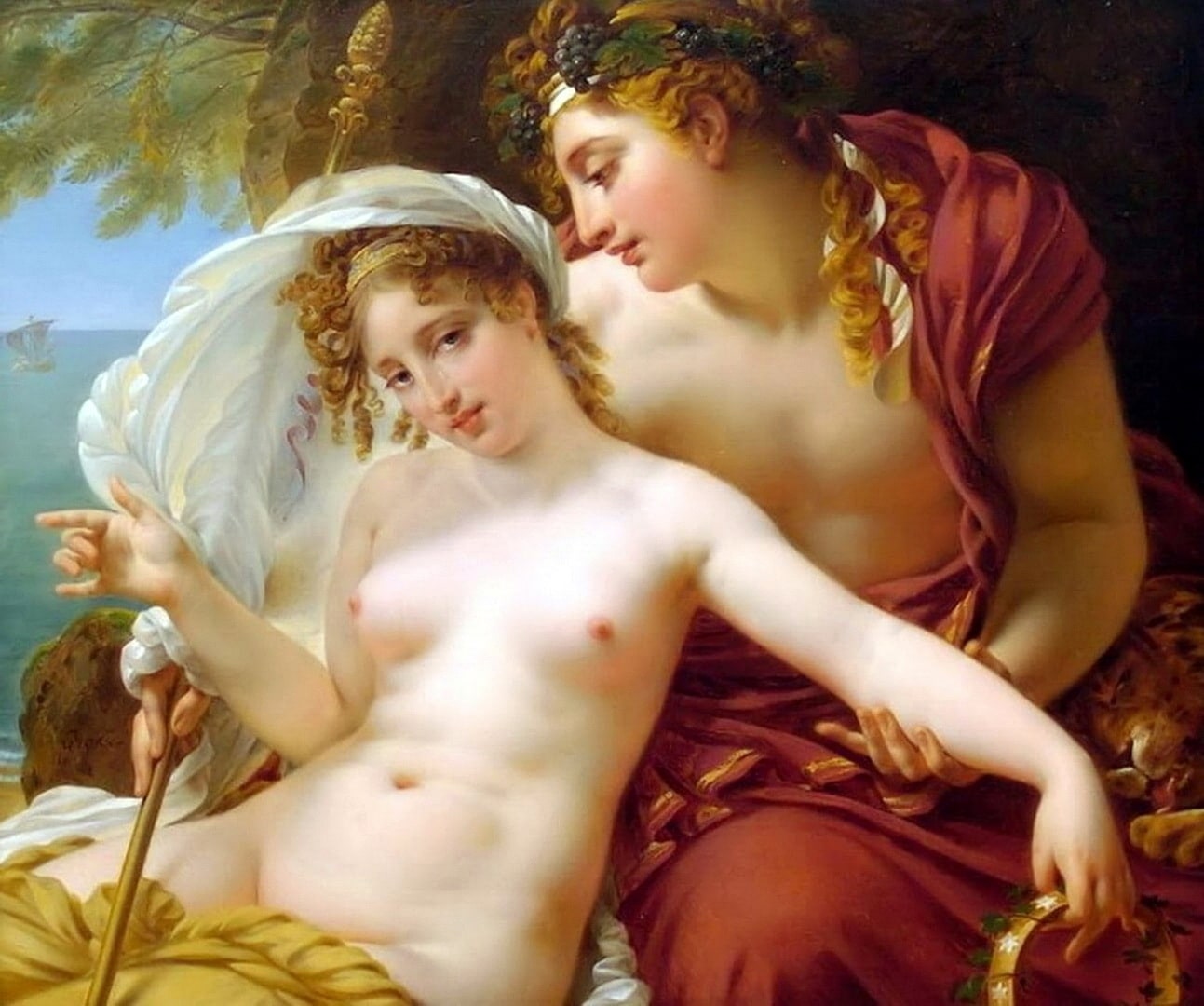
Ariadne is Comforted Bacchus. Antoine Jean Gros.

Ariadne has lovely eyes and very curly hair. All the better to seduce Bacchas with. Although, I think she is past the halfway mark. She has beautiful breasts and outstanding nipples. She is thinking, I wish he would hurry up!

A sensuous portrait of a lusty lady. A busty woman with big bosoms and pretty flowers.

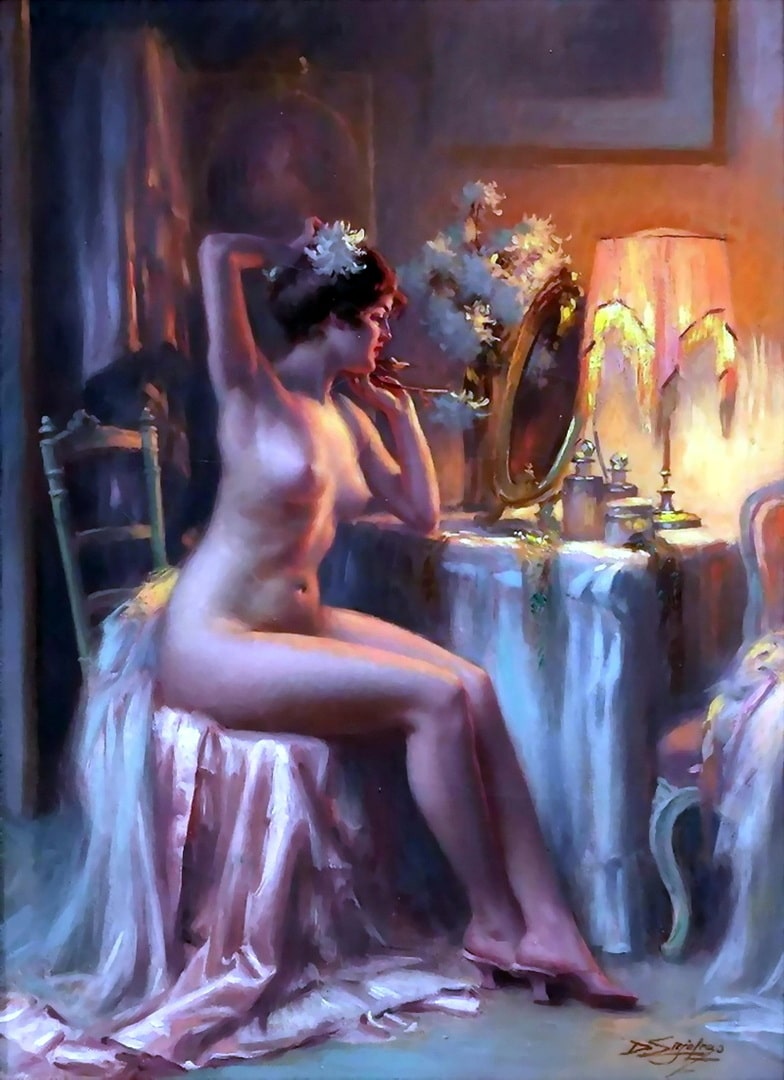
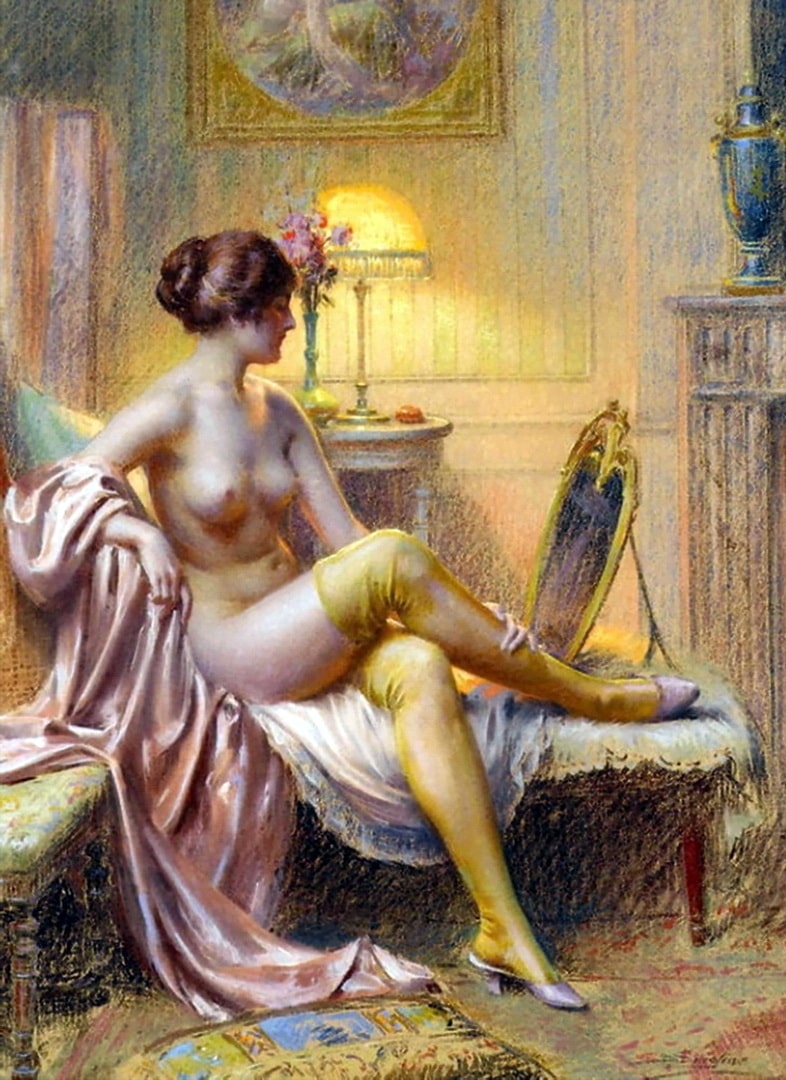
The Toilet. Delphin Enjolras.

A voluptuous woman at her toilet. An elegant lady with big breasts in front of a mirror is wearing yellow stockings and there are pretty flowers behind her. This woman is certainly looking for a hot time in the old town tonight! “If you don’t love your body, change your mind; if your partner doesn’t love your body, change your partner.” Alex Comfort,

 The Joy of Sex: The Ultimate Revised Edition.

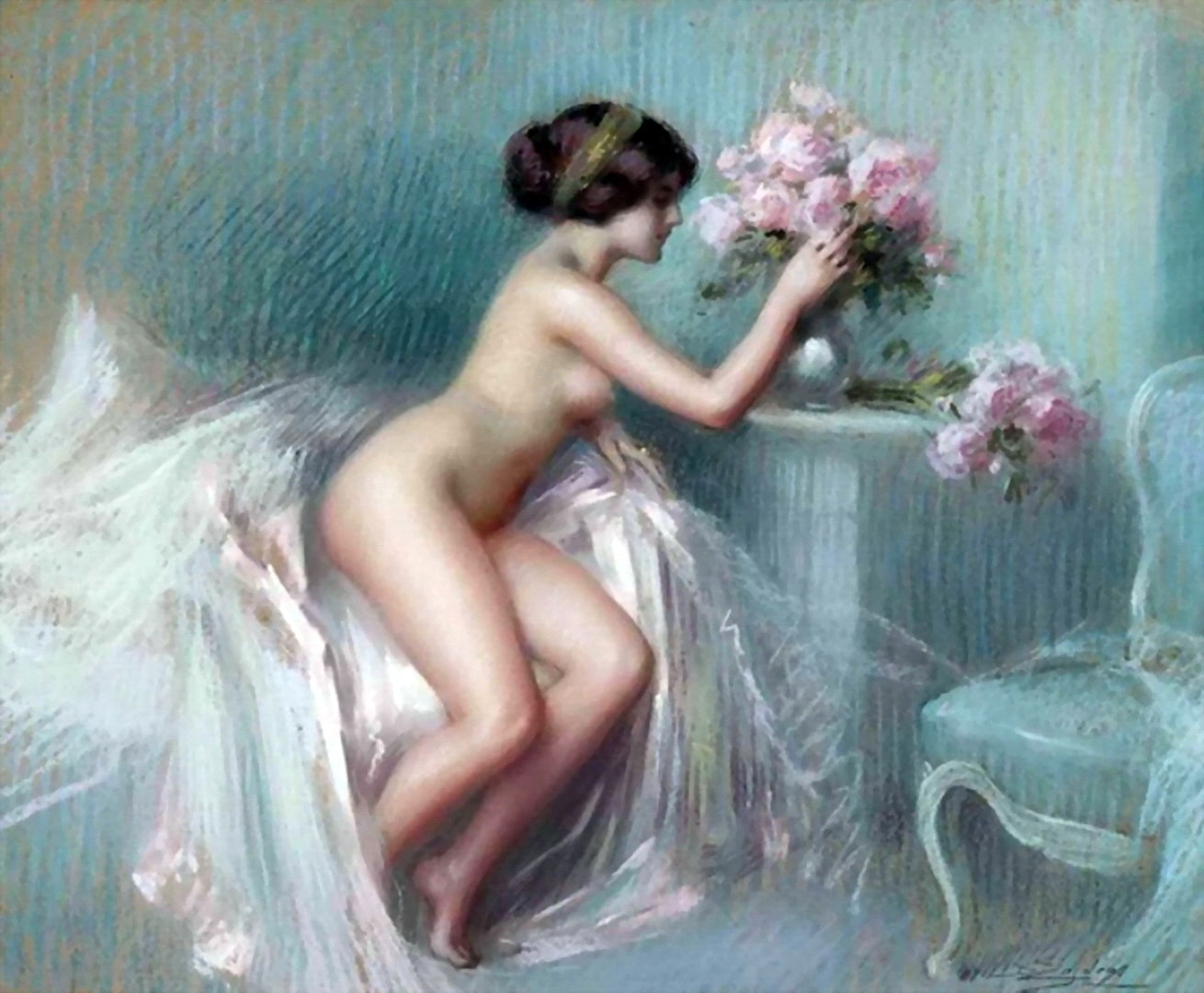
A lovely nude lady arranging pretty flowers in a vase. The beautiful naked girl has very nice breasts.

Arranging Summer Blooms. A painting by Delphin Enjolras.

Nice flowers! The pretty pink roses are being arranged by a nude woman who is showing her sexy bosom. The foxy lady feels very comfortable in her naked body. “The things that stop you having sex with age are exactly the same as those that stop you riding a bicycle.” Alex Comfort, The Joy of Sex.

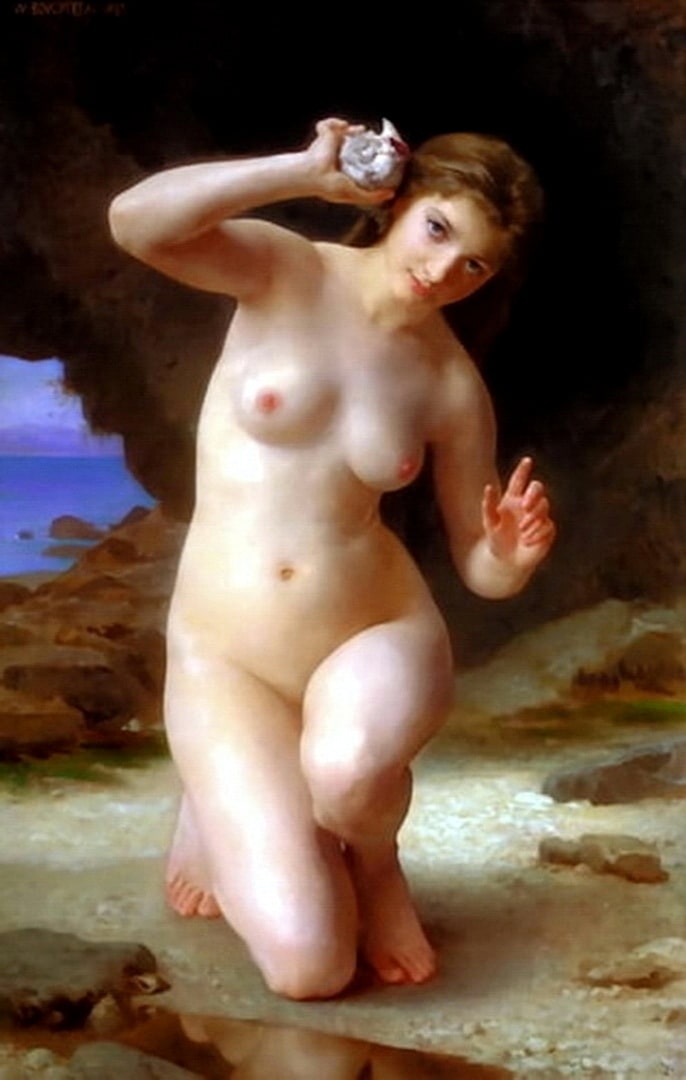
Venus on the beach with a shell to her ear. The naked Goddess of Love has sexy bosoms.

Venus with a Shell. by William Adolphe Bouguereau.

Venus the Goddess of Love has very erotic breasts with lovely nipples. She also has very pretty eyes and luscious lips. All the better to kiss you with. You would expect nothing less from the Goddess of Love. Watch out guys the love goddess is on the prowl. There are only two guidelines in good sex, don't do anything you don't really enjoy and find out what are your partner needs and don't balk them if you can help it. A meal can be an erotic experience in itself. We may eventually come to realize that chastity is no more a virtue than malnutrition.” Alex Comfort The Joy of Sex.

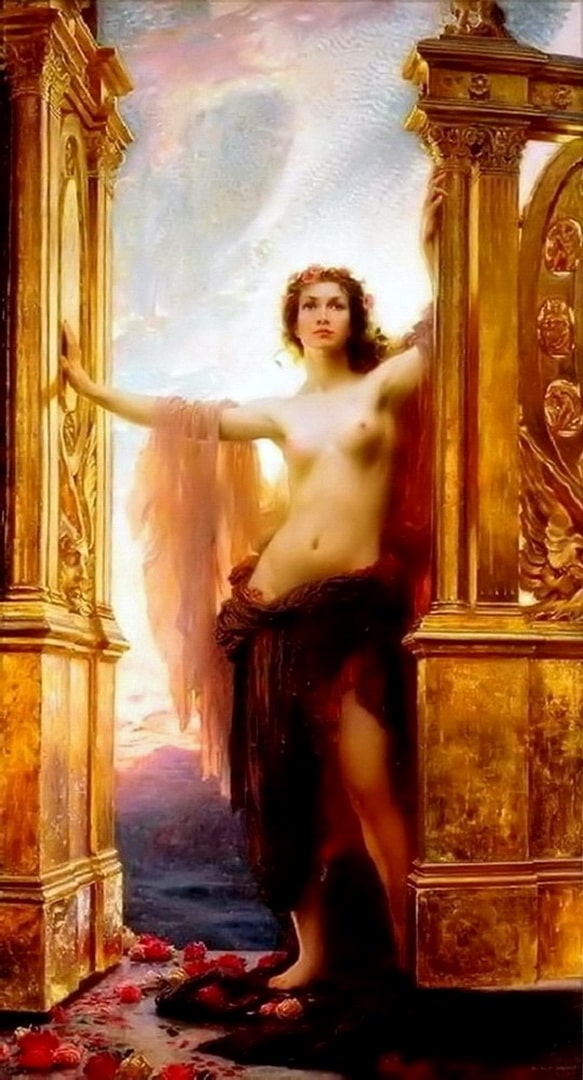
A painting of the Roman Goddess of the Dawn, Aurora. A semi-naked lady is showing her boobs.

The Gates of Dawn by Herbert James Draper.

This painting is on display in Buckingham Palace.

There are flowers in her hair as well as flowers everywhere and pretty red roses around her feet. This painting is on display in Buckingham Palace, where Christopher Robin went down with Alice! Although it has probably been recently moved to King Charles bedroom from the room where it was kept.

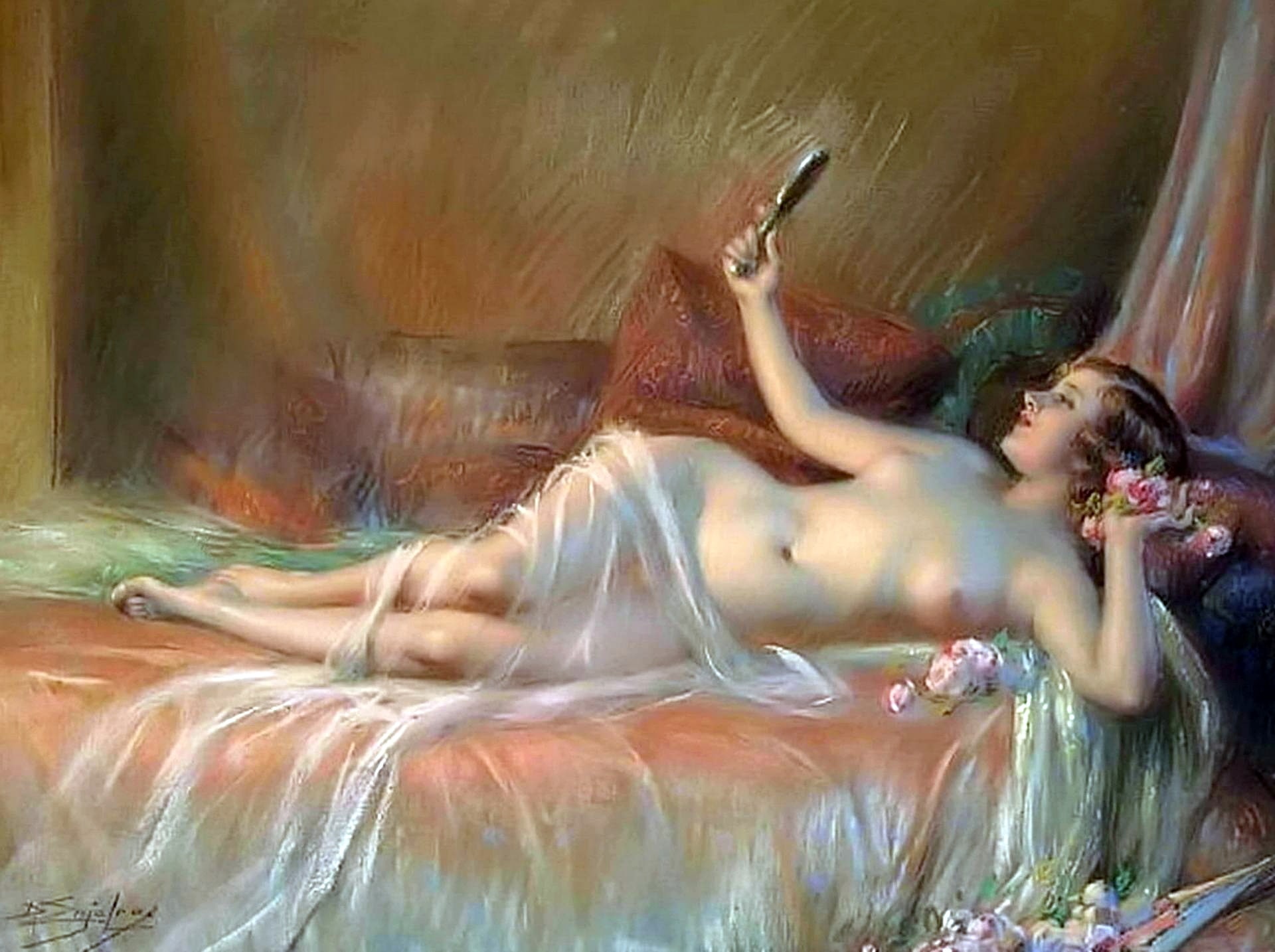
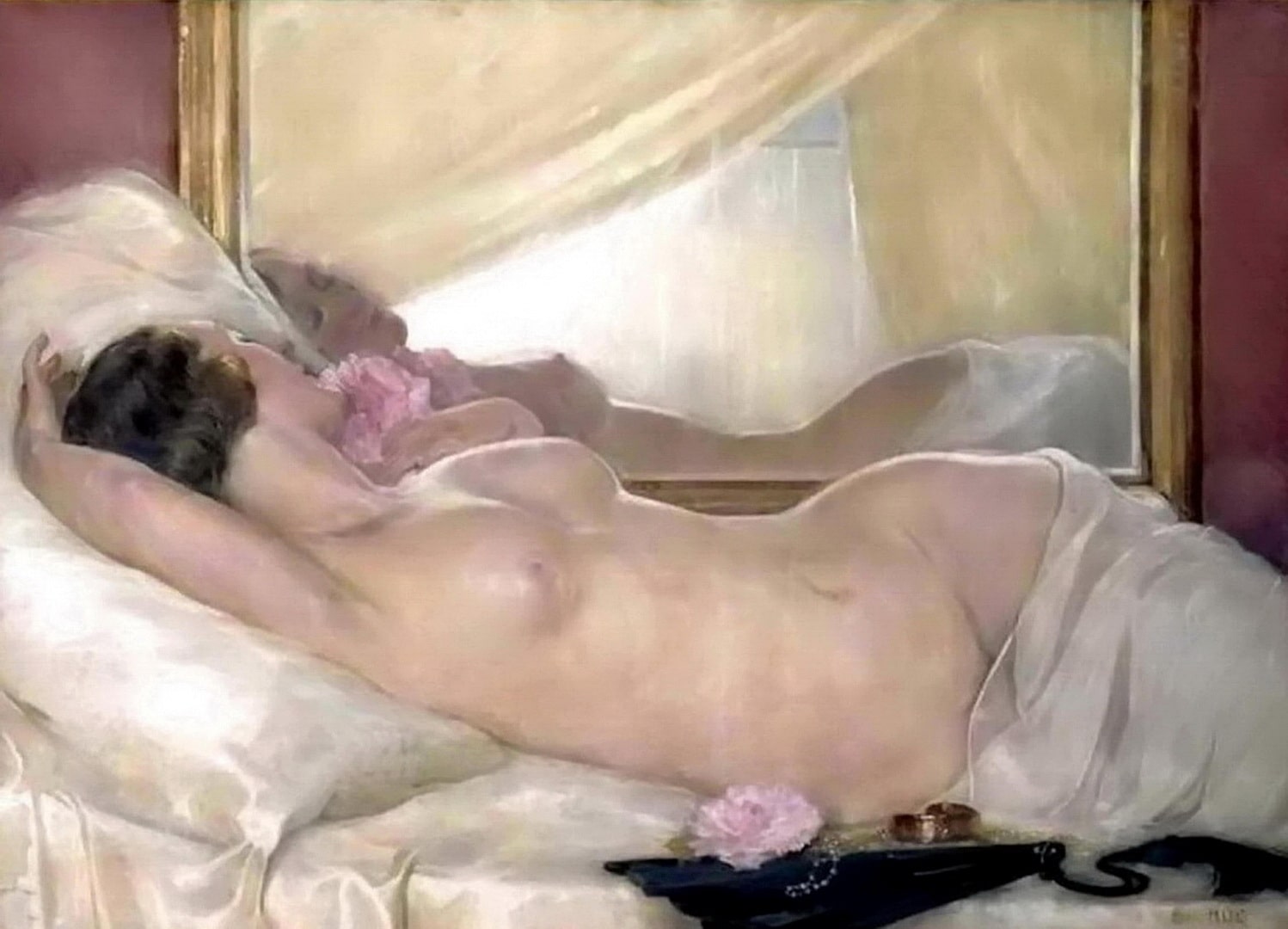
The Beautiful Flower Delphin Enjolras

The Beautiful Flower. Delphin Enjolras.

A naked woman on a bed with voluptuous bosoms. The sexy lady is admiring herself with the pretty flowers in the mirror.
She has a sheer garment over her lap.

Buy sexy prom dresses or cute cocktail dresses or maybe an evening gown for the ladies.

You can buy prom dresses & ball gowns as well as homecoming dresses for hot sexy girls right here. That's right. You can even buy cute cocktail dresses as well! This is the place to buy a dress to melt his heart. Then it won't take long to hear the magic words. You look lovely in that dress darling. Would you like to come back to my place after the show?

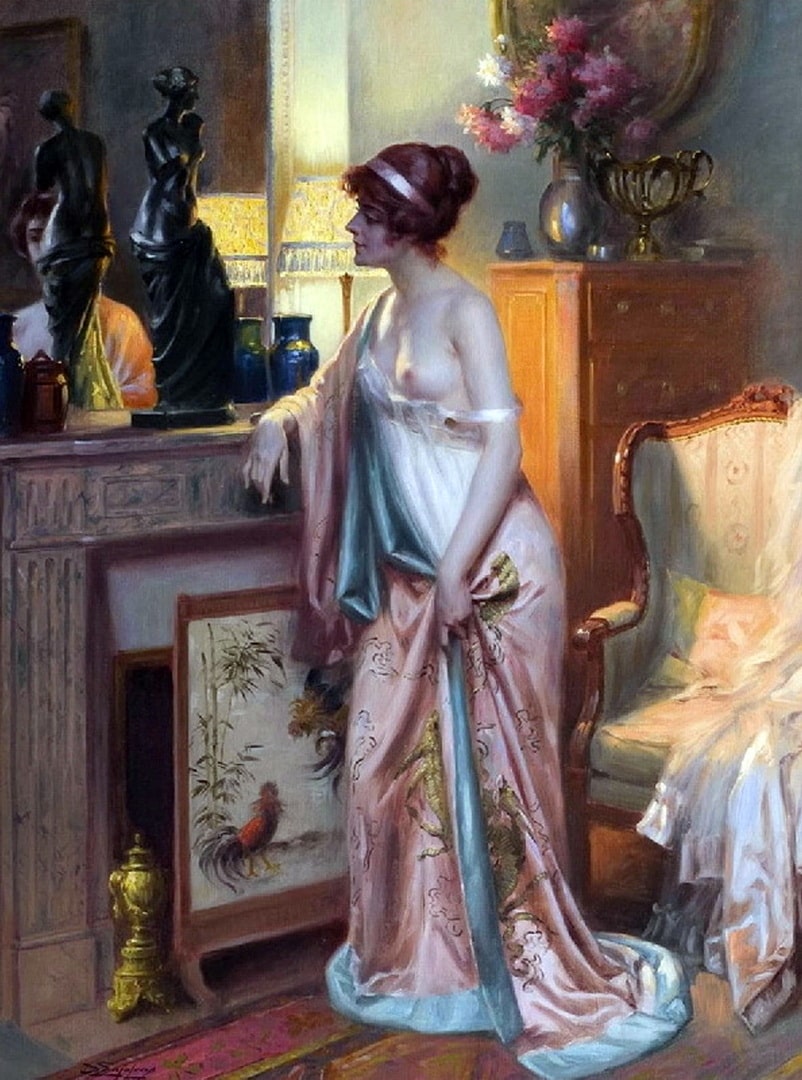
A lovely lady is showing off an erotic breast and a naughty nipple. There are pretty flowers behind her to add a bit of romance.

The Japanese Kimono. Delphin Enjolras.

A pretty girl is admiring herself in the mirror. The lady is checking out her seductive look in the mirror. "Will showing him my breast have any effect on him? Or should I play hard to get? Nha! Flaunting my boob will do it!" There are pretty pink & white flowers sitting on the drawers behind the sexy lady. The woman knows exactly what she wants and she knows how to get it. Her partner is in for a hot time in the old town tonight!

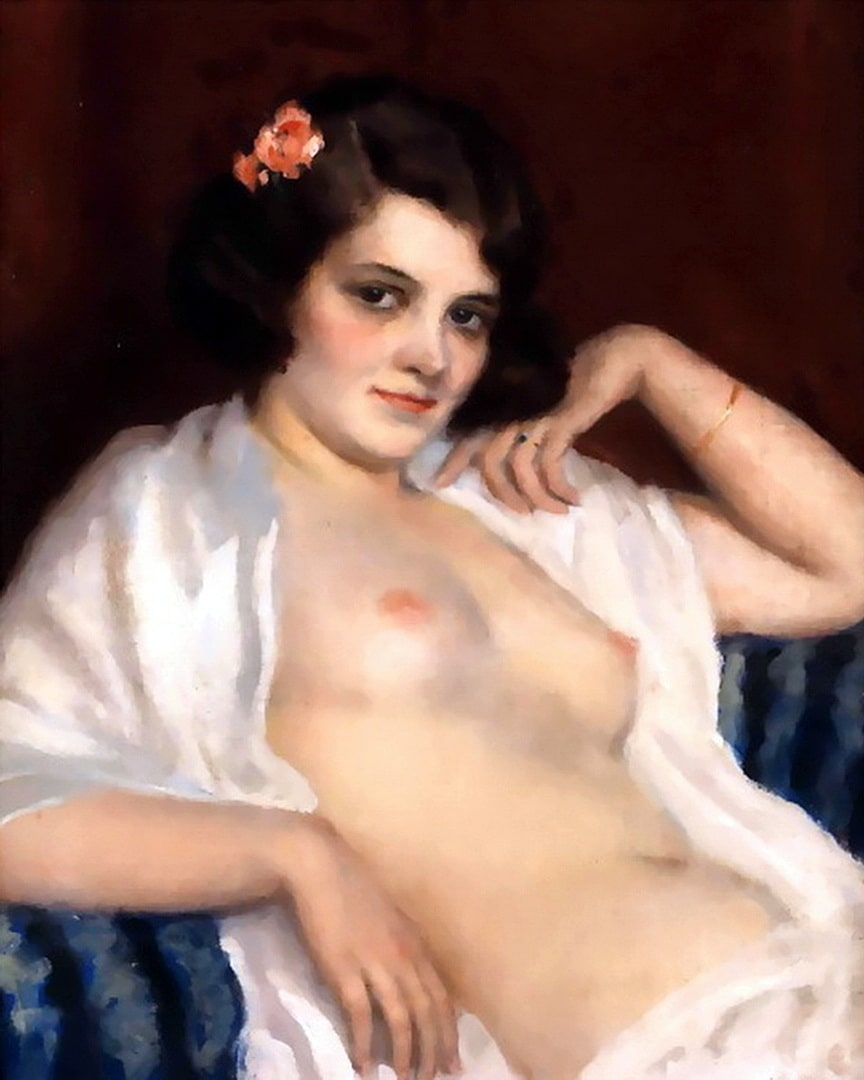
A naughty nude girl admiring a pretty flower in her hair. The woman is very hot and sexy and ready to have a great time.

Bare by Her Dresser. Delphin Enjolras.

A naked girl with nice eyes and a white flower in her hair. The flirtatious female has luscious lips & sexy bosoms on display for all to see. " All the better to love you with!" Is what the hot girl with lovely breasts is saying. Her lover had better watch out when he turns up! After he walks in the door he'll know that the heat is on! She'll give him no chance to escape!

A nude girl showing off her breasts she has long seductive red hair down to her bosoms.

After the Bath. (The Little Bather). Pierre Auguste Renoir.

A buxom girl with long red hair down to her bare breasts. The pretty young lady has nice eyes and lovely lips and lustful bosoms for all fun and pleasure she desires. The lovely young girl is sitting patiently with a sheet around her while her likeness is caught by Renoir. Artists and their subjects normally indulge in a lot of sexual activity. I suspect that these two would have been very tired after each sitting.

Sexy lingerie for hot girls and horny women Boost your lovemaking with erotic lingerie. Buy see-through underwear here.

Buy hot sexy lingerie to lure your lover into Making Love.

We have sexy lingerie for hot girls and wicked women. Supercharge your Love Making with erotic lingerie. Resistance is futile! Sex is very good for you! It helps you live longer and be happy! Don't listen to the fun busters! That's right, if you're feeling horny slip into some sensuous lingerie and your partner will get the message. Find many more of our sensuous paintings of nude wicked women and naughty naked girls in the links below. We have plenty of paintings of foxy females and lusty ladies. Well what do you know? I'm a poet and I didn't know it! Women can improve their lovemaking by looking at hot sexy art. That's right! Enjoy making love more often by looking at nude art. Notice that it's the grumpy old men that are the fun busters! Those that men that aren't getting any! Because they are grumpy old men and they keep ruining a good night by being grumpy! So run right out and buy some hot sexy lingerie so you can put a smile on your partners dial.

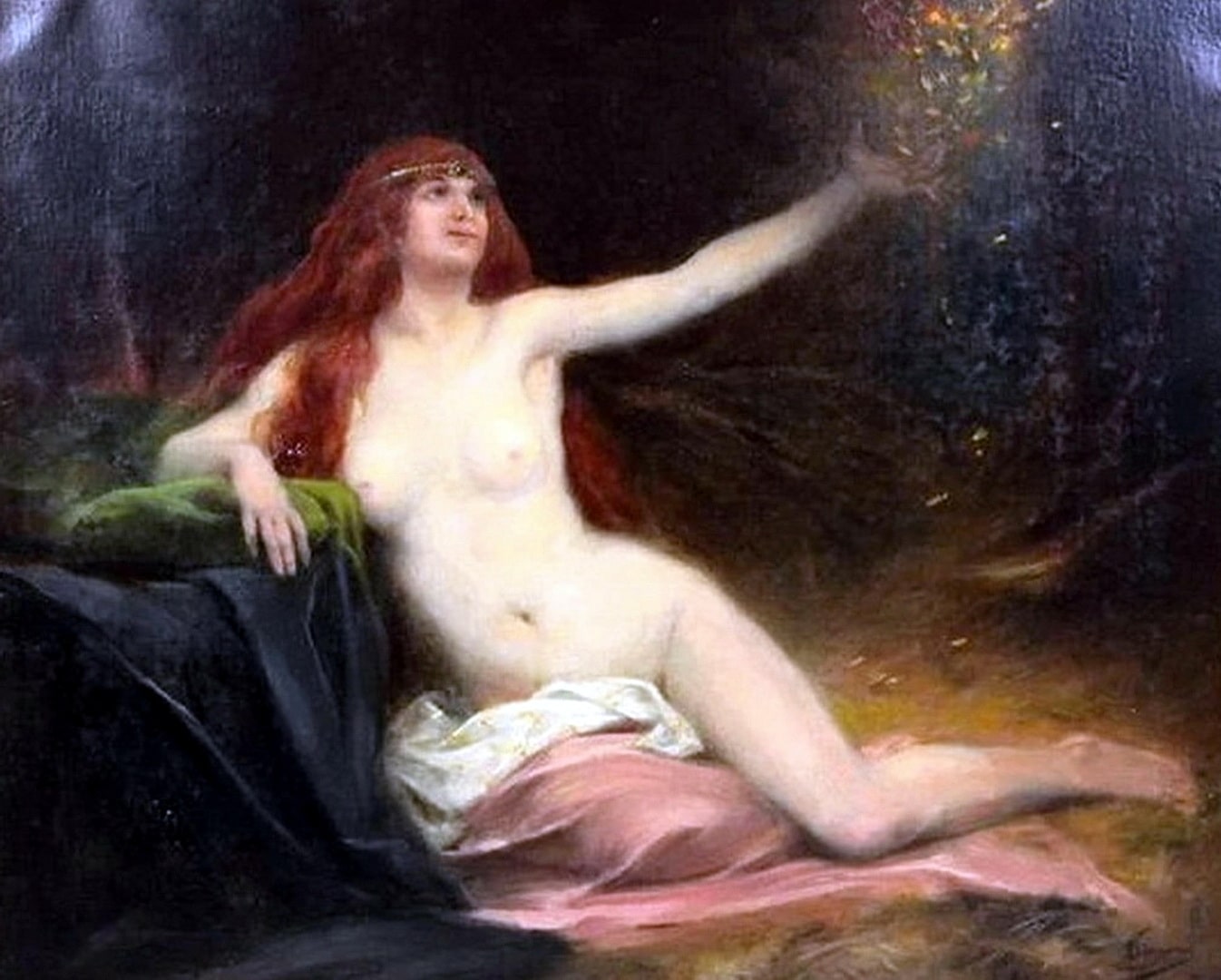
Danae Receives The Rain Of Gold. Henri Adrien Tanoux.

Danae Receives The Rain Of Gold. Henri Adrien Tanoux.

That would be a golden shower wouldn't it? What do you think? Danae has long hair flowing down her back to her bottom. As well as nice tits and pretty eyes and a lovely naked body.

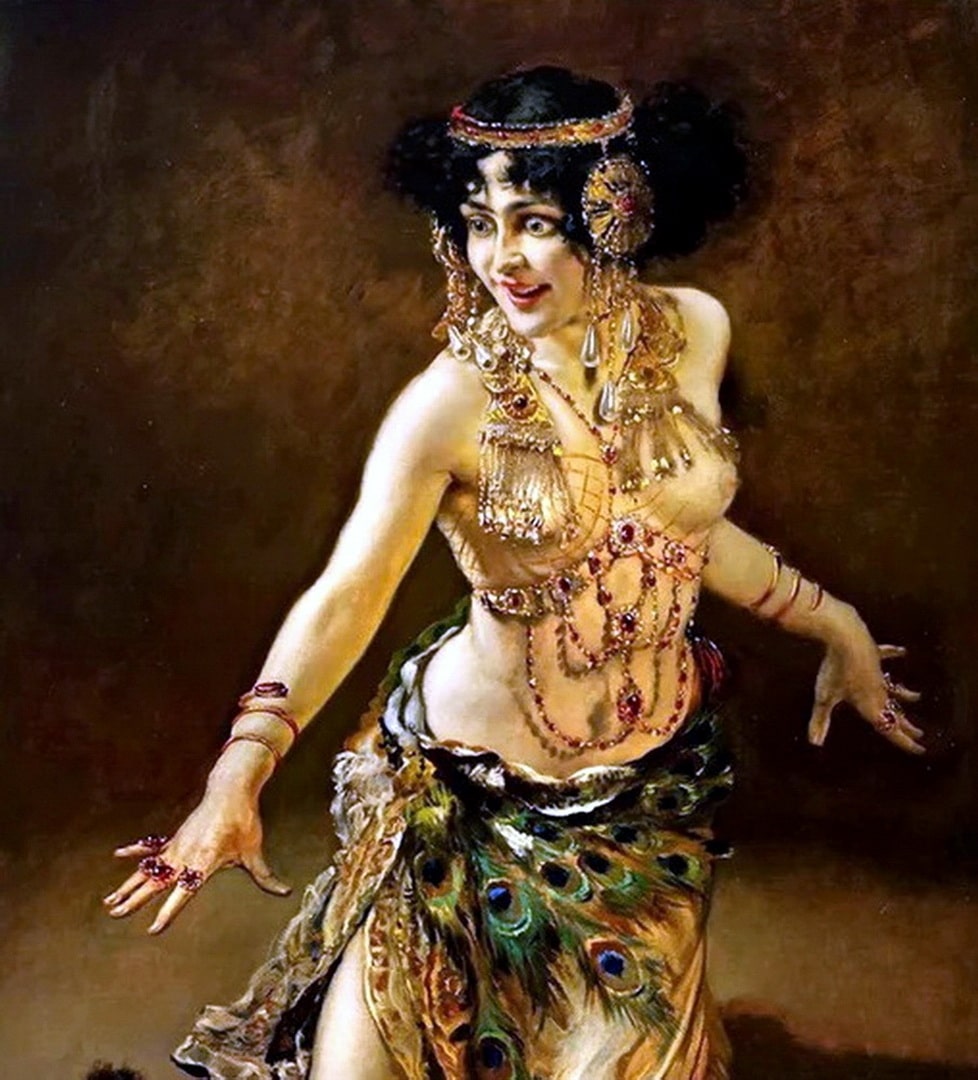
Dance Of Salome. Leopold Schmutzler.

Dance Of Salome. Leopold Schmutzler.

Salome has beautiful eyes and lovely lips. The hot woman has perky breasts and pretty jewells covering her belly as well as peacock feathers on her dress.

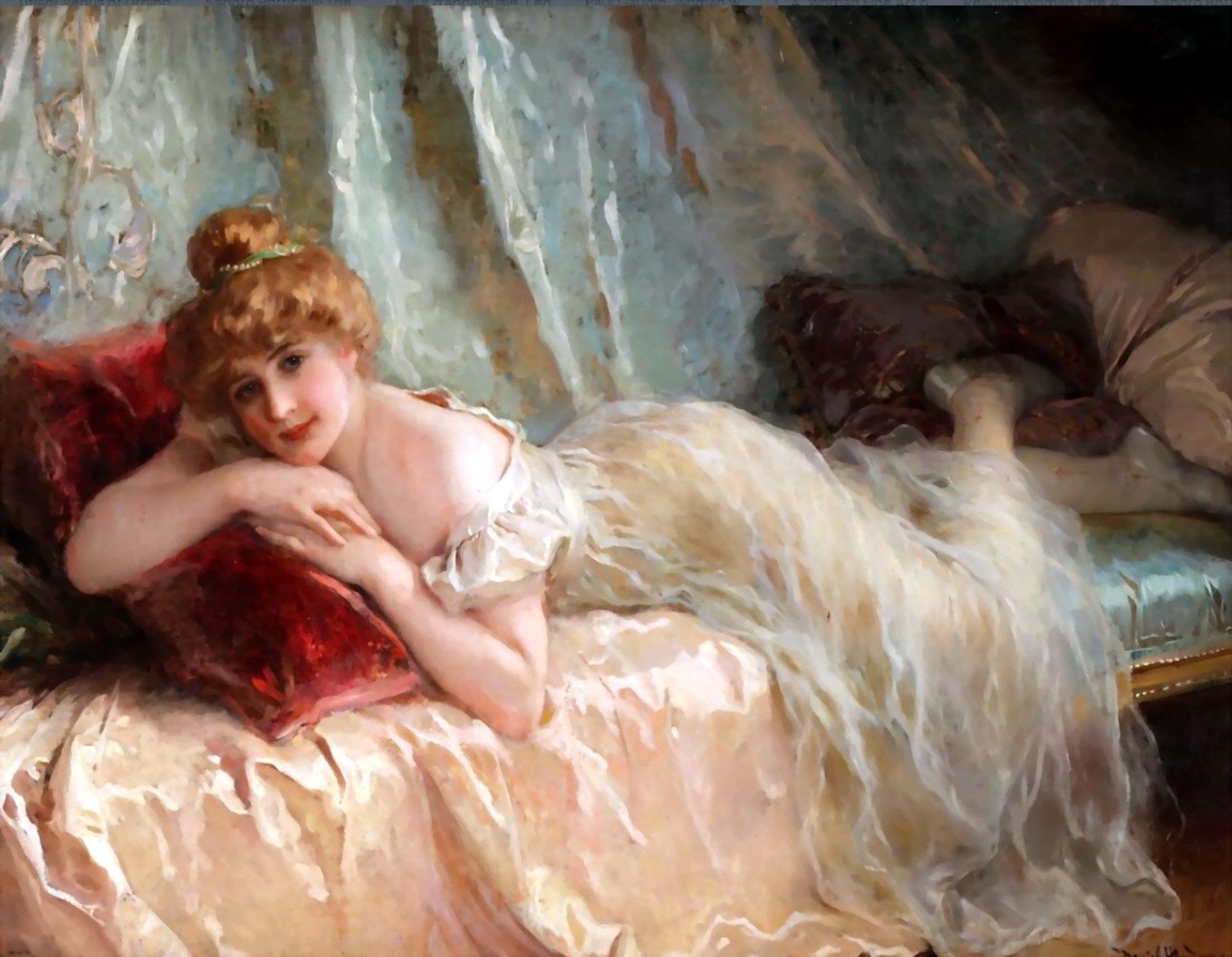
Idle Woman. Daniel Hernandez Morillo.

Idle Woman. Daniel Hernandez Morillo.

The idle lady has red hair as well as pretty eyes and a cute nose and lovely lips. All the better to kiss you with. She is wearing a sheer dress and you can see her naughty bottom.

Loves Muse (Mary Pickford) Guillaume Seignac

Loves Muse (Mary Pickford). Guillaume Seignac.

Mary Pickford was a movie star in the silent movies and black and white days! Here she is with red and pink roses and Cupid looking over her bare shoulder. Mary has pretty eyes and golden heir with curls. What a shame Mary missed the days of colour she looks pretty hot!

Nude. Eugene Huc.

Nude. Eugene Huc.

A naked lady smelling a pink flower as she shows off her lovely breasts and is checking them out in the mirror. The naughty woman has a white garment over her legs. The sexy lady is hot to trot while she waits for her lover to arrive. Boy is he in for a surprise! He'll get dragged straight to the boudoir and then he is in for a great time. You won't be able to wipe the smile from his face for a week!

Nude. Janos Laszlo Aldor.

Nude. Janos Laszlo Aldor.

A pretty girl with beautiful eyes and lovely lips. The sexy naked lady has nice breasts and a cute flower in her hair. The young woman looks as if she is trying to entice you into her boudoir.

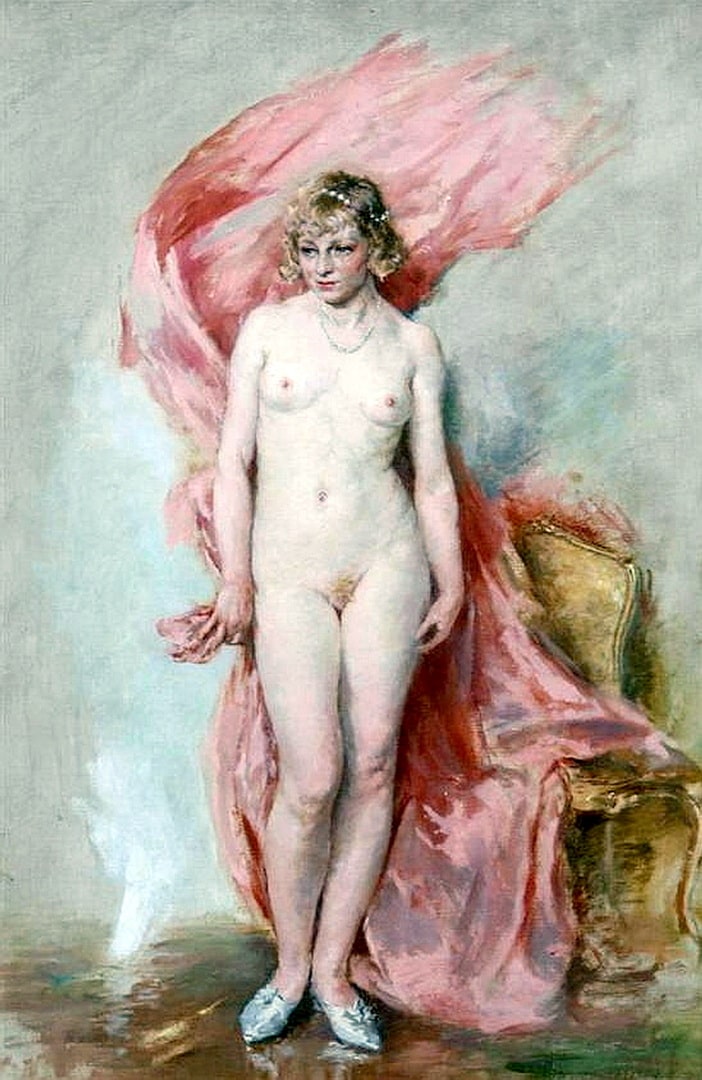
Nude With Pink Drapery. Guillaume Seignac.

Nude With Pink Drapery. Guillaume Seignac.

The beautiful nude woman is flashing her map of Tasmania at you. The young lady is showing you her nice tits along with her light blue shoes as well as the pearls she has in her hair as she stands in front of the chair.

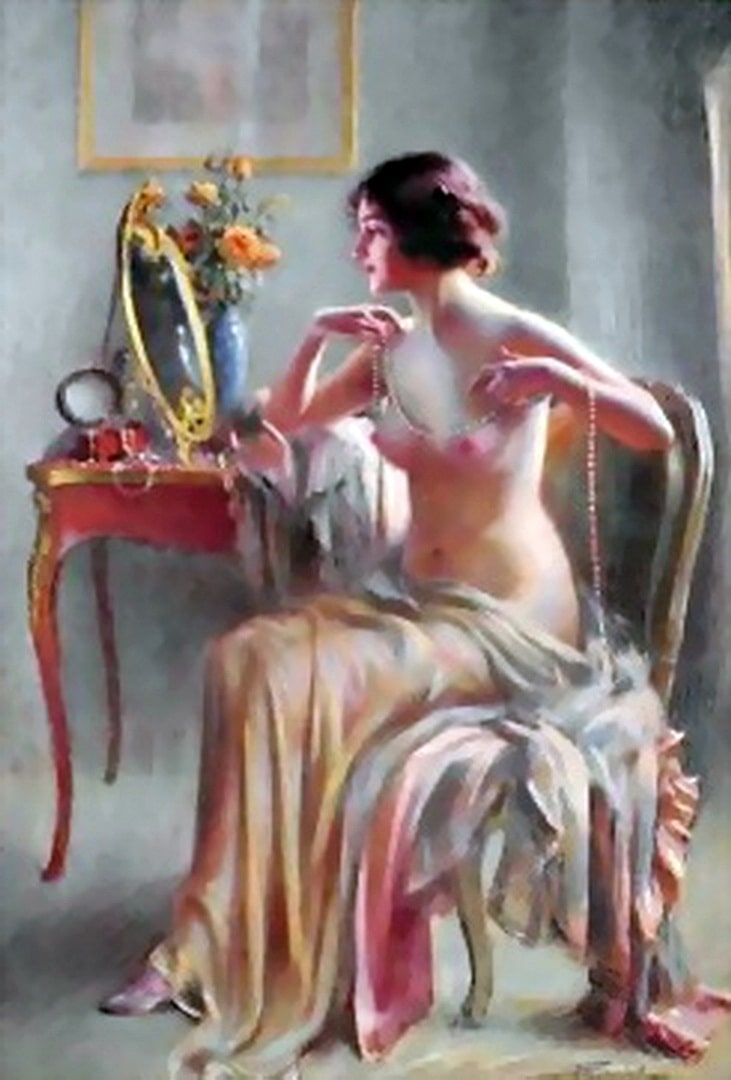
Pearls. Delphin Enjolras.

A Bare Chested Woman Flaunting Her Pearls. Delphin Enjolras.

Another Delphin masterpiece. He certainly knows what a woman wants in a painting. There are many more of Delphins paintings on this site. This beautiful lady is checking out her new pearls. The young woman has very perky breasts and naughty nipples. She has a see-through garment over her lap and there are some lovely flowers on her table.

Banggood for computer technology. Buy it here!

Satyrs with a Maenad (The Raving One's). Jules Scalbert.

Satyrs with a Maenad (The Raving One's). Jules Scalbert.

The Raving One's got their reputation from drinking alcohol. They enjoyed their drinking a lot. Hence their nickname. Satyrs are built like a horse, so with a bit of luck they'll all have fun tonight. The Maenad has pink flowers in her hair and a nice bosom on show. She looks very nice with her sheer garment on. The Satyr has flowers in his hair too.

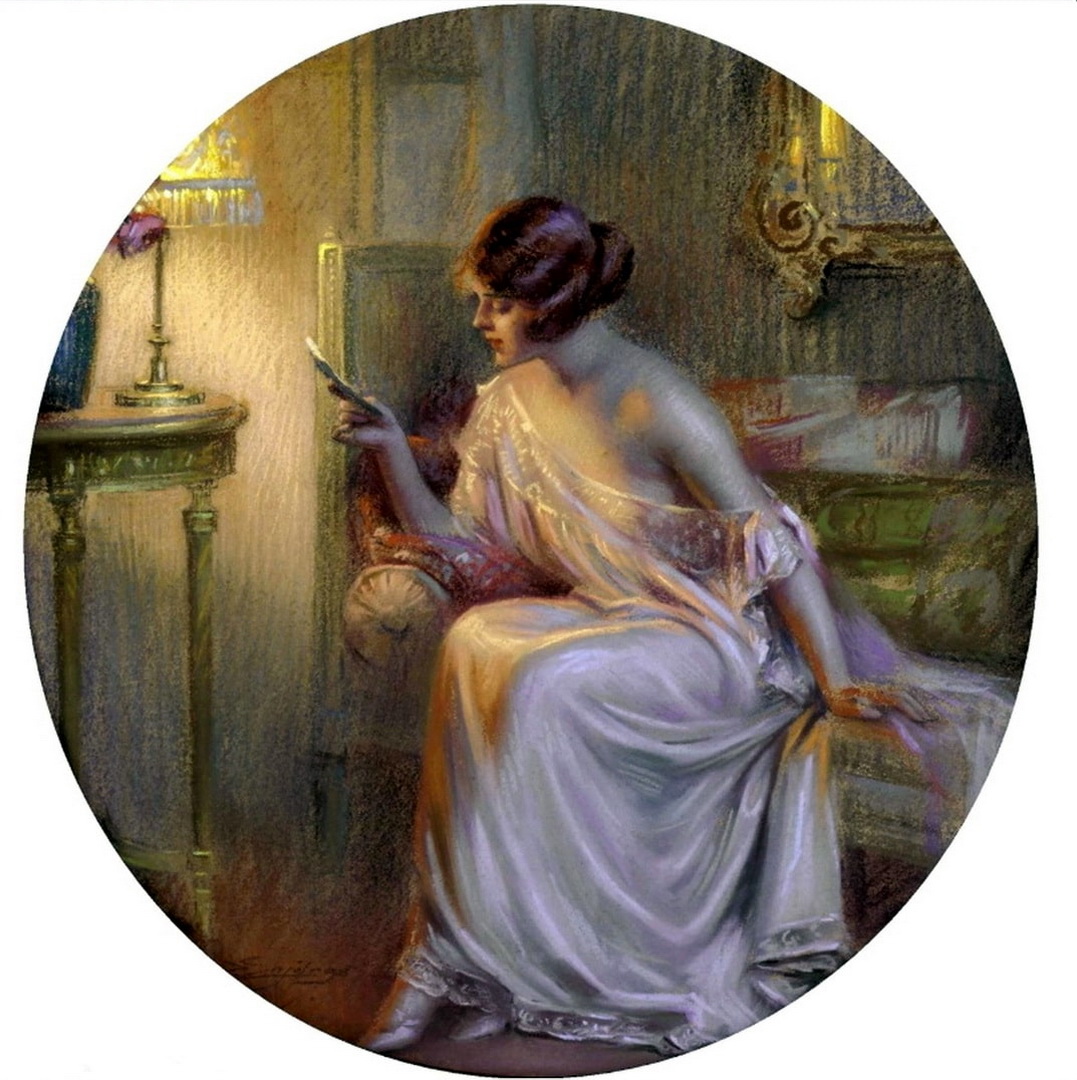
The Letter. Delphin Enjolras.

The Letter. Delphin Enjolras

A pretty lady with an off the shoulder pink nightgown reading a letter from a friend. Beside the lamp their is a pink rose. They are a pretty flower. Women love flowers.

The Beautiful Aroma. Delphin Enjolras.

The Beautiful Aroma. Delphin Enjolras.
Oh my Love is like a red, red rose, That has newly appeared in June: Oh my Love is like a melodie, That is sweetly played in tune.

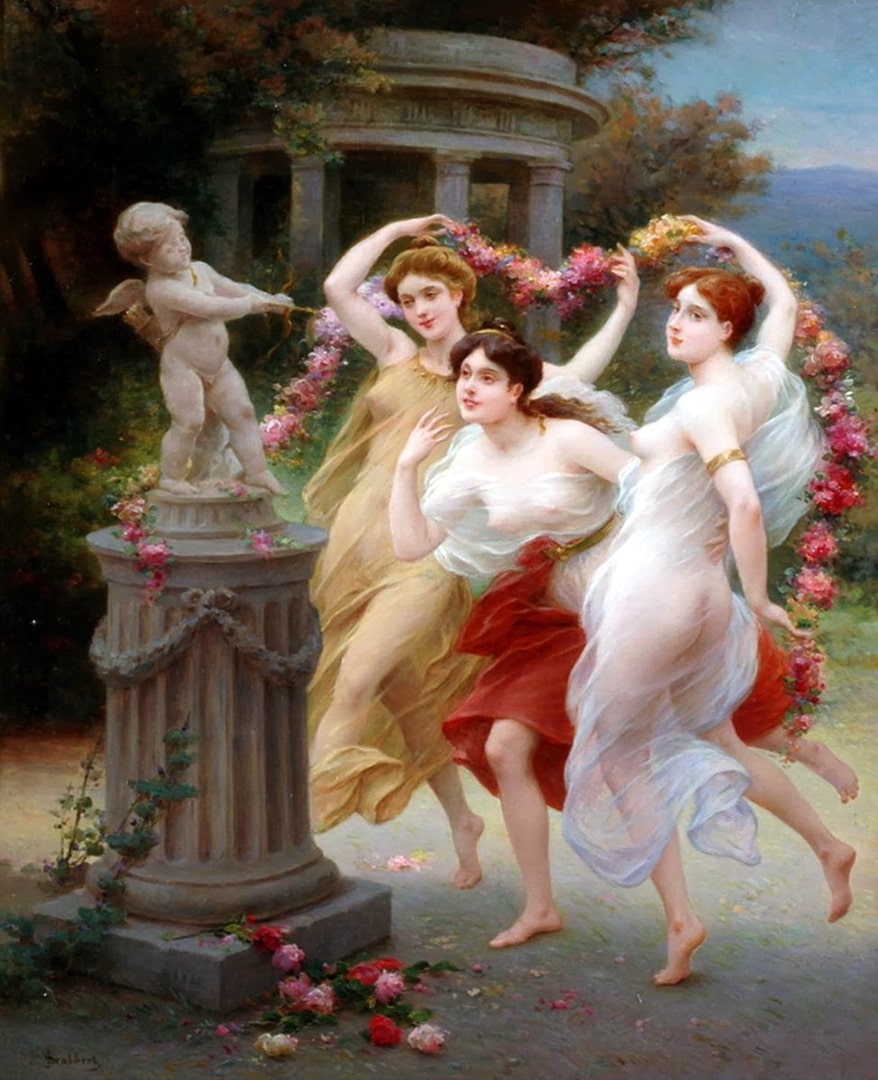
The Dance. Jules Scalbert.

The Dance. Jules Scalbert.

Three girls in sheer dresses dancing around a statue of Cupid the Love God with his bow and arrow. These hot young ladies are showing off their tits and bums while carrying their pretty flowers. They have beautiful naked bodies and pretty roses. They are dancing around Cupid to help them find love.

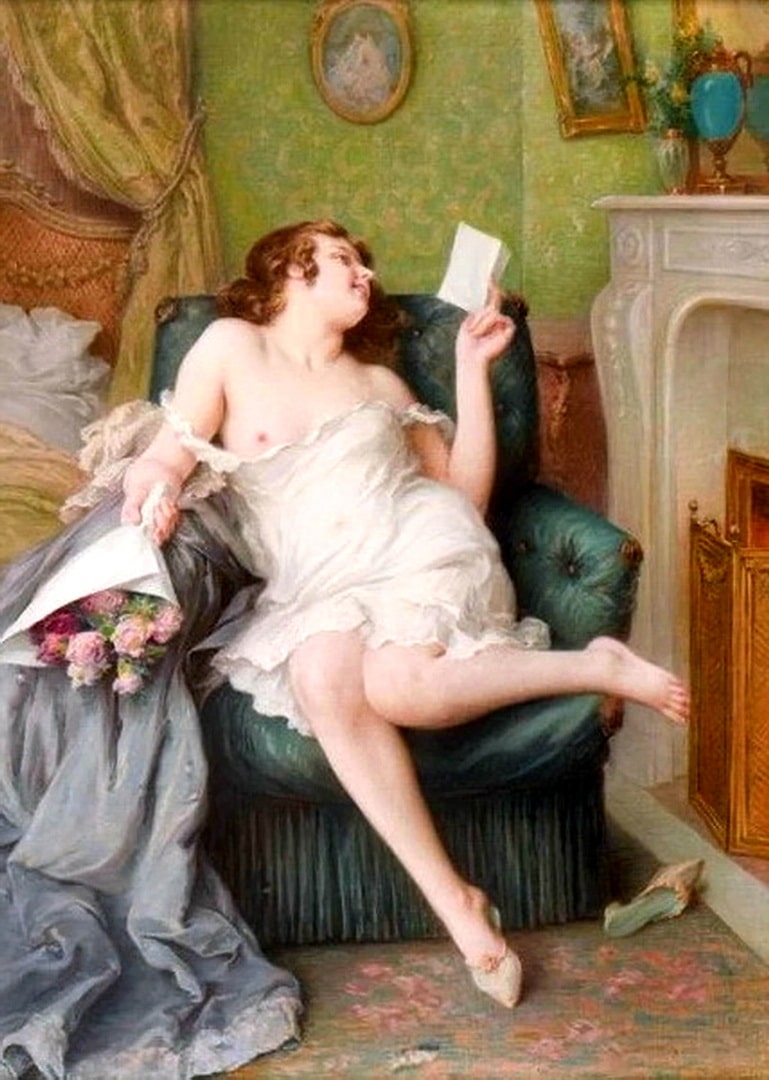
The Love Letter. Jules Scalbert.

The Love Letter. Jules Scalbert.

The beautiful girl is reading a love letter as she holds some flowers from her lover. She is wearing an off the shoulder nightie that shows off her breast. She is very excited to get the letter as she is longing for her romance to take the next step. If he walked in the door right now she would take the next step and drag him straight to her boudoir. Someone is very hot for it right now!

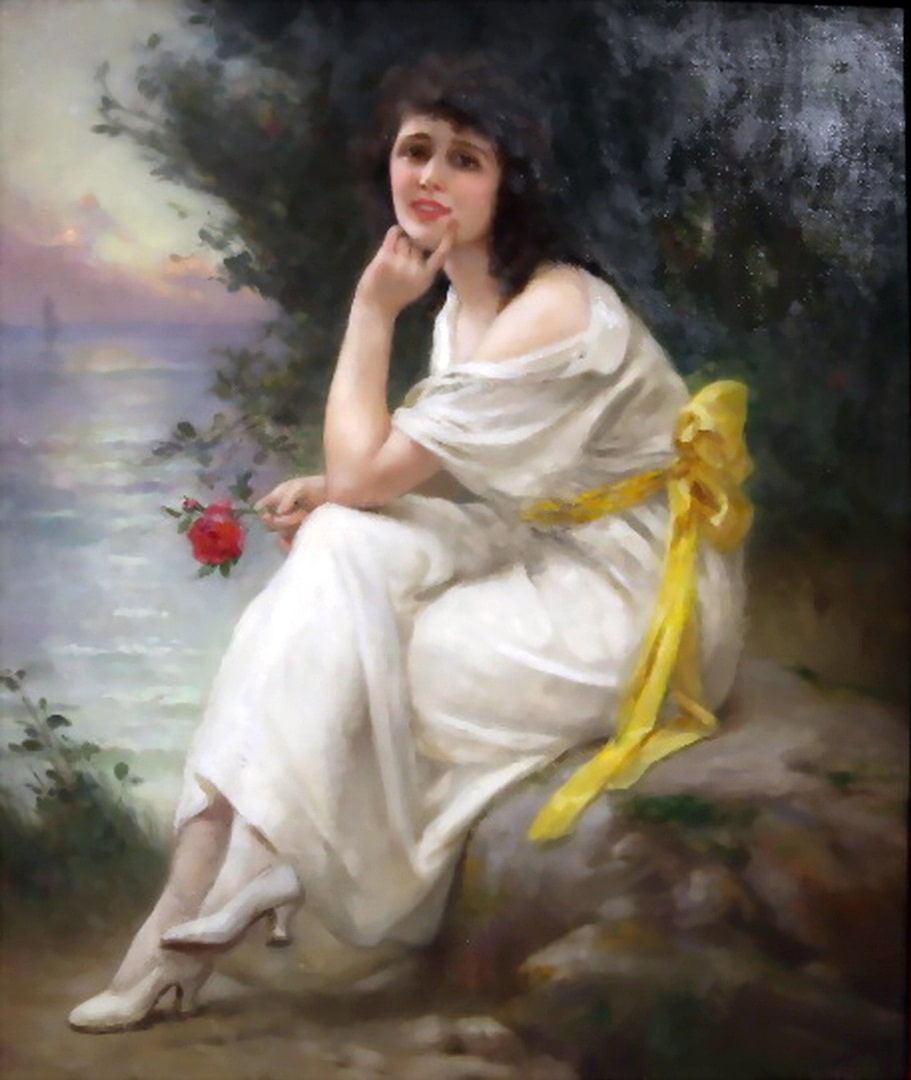
Woman with Red Rose. Guillaume Seignac.

Woman with Red Rose. Guillaume Seignac.

A lady with a red rose is sitting by a lake. The woman with the pretty flower is in a white dress and is sitting on a rock.

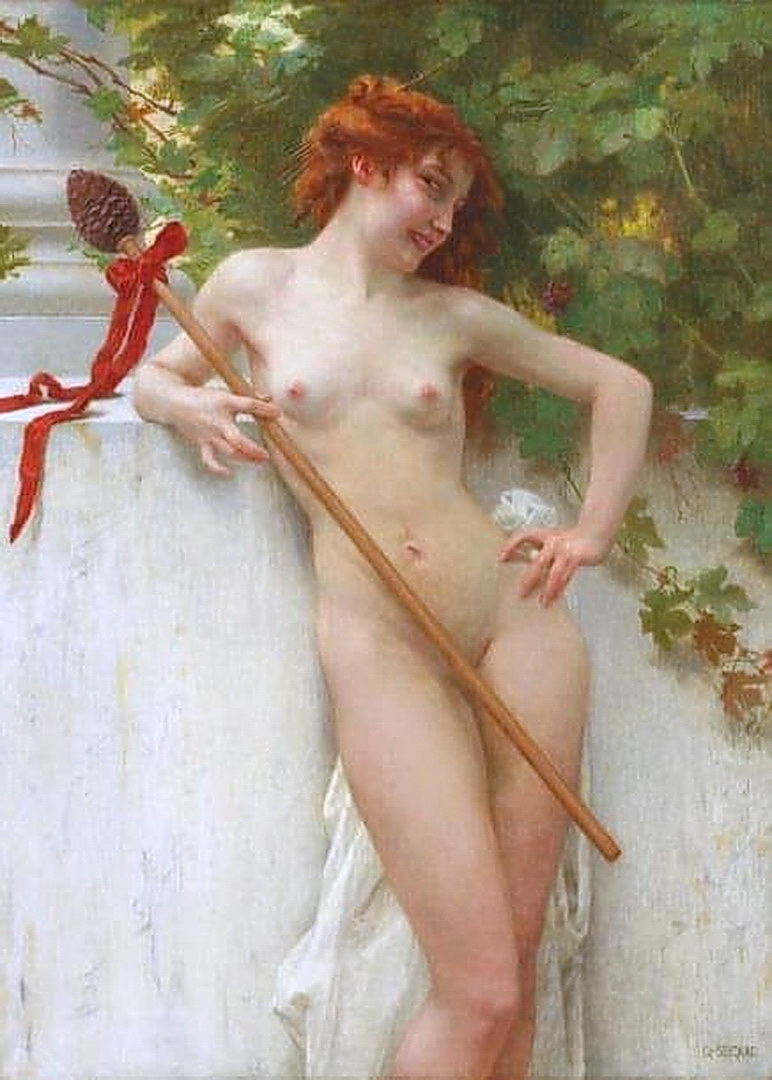
Young Nude. Guillaume Seignac.

Young Nude. Guillaume Seignac.

A cheeky naked girl with red hair is holding a spear. The young nude woman has perky bosoms and naughty nipples. She is showing off her hot body and delicately holding a spear in a suggestive way. It has a red ribbon around it. The naughty young lady certainly has a cheeky expression on her face.

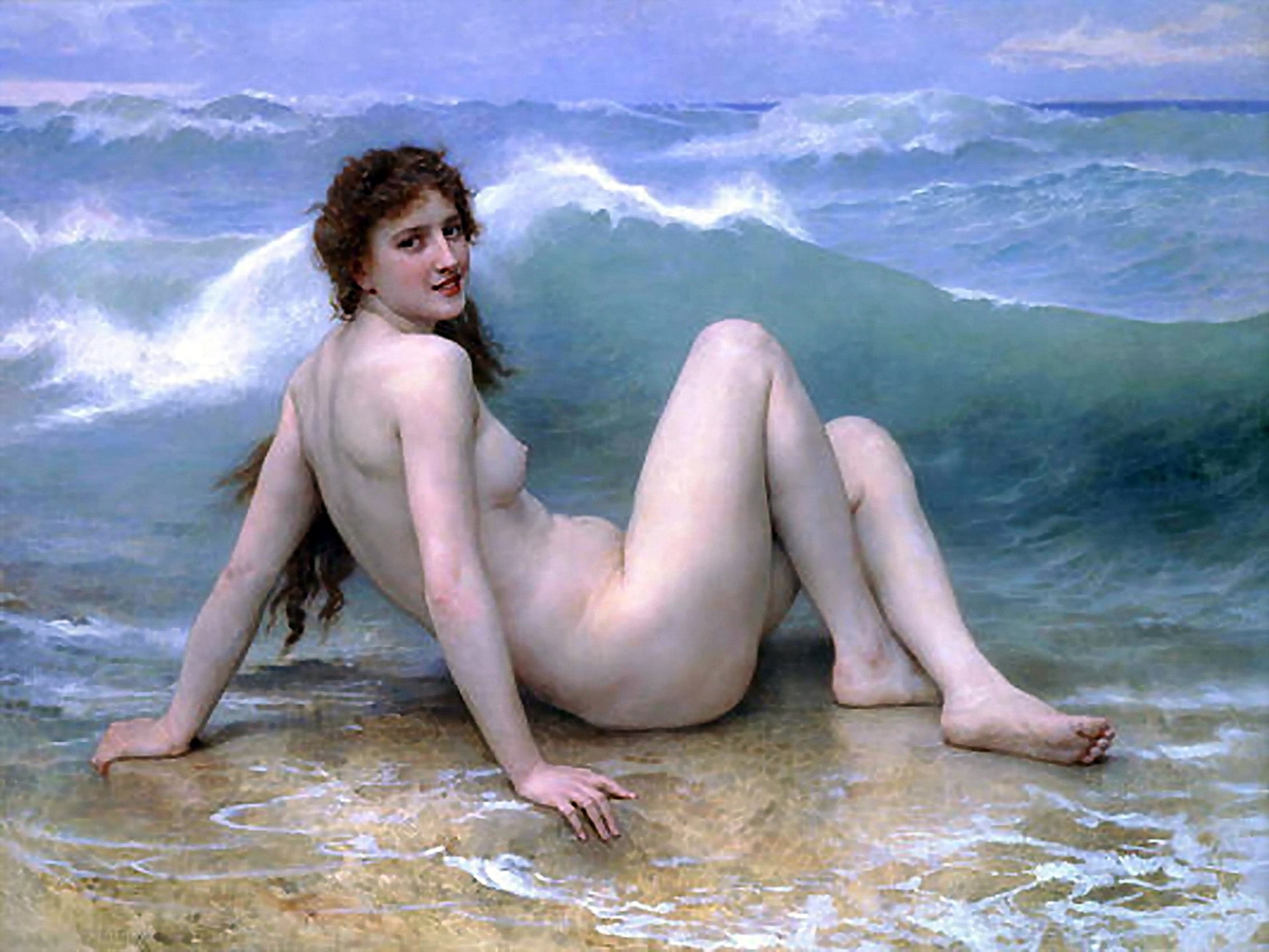
The Wave. William Adolphe Bouguereau.

The Wave. William Adolphe Bouguereau.

The beautiful nude woman is sitting on the beach showing off her sexy naked body. The pretty lady has lovely eyes and luscious lips which are all the better to kiss you with. Her long dark hair flows down passed her breasts. As she sits on the beach with her bottom in the sand a wave is about to crash over her. She is thinking,"Where are all the horny guys when you want one?"

Lovehoney has adult toys for better lovemaking.

Women can improve their lovemaking with adult toys. Ladies can have better sex and bigger orgasms with vibrators or dildos. That's right! Not only can nude art can improve your sexual pleasure, sex toys can too! What a surprise! So boost your desires with adult toys and more erotic art!
       
Sexy Art for Women 1 Find pretty paintings of lovely ladies and beautiful naked women 2.
Sensuous paintings of feminine beauty and lovely nude ladies with flowers and roses 2.
Paintings of very famous lesbians and their lovers 2. Gay ladies and famous females
The naughty nymph’s, sirens, fairies (related) all lust for sex. They are always hot and horny. They are very wicked girls and have sex with males, females, and Satyrs. Even all three at once!.
 
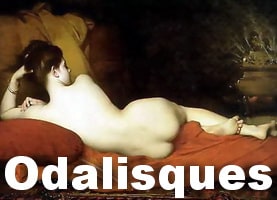
Harems are the home to Odalisques who provide sexual favours to Sultans.
Odelisques are the girls who provide sexual favours to the Sultans.
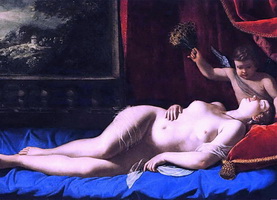
Venus the Goddess of Love. Lust,desire and sexual pleasure are what Venus gives to you.
Sexy Art for Women Page 2 Paintings of nude girls and foxy females Lusty ladies showing off their naked bodies in the name of art.
     
Sexy Art for Women 03 Nude paintings can help to improve a woman's sexuality and love.
Sexy Art for Women 04 Naked paintings of sexy women can help girls with better lovemaking.
Sexy Art for Women 5 Discover naked paintings of foxy females and lusty ladies in portraits.
Sexy Art for Women 6 Find nude portraits of sensuous women and flirty females having sexy fun.
       
Sexy Art for Women 7 Find vintage portraits of cute girls showing their sexy breasts.
Sexy Art for Women 8 Beautiful paintings of sexy nude girls and lovely females.
Sexy Art for Women 9 Elegant portraits of sensuous women and seductive females.
Sexy Art for Women 10 Pretty paintings of luscious ladies and dainty females.
 
The Joy of Sex Alex Comfort was not carried by some Newsagencies in Victoria in the early 1970's. The fun busters! Then the K-Mart stores all sold 1,000 copies and could have sold many more! There are excerpts from the Joy of Sex on this website. One Newsagency refused to stock the Joy of Sex. The owners daughter was given a Doctors prescription for the Joy of Sex! Mind you all she had to do is walk over the road to the other Newsagency!


ANCIENT AND MODERN ART

THROUGHOUT the entire history of the fine arts, no period of aesthetic innovation and endeavour has suffered from public malignity, ridicule and ignorance as has painting during the last century. The reasons for this are many and, to the serious student of art history, obvious. The change between the old and the new order came swiftly and precipitously, like a cataclysm in the serenity of a summer night. The classic painters of the first half of the nineteenth century, such as David, Ingres, Gros and Gérard, were busy with their rehabilitation of ancient traditions, when without warning, save for the pale heresies of Constable, a new and rigorous régime was ushered in. It was Turner, Delacroix, Courbet and Daumier who entered the sacred temple, tore down the pillars which had supported it for centuries, and brought the entire structure of established values crashing down about them. They survived the débâcle, and when eventually they laid aside their brushes for all time it was with the unassailable knowledge that they had accomplished the greatest and most significant metamorphosis in the history of any art.

But even these hardy anarchists of the new order little dreamed of the extremes to whichx their heresies ANCIENT AND MODERN ART

THROUGHOUT the entire history of the fine arts, no period of aesthetic innovation and endeavour has suffered from public malignity, ridicule and ignorance as has painting during the last century. The reasons for this are many and, to the serious student of art history, obvious. The change between the old and the new order came swiftly and precipitously, like a cataclysm in the serenity of a summer night. The classic painters of the first half of the nineteenth century, such as David, Ingres, Gros and Gérard, were busy with their rehabilitation of ancient traditions, when without warning, save for the pale heresies of Constable, a new and rigorous régime was ushered in. It was Turner, Delacroix, Courbet and Daumier who entered the sacred temple, tore down the pillars which had supported it for centuries, and brought the entire structure of established values crashing down about them. They survived the débâcle, and when eventually they laid aside their brushes for all time it was with the unassailable knowledge that they had accomplished the greatest and most significant metamorphosis in the history of any art.

But even these hardy anarchists of the new order little dreamed of the extremes to which18 their heresies would lead. So precipitous and complex has been the evolution of modern painting that most of the most revolutionary moderns have failed to keep mental step with its developments and divagations. During the past few years new modes and manners in art have sprung up with fungus-like rapidity. “Movements” and “schools” have followed one another with astounding pertinacity, each claiming that finality of expression which is the aim of all seekers for truth. And, with but few exceptions, the men who have instigated these innovations have been animated by a serious purpose that of mastering the problem of aesthetic organisation and of circumscribing the one means for obtaining ultimate and indestructible results. But the problems of art, like those of life itself, are in the main unsolvable, and art must ever be an infinite search for the intractable. Form in painting, like the eternal readjustments and equilibria of life, is but an approximation to stability. The forces in all art are the forces of life, coordinated and organised. No plastic form can exist without rhythm: not rhythm in the superficial harmonic sense, but the rhythm which underlies the great fluctuating and equalising forces of material existence. Such rhythm is symmetry in movement. On it all form, both in art and life, is founded.

Form in its artistic sense has four interpretations. First, it exhibits itself as shallow imitation of the surface aspects of nature, as in the work of such men as Sargent, Sorolla and Simon. Secondly, it contains qualities of solidity and competent construction such are as found in the paintings of Velazquez, 19 Hogarth and Degas. Thirdly, it is a consummate portrayal of objects into which arbitrary arrangement has been introduced for the accentuation of volume. Raphael, Poussin and Goya exemplify this expression of it. Last, form reveals itself, not as an objective thing, but as an abstract phenomenon capable of giving the sensation of palpability. All great art falls under this final interpretation. But form, to express itself aesthetically, must be composed; and here we touch the controlling basis of all art: organisation. Organisation is the use put to form for the production of rhythm. The first step in this process is the construction of line, line being the direction taken by one or more forms. In purely decorative rhythm the lines flow harmoniously from side to side and from top to bottom on a given surface. In the greatest art the lines are bent forward and backward as well as laterally so that, by their orientation in depth, an impression of profundity is added to that of height and breadth. Thus the simple image of decoration is destroyed, and a microcosmos is created in its place. Rhythm then becomes the inevitable adjustment of approaching and receding lines, so that they will reproduce the placements and displacements to be found in the human body when in motion.

To understand, and hence fully to appreciate, a painting, we must be able to recognise its inherent qualities by the process of intellectual reasoning. By this is not implied mechanical or scientific observation. Were this necessary, art would resolve itself into a provable theory and would produce in us only such mental pleasure as we feel before a perfect piece of intricate machinery. But once 20 we comprehend those constitutional qualities which pervade all great works of art, plastic and graphic, the sensuous emotion will follow so rapidly as to give the effect of spontaneity. This process of conscious observation in time becomes automatic and exerts itself on every work of art we inspect. Once adjusted to an assimilation of the rhythmic compositions of El Greco and Rubens, we have become susceptible to the tactile sensation of form in all painting. And this subjective emotion is keener than the superficial sensation aroused by the prettiness of design, the narrative of subject-matter, or the quasi-realities of transcription. More and more as we proximate to a true understanding of the principles of art, shall we react to those deeper and larger qualities in a painting which are not to be found in its documentary and technical side. Also our concern with the transient sentiments engendered by a picture’s external aspects will become less and less significant. Technique, dramatic feeling, subject, and even accuracy of drawing, will be relegated to the subsidiary and comparatively unimportant position they hold in relation to a painting’s aesthetic purpose.

The lack of comprehension and consequently the ridicule which has met the efforts of modern painters, is attributable not alone to a misunderstanding of their seemingly for extravagant and eccentric mannerisms, but to an ignorance of the basic postulates of all great art both ancient and modern. 21 Proof of this is afforded by the constant statements of preference for the least effectual of older painters over the greatest of the moderns. These preferences, if they are symptomatic of aught save the mere habit of a mind immersed in tradition, indicate an immaturity of artistic judgment which places prettiness above beauty, and sentimentality and documentary interest above subjectivity of emotion. The fallacies of such judgment can best be indicated by a parallel consideration of painters widely separated as to merit, but in whom these different qualities are found. For instance, the prettiness of Reynolds, Greuze and Murillo is as marked as the prettiness of Titian, Giorgione and Renoir. The latter are by far the greater artists; yet, had we no other critical standard save that of charm, the difference between them and the others would be indistinguishable. Zuloaga, Whistler, Botticelli and Böcklin are as inspirational of sentiment as Tintoretto, Corot, Raphael and Poussin; but by no authentic criterion are they as great painters. Again, were drama and simple narrative aesthetic considerations, Regnault, Brangwyn, and Antonino Molineri would rank with Valerio Castello, Rubens and Ribera.

In one’s failure to distinguish between the apparent and the organic purposes of art lies the greatest obstacle to an appreciation of what has come to be called modern painting. The truths of modern art are no different from those of ancient art. A Cézanne landscape is not dissimilar in aim to an El Greco. The one is merely more advanced as to methods than the other. Nor do the canvases of the most ultra-modern schools strive toward an aesthetic manifestation radically unlike that aspired to in Michelangelo’s Slaves. Serious modern art, despite its often formidable and bizarre appearance, is only a striving 22 to rehabilitate the natural and unalterable principles of rhythmic form to be found in the old masters, and to translate them into relative and more comprehensive terms. We have the same animating ideal in the pictures of Giotto and Matisse, Rembrandt and Renoir, Botticelli and Gauguin, Watteau and Picasso, Poussin and Friesz, Raphael and Severini. The later men differ from their antecedents in that they apply new and more vital methods to their work. Modern art is the logical and natural outgrowth of ancient art; it is the art of yesterday heightened and intensified as the result of systematic and painstaking experimentation in the media of expression.

The search for composition that is, for perfectly poised form in three dimensions has been the impelling dictate of all great art. Giotto, El Greco, Masaccio, Tintoretto and Rubens, the greatest of all the old painters, strove continually to attain form as an abstract emotional force. With them the organisation of volumes came first. The picture was composed as to line. Out of this grew the subject-matter a demonstration a posteriori. The human figure and the recognisable natural object were only auxiliaries, never the sought-for result. In all this they were inherently modern, as that word should be understood; for the new conception of art strives more and more for the emotion rather than the appearance of reality. The objects, whether arbitrary or photographic, which an artist uses in a picture are only the material 23 through which plastic form finds expression. They are the means, not the end. If in the works of truly significant art there is a dramatic, narrative or illustrative interest, it will be found to be the incidental and not the important concomitant of the picture.

Therefore it is not remarkable that, with the introduction of new methods, the illustrative side of painting should tend toward minimisation. The elimination of all the superfluities from art is but a part of the striving toward defecation. Since the true test of painting lies in its subjective power, modern artists have sought to divorce their work from all considerations other than those directly allied to its primary function. This process of separation advanced hand in hand with the evolution of new methods. First it took the form of the distortion of natural objects. The accidental shape of trees, hills, houses and even human figures was altered in order to draw them into the exact form demanded by the picture’s composition. Gradually, by the constant practice of this falsification, objects became almost unrecognisable. In the end the illustrative obstacle was entirely done away with. This was the logical outcome of the sterilising modern process. To judge a picture competently, one must not consider it as a mere depiction of life or as an anecdote: one must bring to it an intelligence capable of grasping a complicated counterpoint. The attitude of even such men as Celesti, Zanchi, Padovanino and Bononi is never that of an 24 illustrator, in no matter how sublimated a sense, but of a composer whose aim is to create a polymorphic conception with the recognisable materials at hand. Were art to be judged from the pictorial and realistic viewpoint we might find many meticulous craftsmen of as high an objective efficiency as were the men who stood at the apex of genuine artistic worth that is, craftsmen who arrived at as close and exact a transcription of nature, who interpreted current moods and mental aspects as accurately, and who set forth superficial emotions as dramatically. Velazquez’s Philip IV, Titian’s Emperor Charles V, Holbein’s The Ambassadors, Guardi’s The Grand Canal Venice, Mantegna’s The Dead Christ and Dürer’s Four Naked Women reproduce their subjects with as much painstaking exactitude as do El Greco’s The Resurrection of Christ, Giotto’s Descent from the Cross, Masaccio’s Saint Peter Baptising the Pagans, Tintoretto’s The Miracle of Saint Mark, Michelangelo’s Creation of the Sun and Moon, and Rubens’s The Earl and Countess of Arundel. But these latter pictures are important for other than pictorial reasons. Primarily they are organisations, and as such they are of aesthetic value. Only secondarily are they to be appraised as representations of natural objects. In the pictures of the former list there is no synthetic co-ordination of tactile forms. Such paintings represent merely “subject-matter” treated capably and effectively. As sheer painting from the artisan’s standpoint they are among the finest examples of technical dexterity in art history. But as contributions to the development of a pure art form they are valueless.

In stating that the moderns have changed the quality and not the nature of art, there is no implication that in many 25 instances the great men of the past, even with limited means, have not surpassed in artistic achievement the men of today who have at hand more extensive means. Great organisers of plastic form have, because of their tremendous power, done with small means more masterly work than lesser men with large means. For instance, Goya as an artist surpasses Manet, and Rembrandt transcends Daumier. This principle holds true in all the arts. Balzac, ignorant of modern literary methods, is greater than George Moore, a master of modern means. And Beethoven still remains the colossal figure in music, despite the vastly increased modern scope of Richard Strauss’s methods. Methods are useless without the creative will. But granting this point (which unconsciously is the stumbling block of nearly all modern art critics), new and fuller means, even in the hands of inferior men, are not the proper subject for ridicule.

It must not be forgotten that the division between old and modern art is not an equal one. Modern art began with Delacroix less than a hundred years ago, while art up to that time had many centuries in which to perfect the possibilities of its resources. The new methods are so young that painters have not had time to acquire that mastery of material without which the highest achievement is impossible. Even in the most praiseworthy modern art we are conscious of that intellectual striving in the handling of new tools which is the appanage of immaturity. Renoir, the greatest exponent of Impressionistic means, found his artistic stride only in his old age, after a long and arduous life of study and experimenting. His canvases since 1905 are the first in which we feel the fluency and power which 26 come only after a slow and sedulous process of osmosis. Compare, for instance, his early and popular Le Moulin de la Galette with his later portraits, such as Madame T. et Son Fils and La Fillette à l’Orange, and his growth is at once apparent.

The evolution of means is answerable to the same laws as the progressus in any other line of human endeavour. The greatest artists are always culminations of long lines of experimentations. In this they are eclectic. The organisation of observation is in itself too absorbing a labour to permit of a free exercise of the will to power. The blinding burst of genius at the time of the Renaissance was the breaking forth of the accrued power of generations. Modern art, having no tradition of means, has sapped and dispersed the vitality of its exponents by imposing upon them the necessity for empirical research. It is for this reason that we have no men in modern art who approximate as closely to perfection as did many of the older painters. But had Rubens, with his colossal vision, had access to modern methods his work would have been more powerful in its intensity and more far-reaching in its scope.

However, in the brief period of modern art two decided epochs have been brought to a close through this accumulation and eruption of experimental activities in individuals. Cézanne brought to a focus the divergent rays of his predecessors and incorporated into his canvases both the aspirations and achievements of the art which had preceded him. This would have been 27 impossible had he been born even with an equally great talent fifty years before. And a more recent school of art, by making use of the achievements of both Cézanne and Michelangelo, and by adding to them new discoveries in the dynamics of colour, has opened up a new vista of possibilities in the expressing of form. This step also would have been impossible without Cézanne and the men who came before and after him. Once these new modes, which are indicative of modern art, become understood and pass into the common property of the younger men, we shall have achievement which will be as complete as the masterpieces of old, and which will, in addition, be more poignant.

Although the methods of the older painters were more restricted than those of the moderns, the actual materials at their disposal were fully as extended as ours of today. But knowledge concerning them was incomplete. As a consequence, all artists antecedent to Delacroix found expression only in those qualities which are susceptible of reproduction in black and white. In many cases the sacrifice of colour enhances the intrinsic merit of such reproductions, for often the characteristics of the different colours oppose the purposes of a picture’s planes. Today we know that certain colours are opaque, others transparent; some approach the eye, others recede. But the ancients were ignorant of these things, and their canvases contained many contradictions: there was a continuous warring between linear composition and colour values. They painted solids violet, and transpicuous planes yellow thereby unconsciously 28 defeating their own ends, for violet is limpid, and yellow tangible. In one-tone reproductions such inconsistencies are eliminated, and the signification of the picture thereby clarified. It was Rubens who embodied the defined attributes of ancient art in their highest degree of pliability, and who carried the impulse toward creation to a point of complexity unattained by any other of the older men. In him we see the culmination of the evolution of linear development of light and dark. From his time to the accession of the moderns the ability to organise was on the decrease. There was a weakening of perception, a decline of the aesthetic faculty. The chaotic condition of this period was like the darkness which always broods over the world before some cleansing force sweeps it clean and ushers in a new and greater cycle.

The period of advancement of these old methods extends from prehistoric times to the beginning of the nineteenth century. On the walls of the caverns in Altamira and the Dordogne are drawings of mammoths, horses and bison in which, despite the absence of details, the actual approach to nature is at times more sure and masterly than in the paintings of such highly cultured men as Botticelli and Pisanello. The action in some of them is pronounced; and the vision, while simple, is that of men conscious of a need for compactness and balance. Here the art is simply one of outline, heavy and prominent at times, light and almost 29 indistinguishable at others; but this grading of line was the result of a deeper cause than a tool slipping or refusing to mark. It was the consequence of a need for rhythm which could be obtained only by the accentuation of parts. The drawings were generally single figures, and rarely were more than two conceived as an inseparable design. Later, the early primitives used symmetrical groupings for the same purpose of interior decorating. Then came simple balance, the shifting and disguise of symmetry, and with it a nearer approach to the imprévu of nature. This style was employed for many generations until the great step was taken which brought about the Renaissance. The sequential aspect of line appeared, permitting of rhythm and demanding organisation. Cimabue and Giotto were the most prominent exponents of this advance. From that time forward the emotion derived from actual form was looked upon by artists as a necessary adjunct to a picture. With this attitude came the aristocracy of vision and the abrogation of painting as mere exalted craftsmanship.

After that the evolution of art was rapid. In the contemplation of solidly and justly painted figures the artist began to extend his mind into space and to use rhythm of line that he might express himself in depth as well as surfacely. 30 Thus he preconised organisation in three dimensions, and by so doing opened the door on an infinity of aesthetic ramifications. From the beginning, tone balance that is, the agreeable distribution of blacks, whites and greys had gone forward with the development of line, so that at the advent of depth in painting the arrangement of tones became the medium through which all the other qualities were made manifest.

In the strict sense, the art of painting up to a hundred years ago had been only drawing. Colour was used only for ornamental or dramatic purposes. After the first simple copying of nature’s tints in a wholly restricted manner, the use of colour advanced but little. It progressed toward harmony, but its dramatic possibilities were only dimly felt. Consequently its primitive employment for the enhancement of the decorative side of painting was adhered to. This was not because the older painters were without the necessary pigments. Their colours in many instances were brighter and more permanent than ours. But they were satisfied with the effects obtained from black and white expression. They looked upon colour as a delicacy, an accessory, something to be taken as the gourmet takes dessert. Its true significance was thus obscured beneath the artists’ complacency. As great an artist as Giorgione considered it from the conventional viewpoint, and never attempted to deviate toward its profounder meanings. The old masters filled their canvases with shadows and light without suspecting that light itself is simply another name for colour.

The history of modern art is broadly the history of the development of form by the means of colour that is to say, modern art tends toward the purification of painting. Colour is capable of producing all the effects possible to black and white, and in addition of exciting an emotion more acute. It was only with the advent of Delacroix, the first great modern, that the dramatic qualities of colour were intelligently sensed. But even with him the conception was so slight that the effects he attained were but meagrely  effective. After Delacroix further 31 experiments in colour led to the realistic translation of certain phases of nature. The old static system of copying trees in green, shadows in black and skies in blue did not, as was commonly believed, produce realism. While superficially nature appeared in the colours indicated, a close observation later revealed the fact that a green tree in any light comprises a diversity of colours, that all sunlit skies have a residue of yellow, and hence that shadows are violet rather than black. This newly unearthed realism of light became the battle cry of the younger men in the late decades of the nineteenth century, and reached parturition in the movement erroneously called Impressionism, a word philologically opposed to the thing it wished to elucidate. The ancients had painted landscape as it appeared broadly at a first glance. The Impressionists, being interested in nature as a manifestation in which light plays the all-important part, transferred it bodily onto canvas from that point of view.

Cézanne, looking into their habits more coolly, saw their restrictions. While achieving all their atmospheric aims, he went deeper into the mechanics of colour, and with this knowledge achieved form as well as light. This was another step forward in the development of modern methods. With him colour began to near its true and ultimate significance as a functioning element. Later, with the aid of the scientists, Chevreul, Bourgeois, Helmholtz and Rood, 32 Other artists made various departures into the field of colour, but their enterprises were failures. Then came Matisse who made improvements on the harmonic side of colour. But because he ignored the profounder lessons of Cézanne he succeeded only in the fabrication of a highly organised decorative art. Not until the advent of the Synchromists, whose first public exhibition took place in Munich in 1913, were any further crucial advances made. These artists completed Cézanne in that they rationalised his dimly foreshadowed precepts.

To understand the basic significance of painting it is necessary to revise our method of judgment. As yet no aesthetician has recorded a rationale for art valuation. Taine put forth many illuminating suggestions regarding the fundamentals of form, but the critics have paid scant heed. Prejudice, personal taste, metaphysics and even the predilections of sentiment, still govern the world’s judgments and appreciations. We are slaves to accuracy of delineation, to prettiness of design, to the whole suite of material considerations which are deputies to the organic and intellectual qualities of a work of art. It is the common thing to find criticisms ever from the highest sources which praise or condemn a picture according to the nearness of its approach to the reality of its subject. Such observations are confusing and irrelevant. Were realism the object of art, painting would always be infinitely inferior to life a mere simulacrum of our daily existence, ever inadequate in its illusion. The moment we attach other than purely aesthetic values to paintings either ancient or modern we are confronted by so extensive and differ33entiated a set of tests that chaos or error is unavoidable. In the end we shall find that our conclusions have their premises, not in the work of art itself, but in personal and extraneous considerations. A picture to be a great work of art need not contain any recognisable objects. Provided it gives the sensation of rhythmically balanced form in three dimensions, it will have accomplished all that the greatest masters of art have ever striven for.

Once we divest ourselves of traditional integuments, modern painting will straightway lose its mystery. Despite the many charlatans who clothe their aberrations with its name, it is a sincere reaching forth of the creative will to find a medium by which the highest emotions may most perfectly be expressed. We have become too complex to enjoy the simple theatre any longer. Our minds call for a more forceful emotion than the simple imitation of life can give. We require problems, inspirations, incentives to thought. The simple melody of many of the old masters can no longer interest us because of its very simplicity. As the complicated and organised forces of life become comprehensible to us, we shall demand more and more that our analytic intelligences be mirrored in our enjoyments.
 would lead. So precipitous and complex has been the evolution of modern painting that most of the most revolutionary moderns have failed to keep mental step with its developments and divagations. During the past few years new modes and manners in art have sprung up with fungus-like rapidity. “Movements” and “schools” have followed one another with astounding pertinacity, each claiming that finality of expression which is the aim of all seekers for truth. And, with but few exceptions, the men who have instigated these innovations have been animated by a serious purpose that of mastering the problem of aesthetic organisation and of circumscribing the one means for obtaining ultimate and indestructible results. But the problems of art, like those of life itself, are in the main unsolvable, and art must ever be an infinite search for the intractable. Form in painting, like the eternal readjustments and equilibria of life, is but an approximation to stability. The forces in all art are the forces of life, coordinated and organised. No plastic form can exist without rhythm: not rhythm in the superficial harmonic sense, but the rhythm which underlies the great fluctuating and equalising forces of material existence. Such rhythm is symmetry in movement. On it all form, both in art and life, is founded.

Form in its artistic sense has four interpretations. First, it exhibits itself as shallow imitation of the surface aspects of nature, as in the work of such men as Sargent, Sorolla and Simon. Secondly, it contains qualities of solidity and competent construction such are as found in the19 paintings of Velazquez, Hogarth and Degas. Thirdly, it is a consummate portrayal of objects into which arbitrary arrangement has been introduced for the accentuation of volume. Raphael, Poussin and Goya exemplify this expression of it. Last, form reveals itself, not as an objective thing, but as an abstract phenomenon capable of giving the sensation of palpability. All great art falls under this final interpretation. But form, to express itself aesthetically, must be composed; and here we touch the controlling basis of all art: organisation. 35 Organisation is the use put to form for the production of rhythm. The first step in this process is the construction of line, line being the direction taken by one or more forms. In purely decorative rhythm the lines flow harmoniously from side to side and from top to bottom on a given surface. In the greatest art the lines are bent forward and backward as well as laterally so that, by their orientation in depth, an impression of profundity is added to that of height and breadth. Thus the simple image of decoration is destroyed, and a microcosmos is created in its place. Rhythm then becomes the inevitable adjustment of approaching and receding lines, so that they will reproduce the placements and displacements to be found in the human body when in motion.

To understand, and hence fully to appreciate, a painting, we must be able to recognise its inherent qualities by the process of intellectual reasoning. By this is not implied mechanical or scientific observation. Were this necessary, art would resolve itself into a provable theory and would produce in us only such mental pleas20ure as we feel before a perfect piece of intricate machinery. But once we comprehend those constitutional qualities which pervade all great works of art, plastic and graphic, the sensuous emotion will follow so rapidly as to give the effect of spontaneity. This process of conscious observation in time becomes automatic and exerts itself on every work of art we inspect. Once adjusted to an assimilation of the rhythmic compositions of El Greco and Rubens, we have become susceptible to the tactile sensation of form in all painting. And this subjective emotion is keener than the superficial sensation aroused by the prettiness of design, the narrative of subject-matter, 36 or the quasi-realities of transcription. More and more as we proximate to a true understanding of the principles of art, shall we react to those deeper and larger qualities in a painting which are not to be found in its documentary and technical side. Also our concern with the transient sentiments engendered by a picture’s external aspects will become less and less significant. Technique, dramatic feeling, subject, and even accuracy of drawing, will be relegated to the subsidiary and comparatively unimportant position they hold in relation to a painting’s aesthetic purpose.

The lack of comprehension and consequently the ridicule which has met the efforts of modern painters, is attributable not alone to a misunderstanding of their seemingly for extravagant and eccentric mannerisms, but to an ignorance of the basic postulates of all great art both ancient and modern. Proof of this is afforded by the constant statements of preference for the least effectual of older painters over the greatest of 21 the moderns. These preferences, if they are symptomatic of aught save the mere habit of a mind immersed in tradition, indicate an immaturity of artistic judgment which places prettiness above beauty, and sentimentality and documentary interest above subjectivity of emotion. The fallacies of such judgment can best be indicated by a parallel consideration of painters widely separated as to merit, but in whom these different qualities are found. For instance, the prettiness of Reynolds, Greuze and Murillo is as marked as the prettiness of Titian, Giorgione and Renoir. The latter are by far the greater artists; yet, had we no other critical standard save that of charm, the difference between them and the others would be indistinguishable. Zuloaga, Whistler, Botticelli and Böcklin are as inspirational of sentiment as Tintoretto, Corot, Raphael and Poussin; but by no authentic criterion are they as great painters. Again, were drama and simple narrative aesthetic considerations, Regnault, Brangwyn, and Antonino Molineri would rank with Valerio Castello, Rubens and Ribera.

In one’s failure to distinguish between the apparent and the organic purposes of art lies the greatest obstacle to an appreciation of what has come to be called modern painting. The truths of modern art are no different from those of ancient art. A Cézanne landscape is not dissimilar in aim to an El Greco. The one is merely more advanced as to methods than the other. Nor do the canvases of the most ultra-modern schools strive toward an aesthetic manifestation radically unlike that aspired to in Michelangelo’s Slaves. Serious 37 modern art, despite its often formidable and bizarre appearance, is only a striving to rehabilitate the natural and unalterable principles of rhythmic form to be found in the old masters, and to translate them into relative and more comprehensive terms. We have the same animating ideal in the pictures of Giotto and Matisse, Rembrandt and Renoir, Botticelli and Gauguin, Watteau and Picasso, Poussin and Friesz, Raphael and Severini. The later men differ from their antecedents in that they apply new and more vital methods to their work. Modern art is the logical and natural outgrowth of ancient art; it is the art of yesterday heightened and intensified as the result of systematic and painstaking experimentation in the media of expression.

The search for composition that is, for perfectly poised form in three dimensions has been the impelling dictate of all great art. Giotto, El Greco, Masaccio, Tintoretto and Rubens, the greatest of all the old painters, strove continually to attain form as an abstract emotional force. With them the organisation of volumes came first. The picture was composed as to line. Out of this grew the subject-matter a demonstration a posteriori. The human figure and the recognisable natural object were only auxiliaries, never the sought--for result. In all this they were inherently modern, as that word should be understood; for the new conception of art strives more and more for the emotion rather than the appearance of reality.38 The objects, whether arbitrary or photographic, which an artist uses in a picture are only the material through which plastic form finds expression. They are the means, not the 23 end. If in the works of truly significant art there is a dramatic, narrative or illustrative interest, it will be found to be the incidental and not the important concomitant of the picture.

Therefore it is not remarkable that, with the introduction of new methods, the illustrative side of painting should tend toward minimisation. The elimination of all the superfluities from art is but a part of the striving toward defecation. Since the true test of painting lies in its subjective power, modern artists have sought to divorce their work from all considerations other than those directly allied to its primary function. This process of separation advanced hand in hand with the evolution of new methods. First it took the form of the distortion of natural objects. The accidental shape of trees, hills, houses and even human figures was altered in order to draw them into the exact form demanded by the picture’s composition. Gradually, by the constant practice of this falsification, objects became almost unrecognisable. In the end the illustrative obstacle was entirely done away with. 39 This was the logical outcome of the sterilising modern process. To judge a picture competently, one must not consider it as a mere depiction of life or as an anecdote: one must bring to it an intelligence capable of grasping a complicated counterpoint. 24
 The attitude of even such men as Celesti, Zanchi, Padovanino and Bononi is never that of an illustrator, in no matter how sublimated a sense, but of a composer whose aim is to create a polymorphic conception with the recognisable materials at hand.
Were art to be judged from the pictorial and realistic viewpoint we might find many meticulous craftsmen of as high an objective efficiency as were the men who stood at the apex of genuine artistic worth that is, craftsmen who arrived at as close and exact a transcription of nature, who interpreted current moods and mental aspects as accurately, and who set forth superficial emotions as dramatically. Velazquez’s Philip IV, Titian’s Emperor Charles V, Holbein’s The Ambassadors, Guardi’s The Grand Canal Venice, Mantegna’s The Dead Christ and Dürer’s Four Naked Women reproduce their subjects with as much painstaking exactitude as do El Greco’s The Resurrection of Christ, Giotto’s Descent from the Cross, Masaccio’s Saint Peter Baptising the Pagans, Tintoretto’s The Miracle of Saint Mark, Michelangelo’s Creation of the Sun and Moon, and Rubens’s The Earl and Countess of Arundel. But these latter pictures are important for other than pictorial reasons. Primarily they are organisations, and as such they are of aesthetic value. Only secondarily are they to be appraised as representations of natural objects. In the pictures of the former list there is no synthetic co-ordination of tactile forms. Such paintings represent merely “subject-matter” treated capably and effectively. As sheer painting from the artisan’s standpoint they are among the finest examples of technical dexterity in art history. But as contributions to the development of a pure art form they are valueless.

In stating that the moderns 25 have changed the quality and not the nature of art, there is no implication that in many instances the great men of the past, even with limited means, have not surpassed in artistic achievement the men of today who have at hand more extensive means. Great organisers of plastic form have, because of their tremendous power, done with small means more masterly work than lesser men with large means. For instance, Goya as an artist surpasses Manet, and Rembrandt transcends Daumier. This principle holds true in all the arts. Balzac, ignorant of modern literary methods, is greater than George Moore, a master of modern means. And Beethoven still remains the colossal figure in music, despite the vastly increased modern scope of Richard Strauss’s methods. Methods are useless without the creative will. But granting this point (which unconsciously is the stumbling block of nearly all modern art critics), new and fuller means, even in the hands of inferior men, are not the proper subject for ridicule.

It must not be forgotten that the division between old and modern art is not an equal one. Modern art began with Delacroix less than a hundred years ago, while art up to that time had many centuries in which to perfect the possibilities of its resources. The new methods are so young that painters have not had time to acquire that mastery of material without which the highest achievement is impossible. Even in the most praiseworthy modern art we are conscious of that intellectual striving in the handling of new tools which is the appanage of immaturity. Renoir, the greatest exponent of Impressionistic means, found his artistic stride only in his old age, 26 After a long and arduous life of study and experimenting. His canvases since 1905 are the first in which we feel the fluency and power which come only after a slow and sedulous process of osmosis. Compare, for instance, his early and popular Le Moulin de la Galette with his later portraits, such as Madame T. et Son Fils and La Fillette à l’Orange, and his growth is at once apparent.

The evolution of means is answerable to the same laws as the progressus in any other line of human endeavour. The greatest artists are always culminations of long lines of experimentations. In this they are eclectic. The organisation of observation is in itself too absorbing a labour to permit of a free exercise of the will to power. The blinding burst of genius at the time of the Renaissance was the breaking forth of the accrued power of generations. Modern art, having no tradition of means, has sapped and dispersed the vitality of its exponents by imposing upon them the necessity for empirical research. It is for this reason that we have no men in modern art who approximate as closely to perfection as did many of the older painters. But had Rubens, with his colossal vision, had access to modern methods his work would have been more powerful in its intensity and more far-reaching in its scope.

However, in the brief period of modern art two decided epochs have been brought to a close through this accumulation and eruption of experimental activities in individuals. Cézanne brought to a focus the divergent rays of his predecessors and incorporated into his canvases both the aspirations and achievements of the art which had preceded him. This would have been impossible had he been born even with an equally great talent fifty years before. And a more recent school of art, by making use of the achievements of both Cézanne and Michelangelo, and by adding to them new 27 discoveries in the dynamics of colour, has opened up a new vista of possibilities in the expressing of form. This step also would have been impossible without Cézanne and the men who came before and after him. Once these new modes, which are indicative of modern art, become understood and pass into the common property of the younger men, we shall have achievement which will be as complete as the masterpieces of old, and which will, in addition, be more poignant.

Although the methods of the older painters were more restricted than those of the moderns, the actual materials at their disposal were fully as extended as ours of today. But knowledge concerning them was incomplete. As a consequence, all artists antecedent to Delacroix found expression only in those qualities which are susceptible of reproduction in black and white. In many cases the sacrifice of colour enhances the intrinsic merit of such reproductions, for often the characteristics of the different colours oppose the purposes of a picture’s planes. Today we know that certain colours are opaque, others transparent; some approach the eye, others recede. But the ancients were ignorant of these things, and their canvases contained many contradictions: there was a continuous warring between linear composition and colour values. 28 They painted solids violet, and transpicuous planes yellow thereby unconsciously defeating their own ends, for violet is limpid, and yellow tangible. In one-tone reproductions such inconsistencies are eliminated, and the signification of the picture thereby clarified. It was Rubens who embodied the defined attributes of ancient art in their highest degree of pliability, and who carried the impulse toward creation to a point of complexity unattained by any other of the older men. In him we see the culmination of the evolution of linear development of light and dark. From his time to the accession of the moderns the ability to organise was on the decrease. There was a weakening of perception, a decline of the aesthetic faculty. The chaotic condition of this period was like the darkness which always broods over the world before some cleansing force sweeps it clean and ushers in a new and greater cycle.

The period of advancement of these old methods extends from prehistoric times to the beginning of the nineteenth century. On the walls of the caverns in Altamira and the Dordogne are drawings of mammoths, horses and bison in which, despite the absence of details, the actual approach to nature is at times more sure and masterly than in the paintings of such highly cultured men as Botticelli and Pisanello. The action in some of them is pronounced; and the vision, while simple, is that of men conscious of a need for compactness and balance. Here the art is simply one of outline, heavy and prominent at times, light and almost indisting29uishable at others; but this grading of line was the result of a deeper cause than a tool slipping or refusing to mark. It was the consequence of a need for rhythm which could be obtained only by the accentuation of parts. The drawings were generally single figures, and rarely were more than two conceived as an inseparable design. Later, the early primitives used symmetrical groupings for the same purpose of interior decorating. Then came simple balance, the shifting and disguise of symmetry, and with it a nearer approach to the imprévu of nature. This style was employed for many generations until the great step was taken which brought about the Renaissance. The sequential aspect of line appeared, permitting of rhythm and demanding organisation. Cimabue and Giotto were the most prominent exponents of this advance. From that time forward the emotion derived from actual form was looked upon by artists as a necessary adjunct to a picture. With this attitude came the aristocracy of vision and the abrogation of painting as mere exalted craftsmanship.

After that the evolution of art was rapid. In the contemplation of solidly and justly painted figures the artist began to extend his mind into space and to use rhythm of line that he might express himself in depth as well as surfacely. Thus he preconised 30 organisation in three dimensions, and by so doing opened the door on an infinity of aesthetic ramifications. From the beginning, tone balance that is, the agreeable distribution of blacks, whites and greys had gone forward with the development of line, so that at the advent of depth in painting the arrangement of tones became the medium through which all the other qualities were made manifest.

In the strict sense, the art of painting up to a hundred years ago had been only drawing. Colour was used only for ornamental or dramatic purposes. After the first simple copying of nature’s tints in a wholly restricted manner, the use of colour advanced but little. It progressed toward harmony, but its dramatic possibilities were only dimly felt. Consequently its primitive employment for the enhancement of the decorative side of painting was adhered to. This was not because the older painters were without the necessary pigments. Their colours in many instances were brighter and more permanent than ours. But they were satisfied with the effects obtained from black and white expression. They looked upon colour as a delicacy, an accessory, something to be taken as the gourmet takes dessert. Its true significance was thus obscured beneath the artists’ complacency. As great an artist as Giorgione considered it from the conventional viewpoint, and never attempted to deviate toward its profounder meanings. The old masters filled their canvases with shadows and light without suspecting that light itself is simply another name for colour.

The history of modern art is broadly the history of the development of form by the means of colour that is to say, modern art tends toward the purification of painting. Colour is capable of producing all the effects possible to black and white, and in addition of exciting an emotion more acute. It was only with the advent of Delacroix, the first great modern, that the dramatic 31 qualities of colour were intelligently sensed. But even with him the conception was so slight that the effects he attained were but meagrely effective. After Delacroix further experiments in colour led to the realistic translation of certain phases of nature. The old static system of copying trees in green, shadows in black and skies in blue did not, as was commonly believed, produce realism. While superficially nature appeared in the colours indicated, a close observation later revealed the fact that a green tree in any light comprises a diversity of colours, that all sunlit skies have a residue of yellow, and hence that shadows are violet rather than black. This newly unearthed realism of light became the battle cry of the younger men in the late decades of the nineteenth century, and reached parturition in the movement erroneously called Impressionism, a word philologically opposed to the thing it wished to elucidate. The ancients had painted landscape as it appeared broadly at a first glance. The Impressionists, being interested in nature as a manifestation in which light plays the all-important part, transferred it bodily onto canvas from that point of view.

Cézanne, looking into their habits more coolly, saw their restrictions. While achieving all their atmospheric aims, he went deeper into the mechanics of colour, and with this knowledge achieved form as well as light. This was another step forward in the development of modern methods. With him colour began to near its true and ultimate significance as a functioning element. Later, with the aid of the scientists, Chevreul, Bourgeois, Helmholtz and Rood, other artists made various departures into the field 32 of colour, but their enterprises were failures. Then came Matisse who made improvements on the harmonic side of colour. But because he ignored the profounder lessons of Cézanne he succeeded only in the fabrication of a highly organised decorative art. Not until the advent of the Synchromists, whose first public exhibition took place in Munich in 1913, were any further crucial advances made. These artists completed Cézanne in that they rationalised his dimly foreshadowed precepts.

To understand the basic significance of painting it is necessary to revise our method of judgment. As yet no aesthetician has recorded a rationale for art valuation. Taine put forth many illuminating suggestions regarding the fundamentals of form, but the critics have paid scant heed. Prejudice, personal taste, metaphysics and even the predilections of sentiment, still govern the world’s judgments and appreciations. We are slaves to accuracy of delineation, to prettiness of design, to the whole suite of material considerations which are deputies to the organic and intellectual qualities of a work of art. It is the common thing to find criticisms ever from the highest sources which praise or condemn a picture according to the nearness - of its approach to the reality of its subject. Such observations are confusing and irrelevant. Were realism the object of art, painting would always be infinitely inferior to life a mere simulacrum of our daily existence, ever inadequate in its illusion. The moment we attach other than purely aesthetic values to paintings either ancient or modern we are confronted by so exten33sive and differentiated a set of tests that chaos or error is unavoidable. In the end we shall find that our conclusions have their premises, not in the work of art itself, but in personal and extraneous considerations. A picture to be a great work of art need not contain any recognisable objects. Provided it gives the sensation of rhythmically balanced form in three dimensions, it will have accomplished all that the greatest masters of art have ever striven for.

Once we divest ourselves of traditional integuments, modern painting will straightway lose its mystery. Despite the many charlatans who clothe their aberrations with its name, it is a sincere reaching forth of the creative will to find a medium by which the highest emotions may most perfectly be expressed. We - have become too complex to enjoy the simple theatre any longer. Our minds call for a more forceful emotion than the simple imitation of life can give. We require problems, inspirations, incentives to thought. The simple melody of many of the old masters can no longer interest us because of its very simplicity. As the complicated and organised forces of life become comprehensible to us, we shall demand more and more that our analytic intelligences be mirrored in our enjoyments.


PRECURSORS OF THE NEW ERA

THE nineteenth century opened with French art in a precarious and decadent condition. To appreciate the prodigious strides made by Géricault and Delacroix, even by Gérard and Gros, one must consider the rabid antagonism of the public toward all ornament and richness in painting and toward all subject-matter which did not inspire thoughts of inflexible simplicity. This attitude was attributable to the social reaction against the excesses of the voluptuous Louis XV. Vien it was who, suppressing the eroticism of Boucher, instigated the so-called classic revival founded on Graeco-Roman ideals. The public became -- so vehement in its praise of this hypocritical and austere art, that Fragonard, that delicious painter of boudoirs, was dismissed as indecent. Even the demure Greuze, who tried to rehabilitate himself by making his art a vehicle for a series of parental sermons, died a pauper. He too lacked the aridity requisite for popular taste. Chardin, the Le Nains and Fouquet were set aside: they were considered too trivial, too insufficiently archaeological. Watteau’s canvases were stoned by Regnault, Girodet and the other pupils of David. Lancret, Pater, Debucourt, Olivier, Gravelot, La Tour, Nattier and others met similar fates at the hands of the new classicists.35

Such men as these could not find approbation in a public which demanded only allegorical, political and economic art. But David met all its requirements. He represented the antithesis of the sound freedom of the French temperament; and forthwith became the Elija of the new degeneracy. He apotheosised all that is false and decadent in art. But the adulation of him was short-lived. The French imagination is too fecund for only thorns. Ingres superseded him. -- This new idol, going to the Greeks for inspiration, made David fluent and charming. He studied the Italian primitives and simplified them with Byzantine and Raphaelic addenda. He had a genuine instinct for silhouette entirely lacking in his forerunner, and soon struck the first blow which marked the disintegration of David’s cult.

Gérard and Gros took a further step by loosening slightly Ingres’s drawing; and Géricault and Guérin completed the disruption of the David tradition. Géricault’s Radeau de la Méduse brought its young and highly talented creator immediately into the public gaze, not only because of its -- implied blasphemy in deviating from the méthode David, but because the tragedy of its subject was still fresh in the national mind. Was this a clever device on the part of the painter to circumvent hostile criticism by clothing his innovations with a sympathetic theme? Perhaps; but the picture’s value to us lies in that it foreshadowed the new idea in art. It forced the gate which made easier Delacroix’s entrance several years later.

In retrospect the reaction against an established36 order appears simple, but the world’s innovators have required for their task an intellectual courage amounting to rare heroism. Heretics are regarded as dangerous madmen, and generally their only reward is the pleasure of revolt. The credit for greatness falls on those later men who avail themselves of the principles of past reactionary enterprise. So much of the energy of pioneers is spent in combating hostile criticism and indifference, that their fund of creative force is depleted. This was true in the case of Delacroix. Like all the greater painters he was self-taught. The essence -- of knowledge is untransmittable. True, he occasionally visited the studio of Guérin, but his real education came from the Louvre where he copied Veronese, Titian and Rubens. His insight was keen but not deep, and at first he did little more than absorb the surface aspects of others, though he did this with intelligence. Later, by devious steps both forward and back, he became the bridge from the eighteenth century to Impressionism, just as Cézanne became the stepping stone from Impressionism to art’s latest manifestations.

In 1822 Delacroix exposed his first canvas, Dante et Virgile aux Enfers, one of the finest début pictures ever recorded. Superficially it is his most obvious influence of Rubens whom he deeply respected; and in it are also discoverable the exaggerations and disproportions of Michelangelo. Thiers lauded it, and so great was its popularity that the government bought it for 2,000 francs. Rubens still held him firmly two years later in the Massacre de Scio, although there were in the picture indubitable indications37 of the advent of Venice. This picture -- was to be hung in the famous Salon of 1824, where Lawrence, Bonington, Fielding, and Constable (who were to have such a great influence on his later work) exposed. The Massacre de Scio was ready for shipment when, just before the vernissage, Delacroix saw a canvas by Constable done in the divisionistic method. At once he felt the necessity for colour expression, and going home he entirely repainted his picture.

This was the turning-point in his art. He had admired the green in Constable’s landscape, and had spoken of it to the other. Constable explained that the superiority of the green in his prairies was due to the fact that he had composed it with a multitude of different greens. Here Delacroix’s keen perception got to work. In his Journal he wrote: “What Constable says of the green of his prairies can be applied to all the other tones as well.” By this method, primitive as it seems today, he beheld a way of augmenting the dramatic significance of his conceptions. The next year, 1825, he went to London to study the English painters at closer range. There -- he learned much from Bonington, as he did from Constable, and in one of his letters he wrote: “Grey is the enemy of all painting.... Let us banish from our palette all earth colours.” And later he forecasted the Impressionistic methods by writing: “It is good not to let each brush stroke melt into the others; they will appear uniform at a certain distance by the sympathetic law which associates them. Colour obtained thus has more energy and freshness. The more opposition in colour, the more brilliance.38”

Delacroix’s intelligence, reconnoitring along these lines, formulated other principles. Among many observations concerning colour, he wrote: “If to a composition, interesting in its choice of subject, you add a disposition of lines, which augments the impression, a chiaroscuro which seizes the imagination, and a colour which is adapted to the characters, it is then a harmony, and its combinations -- are so adapted that they produce a unique song.... A conception, having become a composition, must move in the milieu of a colour peculiar to it. There seems to be a particular tone belonging to some part of every picture which is a key that governs all the other tones.... The art of the colourist seems to be related in certain ways to mathematics and music.” That he believed in the exact science of colour is further attested to by the fact that he made a dial on which noon represented red, six o’clock green, one o’clock blue, seven o’clock orange and so on through the hours with the opposition of complementaries.

Evidences of these experimentations are dimly discerned in a number of his minor canvases done between 1827 and the Revolution. In 1832, after he had painted the admirable La Liberté Guidant le Peuple sur les Barricades, he visited Morocco. Before this event his work had contained many -- of the elements of sumptuousness and sensuality; but in this eastern land his colour reached maturity. Studying the productions of the native crafts in their relation to colour, he dreamed of making pictures as variegated as rugs and vases. In this he was trespassing on the precincts of Veronese who had39 made pictorial use of the products of the Orient and of Africa. On his return he painted Les Femmes d’Alger dans Leur Appartement. This picture, one of his best, embodies most of his colour theories. In it we find cold shadows opposed to hot lights, and the contiguous placing of complementaries.


LES FEMMES D’ALGER DANS LEUR APPARTEMENT

DELACROIX


Delacroix looked upon himself as a colourist. But while his theories were in the main sound they did not go far enough. They were important only as a starting point. His colour is hardly noticeable today, and in no wise does it sum up his artistic interest for us. Gauguin once said that we get Delacroix’s full -- significance in black-and-white reproduction. This comes perilously near being true. Today his pictures appear as devoid of brilliancy as those of the Venetians. Yet, when he first exhibited, he was reproached for his raucous tones. The critics called his Massacre de Scio the “massacre of painting,” and added, “il court sur les toits.” His men and women, the shadows of whose flesh were coloured with blues and greens, were stigmatised “corpses,” and he was accused of having used the morgue for his studio.

All this mattered little. Delacroix’s real significance as an artist lay in his drawing which was his greatest asset. What raised him above the general run of painters, baroque and otherwise, was his slight talent for composition. Often in his Journal he speaks of the “balance of lines.” He knew that with the masters of the Renaissance it was common property, and that modern painting had lost it; and he strove to reintroduce it into art. But he never got beyond40 the simplest synthesis of the least compounded of Rubens’s figure pieces. For -- instance, in the Bataille de Taillebourg an excellent example of his dramatic method it will be noted that the canvas opens at the bottom-centre to form a triangle of struggling forms, and that in the breach thus made the rearing charger looms white. The identical composition can be found in La Justice, La Liberté, the Janissaires à l’Attaque, La Lutte de Jacob avec l’Ange, the Enlèvement de Rébecca and the Entrée des Croisés à Jérusalem. In this last canvas, his most masterful, the triangle is complicated by a curved line running inward from the centre. This picture recalls, almost to every detail, Rubens’s The Adoration of the Wise Men of the East, in the Antwerp Museum. However, it marks a great progress from the symmetricality of his toile de début, and though in it Rubens is consciously imitated if not indeed plagiarised, Delacroix gets nearer to the spirit of Veronese than to that of the Flemish master.

Among the paintings wherein the simple, three-sided composition does not appear, the most notable are his animal pictures (in which he substituted the S design) and those canvases in which his momentary admiration for others (as for Veronese in the Retour de Christophe Colomb, and for the Dutch in -- Cromwell au Château de Windsor) made him forget himself. Even this primitive comprehension of linear balance had passed out of French painting with the death of Poussin, and its reapparition in Delacroix is analogous to the impetus toward rhythm which was given to the stiff Byzantine painting of Venice by41 Nicolo di Pietro and Giovanni da Bologna in the fourteenth century.

In Rubens we find turbulent movement, as great as in life itself, organised in such a way that all the emotions, exalted, depressive, dramatic, are expressed. But in Delacroix there is merely co-ordinated action. And this action, even in the busiest centres of his canvases, is more suggestive of unrest than of movement. However, the real cause for his failure to express a spirit as modern as Rubens’s lay in his inability to understand the opposition in rhythmic line-balance of three dimensions which is to be found in even the slightest of Rubens’s canvases. His -- details are always interesting, but he never succeeded in welding them into a sequacious and interrelated whole. His high gift of invention was inadequate equipment for so difficult a feat. Compare Rembrandt’s exquisite bathing girl in the London National Gallery and Delacroix’s La Grèce Expirant sur les Ruines de Missolonghi. In technical treatment these two paintings are not unlike, but the scattered feeling and lack of plastic concentration in the latter emphasises the superior force of the Dutchman.

Delacroix’s work fell between flat decoration and deep painting. Although in his small drawings and details he exhibits a genuine feeling for volume, as his Lion Déchirant un Cadavre shows, his constant refinements of reasoning nearly always resulted in his form being flattened out until it sometimes became commonplace. Simple balance of line defined the limits of his -- ability for organisation. If he had carried out in other pictures the compositional elements of his Piéta, 42 which had distinct movement, his work would have taken a higher place in the history of art. In many canvases his seeming fullness of form is only a richness of line a richness, however, which had seldom been found in painting since Masaccio. This voluptuousness in Delacroix (analogous to Wagner’s music) results from the balance of large dark and light masses the fullness of chiaroscuro. It is particularly appreciable in La Justice de Trajan, La Captivité de Babylone, Repos (reminiscent of Goya’s La Maja Desnuda) and his animal compositions.

Delacroix’s greatest deficiency lay in his inability to recognise the difference between the inventive intelligence and the imaginative instinct. Had he understood this he could have seen that his limitless ambition was incommensurate with his comparatively small capabilities. But his mind was not sufficiently open. In fact his viewpoint at times was a petty one. Even his -- patriotism was chauvinistic. He was rabidly anti-Teutonic and attempted to compress all the great masters of art into the French mould. He inveighed against style in painting because France had always been barren of it. He pretended to detest Wagner, his musical prototype, and ignoring the latter’s dramatic undulations, criticised him severely for his methods. Beethoven was too long for Delacroix, and Il Trovatore too complicated. However, he had a profound admiration for Titian and Mozart; and in these preferences we have the man’s psychology. Both were great classicists, but both lacked that genuine and magistral fullness which was the propre of Beethoven and Michelangelo.43

Delacroix’s thoughts were on deep things rather than deep in themselves. Among the romanticists he was at home: all his life Byron and Walter Scott provided him with themes. And though he had sufficient foresight --  to see the hopeless trend of the painting of his day, and combated it, he did not advance. His muse was the corpse of Venetian art. He was the brake which put an end to the reactionary tendencies of art. His discoveries did not reach fruition until Impressionism, twenty years after his death.

In all his struggles destiny seemed to conspire to bring about his fame. In 1824, the very year he brought colour into his painting, Géricault, who gave promise of outstripping him, died. Constable and Turner came forward with their achievements. David’s influence had died out, and the painter himself -- was an exile in Brussels. Fromentin tells us that Géricault helped paint Delacroix’s first canvas. Certain it is that several of the great Englishmen painted some of his second. This, no doubt, taught Delacroix much. In 1827 the government ordered Justinien Composant les Institutes. All France rallied round his standard. He was decorated by Louis Philippe; and at the age of thirty he was proclaimed a great master by one of the leading critics of the day.

From the first he had had the backing of men respected as authorities. But though they helped make his position tenable, they obfuscated his true significance by their purely literary appreciations. Gautier, Dumas, Baudelaire, Stendhal -- and Merimée there was none whose temperament was not either romantic or ideal44istic. They could not see that, though he strove with them for modernity of expression, his language was unmodern. However, Ernest Chesneau, Théophile Silvestre, Eugène Véron and C. P. Landon have all given us side-lights on his methods, and, in this, their expositions are of value.

But, though the men of letters did not understand him thoroughly, several of his fellow painters recognised his eclecticism. Among them was Thomas Couture who, in his highly instructive booklet, Méthodes et Entretiens d’Atelier, had the audacity to point out the painter’s selective -- habits. n the main his charge was just. Delacroix’s first canvas contains influences of both Rubens and Michelangelo. His second picture echoes Rubens, the Venetians and Goya. Later came more prominent evidences of Titian and Veronese. Delacroix was museum-bred. He absorbed impressions avidly, and did his best work only after he had undergone an intellectual experience. Had his art been truly expressive of all that was within him, he would have been in turn diluted, to be sure a Giotto, a Caravaggio, a Rubens, a Rembrandt. He felt the call of these men, but instead of halting at appreciation, he tried to use them. But the old masters, like the lords of the earth, are not amenable to high-handed demands.

The diversity of his pursuits, which sprang from a desire to compete with Leonardo da Vinci, smacks of the dilettante. His great mistake was that he did not separate his capabilities from his desires. Had he done so he would have produced small figure pieces of gem-like45 richness and voluminous composition. Enthusiasm is not the proper equipment for extended labour. It burns out too -- soon, and is kept alive only by quick and brilliant results. For this reason his pictures are viewed to better effect framed and in galleries than as mural decorations. In trying to paint monumental subjects on extensive canvases he lost that spirit of organisation which would have been his on more limited surfaces. One of his finest expositions of colour, La Lutte de Jacob avec l’Ange, in a chapel at Saint Sulpice, is ineffective because its surface is too large for his treatment of the theme. Delacroix in reality was a painter of still-life in the broad meaning of the term, just as Rembrandt and Cézanne were still-life painters. He failed in the accomplishment of his larger programme because his vision was too restricted to permit him to weld his details into great ensembles, as Rubens did. His ambition outstripped his power, and strive as he might, he could not make up the discrepancy by reasoning. Undoubtedly he sensed --  his own weakness, for all his days he was in continual pursuit of system. System was to him what law was to the old masters. Herein he was reflecting the rationalistic philosophers of his day who substituted theory for observation.

Were all Delacroix’s paintings destroyed and his Journal and drawings saved, his apport to art would be but imperceptibly decreased. We should still possess his linear compositions and his colour theories his two significant gifts to modern art. Without the liberation of draughtsmanship expressed in the former, Courbet’s struggle would have been more difficult, and rhythm in drawing46 would have had to wait for another resuscitator. Without his colour theories Impressionism -- would have been postponed for half a century; Van Gogh could not have done his best pictures; and the Pointillists, with their system of complementaries, might never have existed. Delacroix was the first to speak of simultaneity in painting, on which phrase has recently been founded a school; and he sketched a dictionary of art terms and definitions which even now, after fifty years, is far more intelligent than present-day academic precepts.

Let us regard Delacroix as a great pioneer who fought against the zymotic formalism of his day and by so doing opened up a new era of expression. He is the link in the chain which holds the brilliant gems of painting. If he himself -- fell short of genius, he nevertheless fulfilled a destiny which intrinsically is in many ways more fine: he made genius possible for those who were to come after him.

The other man who contributed vitally to modern colour theories was J. M. W. Turner, born in 1775, one year before Constable. Like Delacroix he had ardent and influential defenders; and the coincidence is emphasised by the fact that between these two great colour innovators there existed a striking thematic similarity. Ruskin took care that Turner should taste those beneficent honours which the world generally withholds from a painter during his lifetime. He accomplished this feat -- by praise which was largely enthusiasm and by criticism which spelled partiality. But a panegyric not founded on accuracy and authenticity defeats its own object in the47 end. Turner himself remarked that Ruskin discovered recondite points in his painting of which he, as the artist, was ignorant. This might have been true, or it might have been sarcasm. But whether Ruskin or Turner -- knew more about the latter’s art, the fact remains that the author of Modern Painters overestimated the painter for a reason totally inapposite to aesthetic consideration: the almost photographic perfection of his canvases. Later, when the spirituel Whistler tarnished this English didactician’s reputation for infallibility, the latter’s pronunciamentos were questioned, in some quarters ridiculed. And Turner, accepted because of Ruskin’s assurances, became suspect.

But no amount of effulgent literary criticism can obscure the authentic accomplishments of this poor barber’s son. Turner’s contributions to the colour methods of the eighties were too large, and his imitators too bold, for the fact to be longer ignored. In his Ulysses Deriding Polyphemus, The Fighting Téméraire and especially in Rain, Steam and Speed, he had begun to divide the surfaces of his objects into minute touches of different colours not, perhaps, for the purpose of heightening the emotional qualities of the paintings -- as a whole, but for the primitive reason that the device gave accuracy to them as representations of nature. These pictures Monet and Pissarro studied closely during the Franco-Prussian War, and there is no doubt that the result of this study determined the direction taken by the Impressionists. Turner’s earlier pictures had been too sombre to meet the demand for brilliancy in that first great modern school, and the can48vases in which his vision of sunlight began to take form had not yet been painted. These later pictures, with their light tonality and their full use of misty blue and gold, had a further influence on the Impressionists’ conception of colour.

When Monet and Pissarro went to London in 1871 they had been habituated to the use of broad flat tones, and were astonished at Turner’s extraordinary snow and ice effects which were obtained by juxtaposing little spots of diverse colour and by the gradating of tones. On their return to France they both made use -- of this striking artifice, and developed it, in conjunction with Delacroix’s theories, into what later an unknown humorist of the Charivari named Impressionism. This process was given further impetus by another Frenchman, Jongkind, called the European Hiroshige. There is more than a superficial analogy between Jongkind and Turner; and the Impressionists, first under the influence of Corot and Courbet, found the effects they sought by using the purity of Turner with the facture of Jongkind. It was thus they were brought back to the theories of Delacroix which they -- had partially abandoned. This return had a profound raison d’être, for between the last phase of Delacroix and the later sketches of Turner there is a similarity which was apparent even to their contemporaries. But though the resemblance was as pronounced as that between Turner and the Impressionists, the eulogists of that movement chose to ignore and, in some cases, to deny it.

This new method of using colour did not constitute the only debt the Impressionists owed 49 Turner. They also found in him an added inspiration toward freedom of arrangement and unconventionality of design. The landscape painters before Turner’s day conceived their out-of-door pictures in more or less -- definite moulds. A tree in one man’s canvas, being an idealistic conception, was difficult of differentiation from a tree in another’s. All their pictures were permeated by the same motif. But Turner, along with Constable and Bonington, began putting character into landscapes. As a consequence their pictures exuded a new freedom of arrangement.

To appreciate Turner fully we must overlook his astonishing ability for transcription a heritage from his architectural days and consider him as a man who loved nature so ardently that it was impossible for him to approach it intellectually. His sketches, both in water-colour and oil, were, unlike those of the Impressionists, rarely done in the open. He conceived them in pencil, wrote upon his clouds, trees and stones the colours he saw in them, and later, in the solitude of his studio, “worked them up.” Had the Impressionists, after their frenzied séances before models, taken their canvases home, organised and modified them, they -- would no doubt have produced greater net results artistically. Organisation, in its finest sense, comes only through contemplation and reflection; and while Turner did not possess the genius for rhythm in any of its manifestations, he nevertheless realised that mere truth does not make a picture. The Sun of Venice Going to Sea is as excellent as anything Monet or Sisley has ever done. In Turner there 50 is a feeling for the grandiose such as few moderns possess. Did this gift come from Claude whom he delighted in imitating? Even Constable spoke of a Turner canvas as the most complete work of genius he ever saw. But this was the beau geste of a contemporary who wished to appear broad-minded. The truth lay further down the slope. Turner undoubtedly showed genius in his competent copying of even the most insignificant of of nature’s accidents. The composition of The Devil’s Bridge is the foundation -- on which are built many of Monet’s pictures; and the Rain, Steam and Speed canvas can hang beside La Gare St. Lazare without loss to either.

Delacroix re-established an Italian mode of expression and tried to make of it a modern language. Turner, in a new language, spoke of ancient things. But Courbet ignored all method, and withal became the father of latter-day art. In him was the embryo of that distinctly modern spirit which demands visible proof before believing. Like William of Orange, he arose triumphant above every opposition. His art stemmed temperamentally from the Dutch and Spaniards, for while he imitated no one, he was unconsciously influenced by many. So complete was his assimilation of great men that in his expression they all had a place.-- He himself says that he studied antiquity as a swimmer crosses a river. The academicians were drowned there. So was Delacroix. Courbet learned in his passage that in adaptation is the confession of sterility. But though he avoided paraphrasing and copying the old masters, we find throughout his life recurring traces of Van Dyke, Zurbarán, Delacroix,51 Rembrandt, El Greco, Géricault, Ribera, Velazquez and that little known Valencian master, Juan de Juanes.

Courbet was considered an ignorant, vulgar and brutal peasant. But this judgment was the outgrowth of public miscomprehension rather than of any authentic evidence in the man himself. Courbet was the epitome of that unstudied naturalism which is antipodal to the hypocrisies of society. France, during his day, was governed by the dictates of theatricalism. Its ideals were those of Renaissance Italy, and its artistic attitude reflected a refinement of vision approaching -- decadence. Courbet’s deportmental crudities alone were a source of antagonism, and when to these were added scorn and indifference the hostility against him became violent. But temperamentally he was aristocratic. The peasant mind is fundamentally traditional: Courbet was violently revolutionary. Nor did he lack fineness of mind. His early portraits embodied the subtleties of modelling in Rembrandt as well as the extraordinary niceties of characterisation in El Greco. The compositions of his pictures alone belie any coarseness of fibre in the man. They are founded on a weakened S which, since the decay of Byzantine art, had done valiant service for the most exalted painters such as Rubens and Tintoretto. This compositional figure appears, either exact or varied, in his Le Combat de Cerfs, Le Retour de la Conférence, Chien et Lièvres, and L’Enterrement à Ornans.

Courbet’s reputation for vulgarity was derived more from his lack of facile fluency, so common in the French tradition, than from a basic under52standing of the structural synthesis of his work. And this misconception of him was aggravated by his being the first painter unwilling to accept praise as the public chose to dole it out. He was a self-advertiser, and such men as George Bernard Shaw are but echoes of his methods. He pushed his way to the front unceasingly, and continually theorised as a means of silencing his adversaries. He regarded all public demonstration as blague, and later in life carried this attitude into politics. Whistler, his pupil, was -- quick to sense the advantage of his teacher’s methods; and it is the irony of fate that this ineffectual American was believed and respected while Courbet was abused and ridiculed and forced to die in exile. He had carried his assaults too far. “To be not only a painter but a man,” he wrote at one time. “To create a living art this is my aim.” It is a masterly statement of his real ambitions. He was intensely interested in life, as were Rubens and Cellini. “You want me to paint a goddess?” he exclaimed. “Show me one!” In this mot he summed up the very spirit of modern times. It expressed the new realism found in such widely separated men as Dostoievsky, Zola, George Moore, Conrad, Andreiev, Theodore Dreiser, Gerhart Hauptmann, Richard Strauss, Debussy, Korngold, Sibelius, Manet, Renoir, Sorolla and Zorn.

It is strange how Courbet, so far removed from the French temperament, should, at the crucial period of his life, have reverted to a French gesture by refusing the cross of the Legion of Honor. But in that famous letter of rejection, written in a café and mailed with a grandiloquent53 toss in the presence of Fantin-Latour, he summed up aptly the man of genius who, though avid for honour, throws it away at the moment of attainment. Not even Napoleon was more concerned with the thoughts of posterity than Courbet, and some of the artist’s letters are not dissimilar -- in tone to the bombastic manifestos of certain ultra-modern schools. At the time of his first exhibition he wrote to Bruyas: “I stupefy the entire world. I am triumphant not only over the moderns but the ancients as well. Here is the Louvre gallery. The Champs Elysées does not exist, nor the Luxembourg. There is no more Champs de Mars. I have thrown consternation into the world of art.” This spirit of monumental self-confidence, so startling to a generation whose taste was measured by the decadent poetry of Beaudelaire, brought frantic sarcasm hurtling about his head. This troubled Courbet little. He valued friendships only in so far as they were useful. It was Meissonier who said in a Paris salon, when standing before the famous Femme de Munich which Courbet had painted in a few hours for Baron Remberg: “It is no longer a question of art, but of dignity. From now on Courbet must be as one dead to us.”

Charles Beaudelaire, who helped fight the battle for Wagner, Poe, Delacroix, Manet and Monet, tentatively praised him at first, but later allied himself with the public and became his bitterest assailant. It was not surprising. A poet so superficial as to call Delacroix “a haunted lake of blood” could not be -- expected to appreciate the terre à terre qualities of this master of Ornans. And Courbet was so little French that he was 54 incomprehensible to his national contemporaries. He disclaimed all tradition, swore he had no forerunners, and struck blindly into the unknown. For a man without genius this would have been fatal, but, after all, only a genius would attempt such things.

Courbet was disgusted with the allegory and romance of his time. His nature cried aloud for a pose that was natural, for a landscape that resembled the out-of-doors, for objects in which life was discernible. Consequently the critics and painters of his day put him aside either indifferently or insolently. They could not understand a work of art which did not delineate a literary episode or in which the postures were not taken direct from the theatre. Courbet needed no literature to paint great pictures. He went straight to nature, and his compositions grew out of his sheer enjoyment in visible objects, whether they were dramatic or not. To the public his pictures appeared ugly, even repellent. Here was a man who painted a -- funeral realistically Dieu m’en garde! With only the example of canvases filled with familiar gods and goddesses and melting nudes in golden pink, he dared set forth, in a sacred theme, peasants’ faces and peasants’ shoes, cloudy skies, and holes in the brown earth. To those who had come to look upon art as something ethereal and evanescent, L’Enterrement à Ornans was more than blasphemy. It was this picture, falling like a bomb into the midst of the vagaries of his time, that sounded the death knell of romanticism. It was the last spade of earth on the graves of the classicists. The mere picture was sensation enough, 55 but Courbet was not content to let the matter rest there. At the time of his exhibition in 1855, held in a barrack of his own building on the Rond Point de l’Alma, he wrote a defensive and provocative preface to his catalogue. In it he proclaimed himself not only the first realist, but realism itself. Continued on the bottom of the next page.
 

Sexy Art for Women page 3 with sexy paintings of horny nude women and lusty ladies Discover many seductive paintings of arousing naked females for your pleasure Be happy with lovely paintings of hot girls

© 7th June 2024 sexyartforwomen.

Sexy Art for Women. Paintings of nude girls. Sex and Love go together. Female Erotica and Feminine Beauty. Ladies can get turned on with nude art!