Sexy Art for Women 7.

Female Erotica and Feminine Beauty.
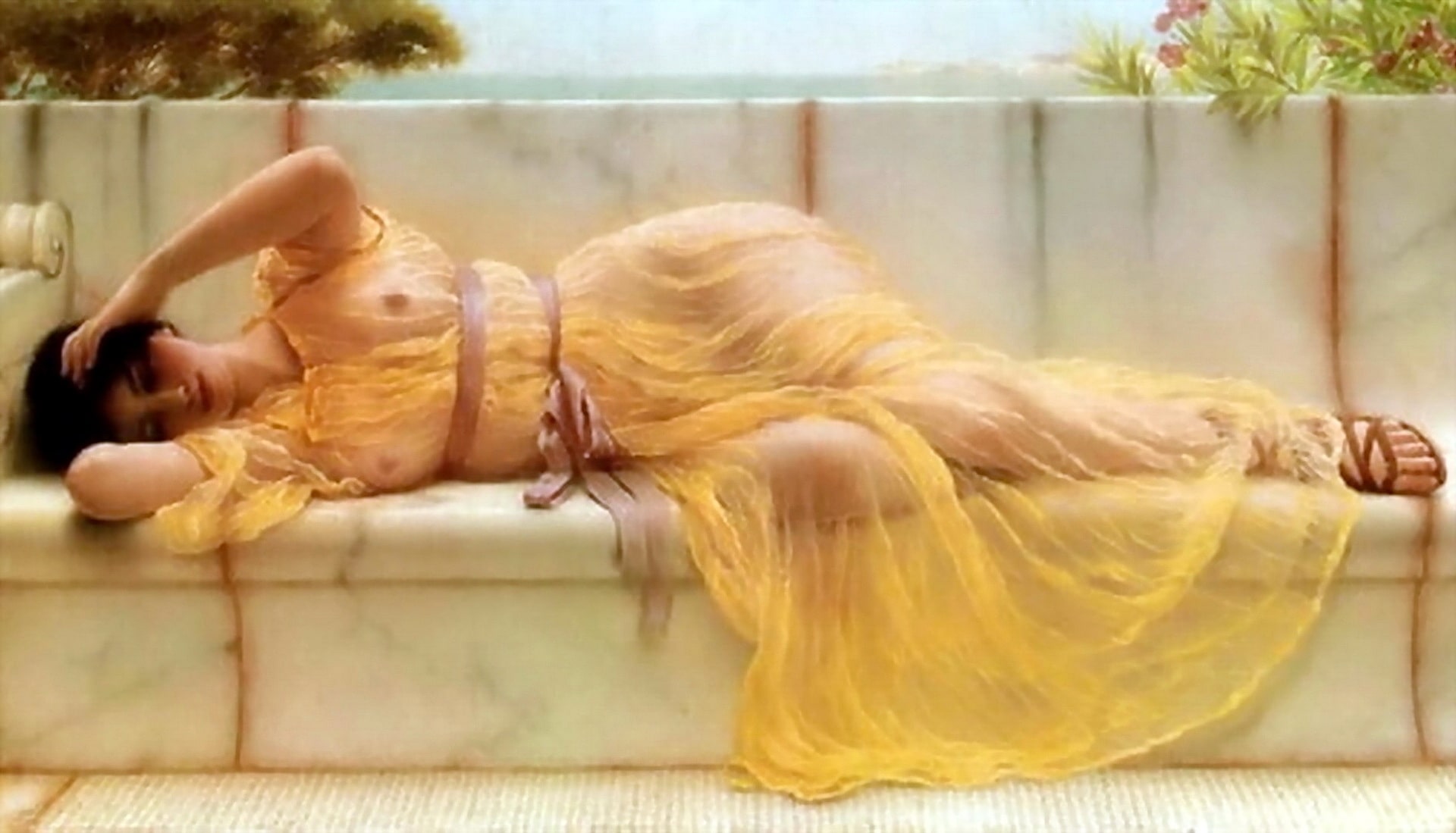
 

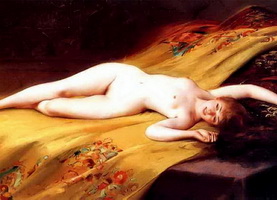
A female in a sheer yellow dress lying on a bench showing her bosoms and nipples


Girl in Yellow Drapery. John William Godward.

A sexy see-through dress on a pretty woman. The lovely lady on the marble bench is wearing a sheer outfit on showing her breasts and nipples. The foxy female looks very alluring in her steamy dress. Who could say no to an invitation from this saucy young woman? She has beautiful eyes and luscious lips. She's very hot! All the better to love you with! The dress is very seductive. How can anyone keep their eyes off her? Even if she doesn't say a word. She is calling for you. The lustful lady looks very hot and sexy. All the better to have you with! She certainly has beautiful bosoms and naughty nipples and those alluring eyes keep leading you on! Come and make passionate love to me. I want you. I need you! The hot woman doesn't need to say a thing!


Contents.

Lite Erotic Art Page 6 with saucy paintings of naked women as well as hot nude girls and fleshy females You will also find wicked art of luscious ladies There are many naughty females on here for you to look at for sexy fun!
Lite Erotic Art page 8 with sexy paintings of horny nude women and lusty ladies Discover many seductive paintings of arousing naked females for your pleasure Be happy with lovely paintings of hot girls
Lite Erotic Art 1 Find pretty paintings of lovely ladies and beautiful naked women.
Sensuous paintings of feminine beauty and lovely nude ladies with flowers and roses.
Paintings of very famous lesbians and their lovers.
Naughty nymphs lust for sexy. They are always horny. The Sirens are close relatives of them.


This post contains affiliate links, we may receive a commission if you make a purchase using these links.
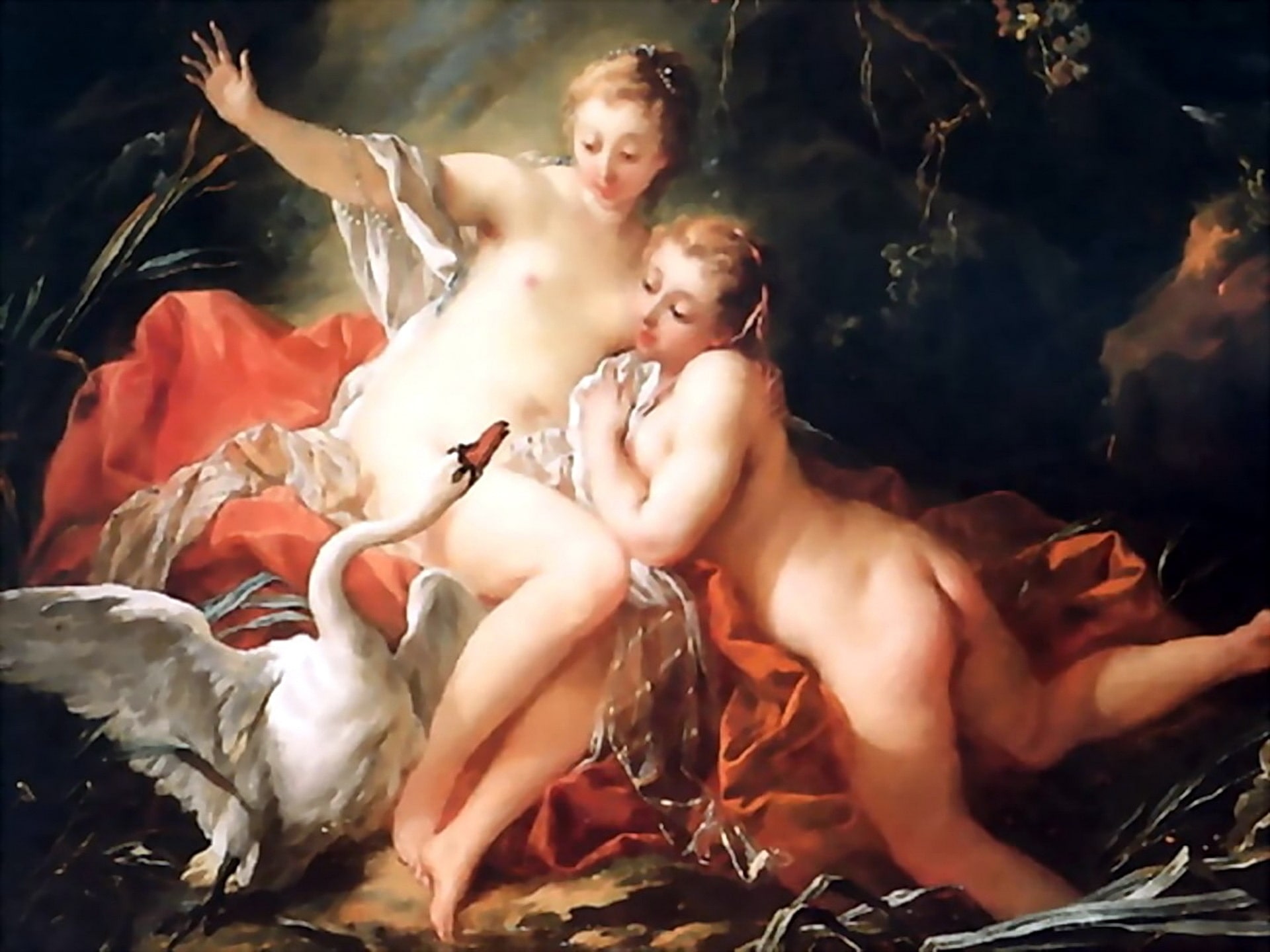
Two naked women and a white swan One nude lady shows off her bum

Leda. Francois Boucher.

Two nude women displaying their boobs and a bottom. I hope the swan doesn't go sticking its beak into things! Then he'll have sticky beak! The pretty ladies are showing their tits! They are lying on a burnt orange rug that they have been using. The foxy females have been out having a bit of fun in the nude. Girls just want to have fun! The beautiful ladies are having fun in the sun. That woman certainly has a cute bum.

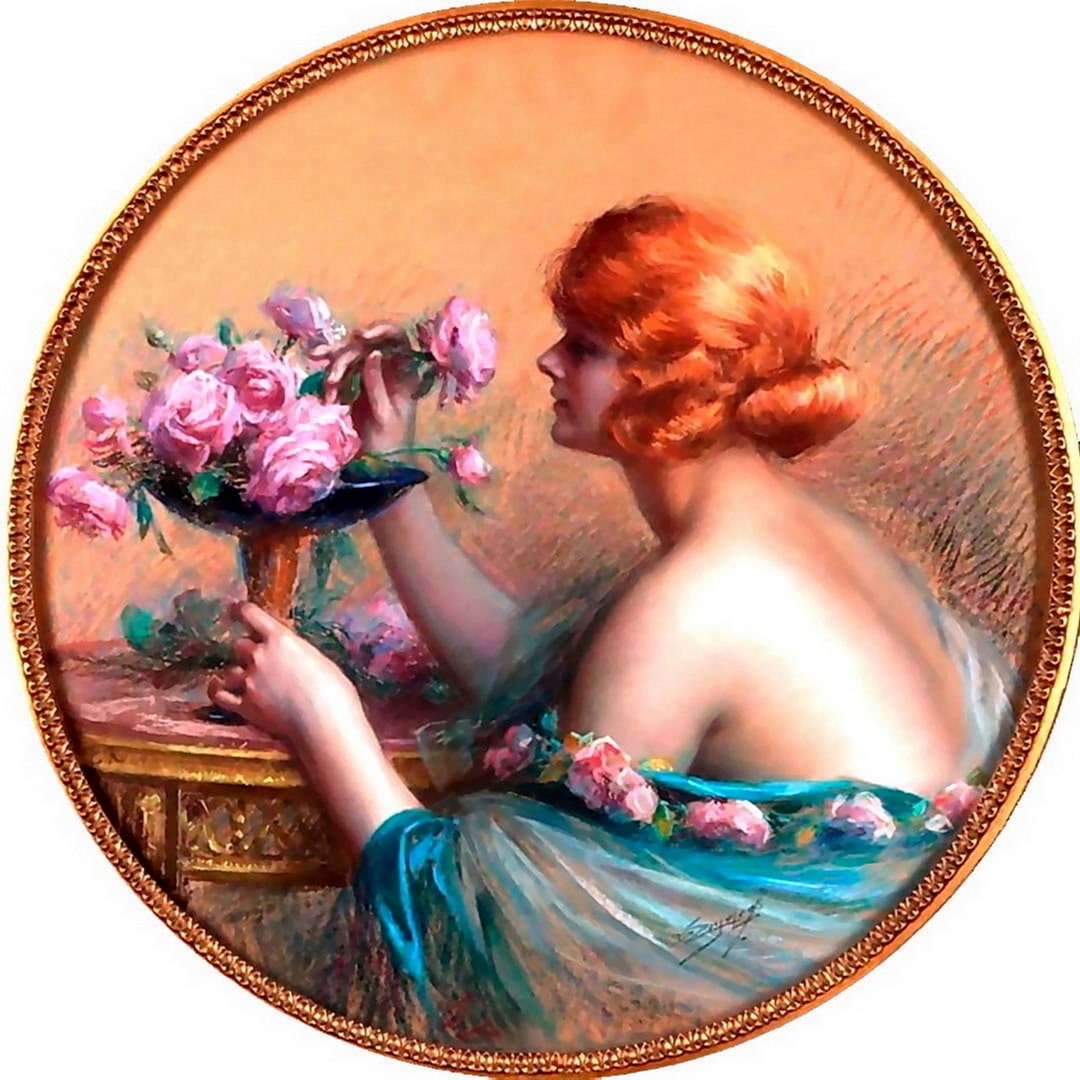
Ared haired lady with pink roses Her sexy dress has flowers on it too

Young Woman Arranging Roses. A painting by Delphin Enjolras.

They are very pretty pink flowers. The fiery redhead is looking very sexy in her off the shoulder dress. That should send a message to her partner! She's in the mood for love, especially because she was sent some beautiful flowers. Somebody knew how to set things in motion for a romantic evening. Her sensuous outfit tells him she's hot to trott. No words are needed. After they finish making passionate love. She'll probably tell him to come again! Once more into the valley of love he will go! Such a brave man! Making love to the woman he loves. What an awesome couple. Doing the thing they love doing the most together.
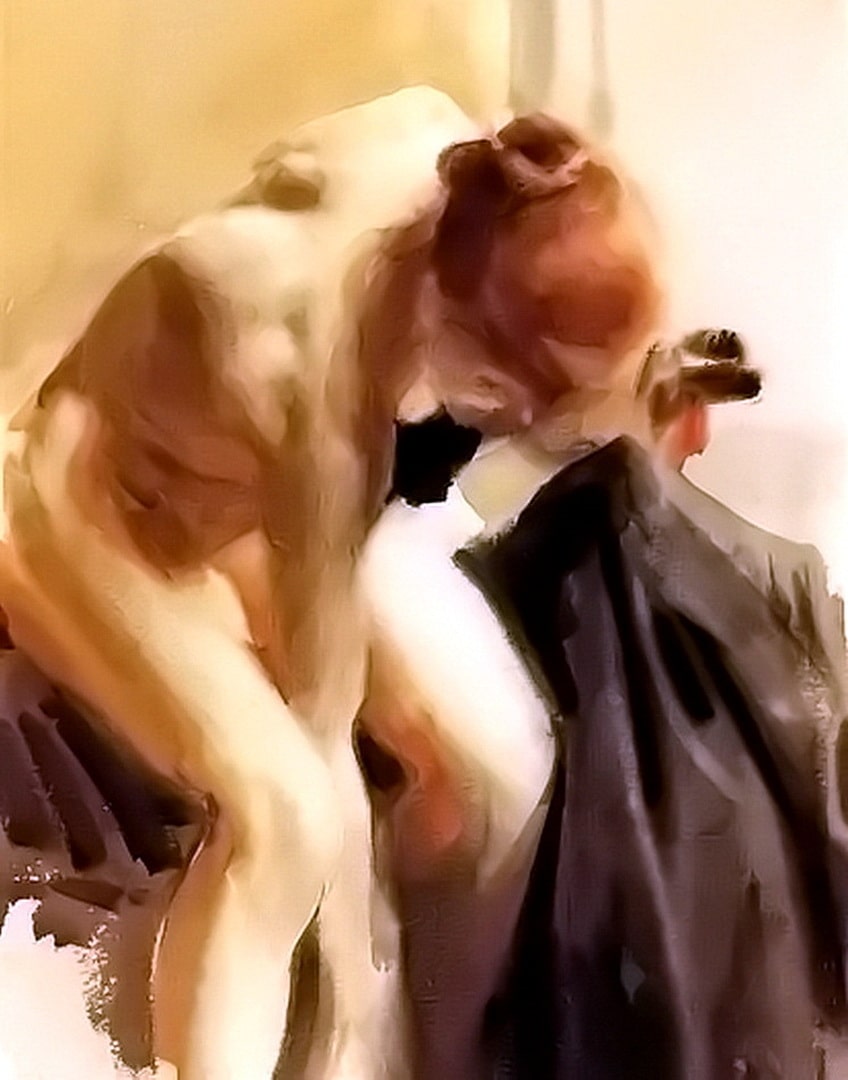
 

A Female Nude Anders Zorn

A Female Nude. Anders Zorn.

A naked lady with red hair. The young woman seems to be holding a mans coat. The cute nude girl has red hair and it's tied up in a bun at the back of her head. She seems to be looking at something on the floor.


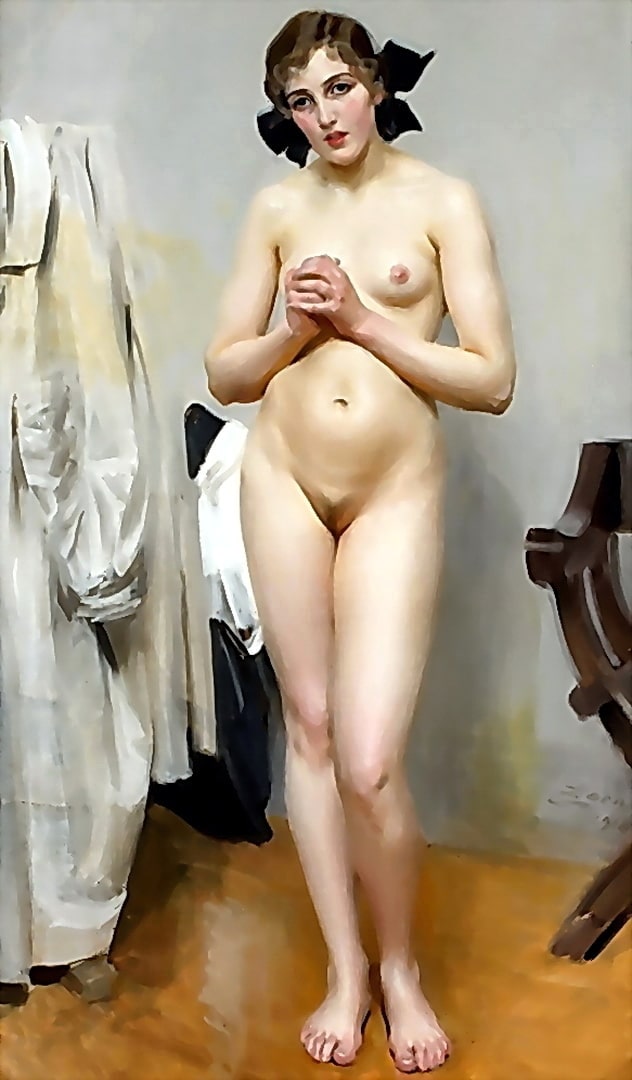
A naked girl showing her boobs and nipples she has pretty eyes and black ribbins in her hair

Nude Woman. Anders Zorn.

A naked young lady with very nice eyes. The young woman is displaying her boobs and nipples. She has beautiful eyes and lovely lips and she is showing off her pussy. Apparently, she feels very comfortable in her nude body. She has two black ribbons tying up her hair at the back. The cute girl would make a great model if she wants to. With a delightful figure and being as comfortable as she is already in her naked body. She should have no trouble in a lovely dress or two.

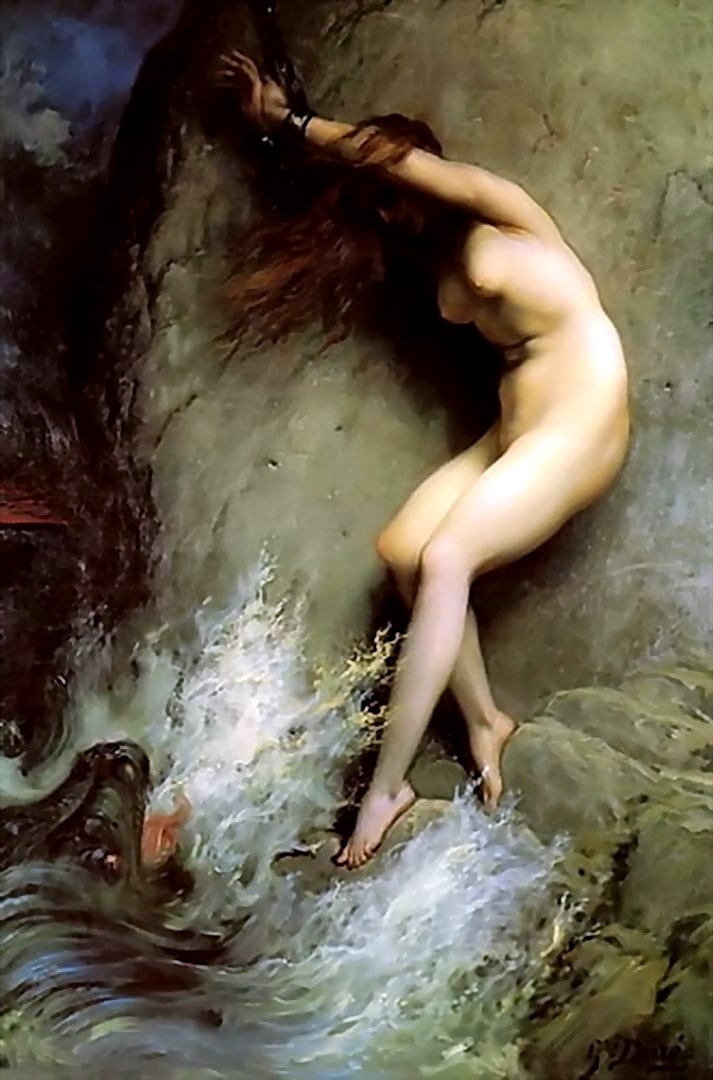
A naked woman chained to a rock The nude girl is swinging over the sea with her long hair blowing in the wind

Andromeda Chained to a Rock. Gustave Dore.

Andromeda has her big breasts on full show. There's a big monster waiting in the sea to gobble her up! That's a very naughty monster! Her very long hair is blowing in the wind as she desperately tries to keep her feet away from being eaten.

Adult toys help a woman's sexuality Boost your sex drive with 100% silicone sex toys

Buy sex toys here for fun and good times. Have hotter sex.

Hot girls love adult toys and Sex. It's what women want! Apparently, some girls also want 100% silicone sex toys. Are you looking to build bigger orgasms, or do you need some sexual satifaction? There are sex toys for improving female sexuality or simply satifying your horny needs. Shop online for your adult toys and you can feed your sexual needs or boost your orgasms for better love making. Whether it be a vibrator, a huge dildo or a dong. Lovehoney has what you need. Go shopping online for sex toys in the privacy of your own home. Choose the adult toys from our wide range and make yourself happy! There are many items to help improve a woman's sexuality for you to buy. Some sex toys will help you blow your load in a big way. Especially if you are a very horny girl!


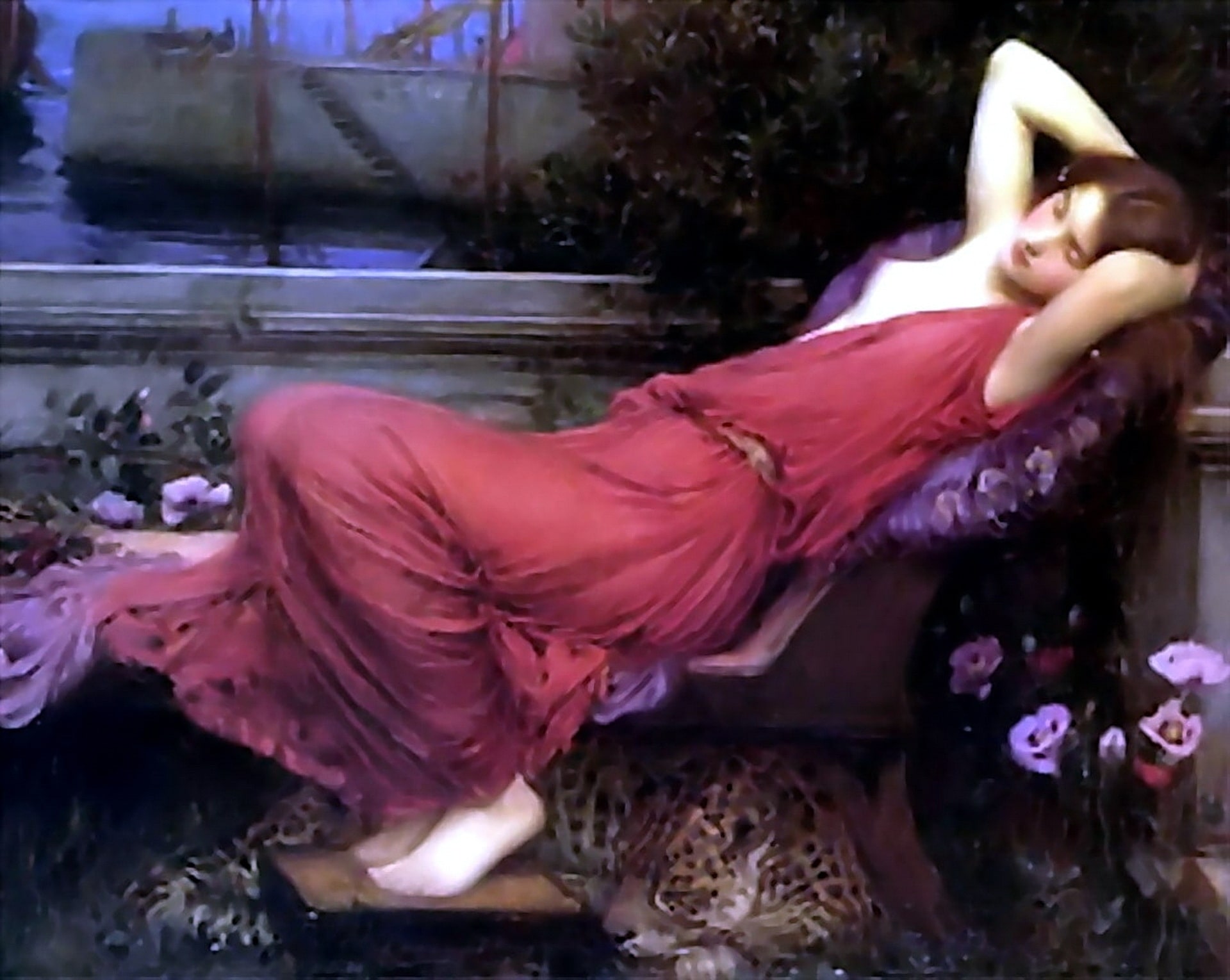
A woman showing off her breast in a long sexy red dress An erotic lady lying down in a see-through garment

Ariadne by John William Waterhouse.

Ariadne is in a red sheer dress and showing her tit. The sexy woman certainly looks comfortable in her seductive outfit. There are many pretty flowers around her along with a leopard under her seat. That will certainly keep the boys away. She certainly has one very big pussy.

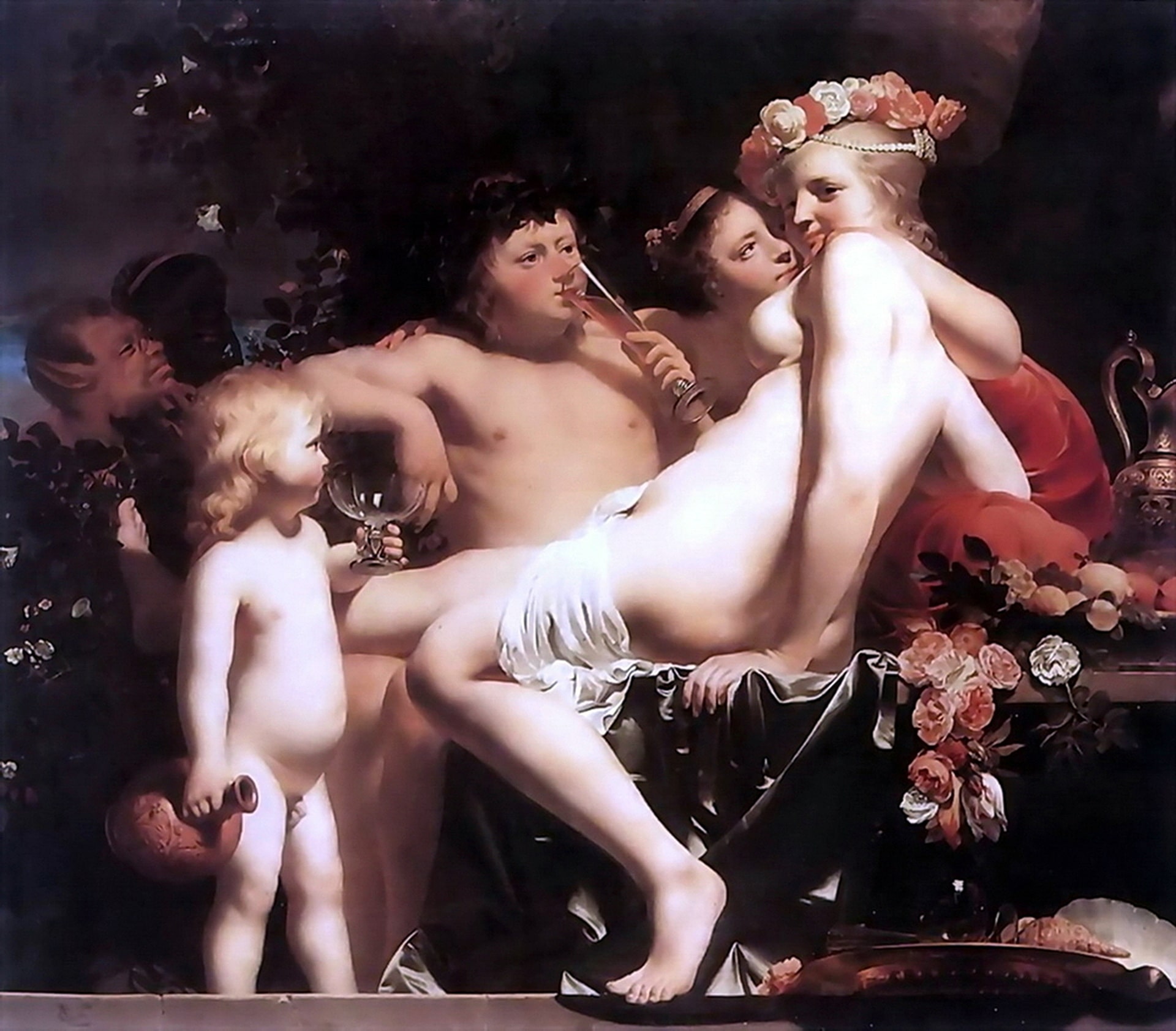
The God of Wine with two naughty nymphs There erotic girls love lots of sex Pretty roses everywhere

Bacchus with Two Nymphs & Cupid. Caesar van Everdingen.

They have flowers in their hair. Those hot girls certainly love to party! There are pink and white roses in her hair and Cupid is enjoying the show! It looks like a satyr is checking out what is going on. No one is up to any naughty stuff yet, but the satyr might join in the fun! After all, the two nymphs will certainly take a lot to satisfy them! The more the merrier! These horny girls will make sure Bacchus will have plenty of fun tonight. The nymphs don't need any liquid panty remover. They just need someone to fill in their tunnel of love and if Bacchus can't satisfy them the Satyr certainly will! Him and his large horse sized penis can fill any love passage to its capacity. Although the nymphs will have no trouble taking it in.

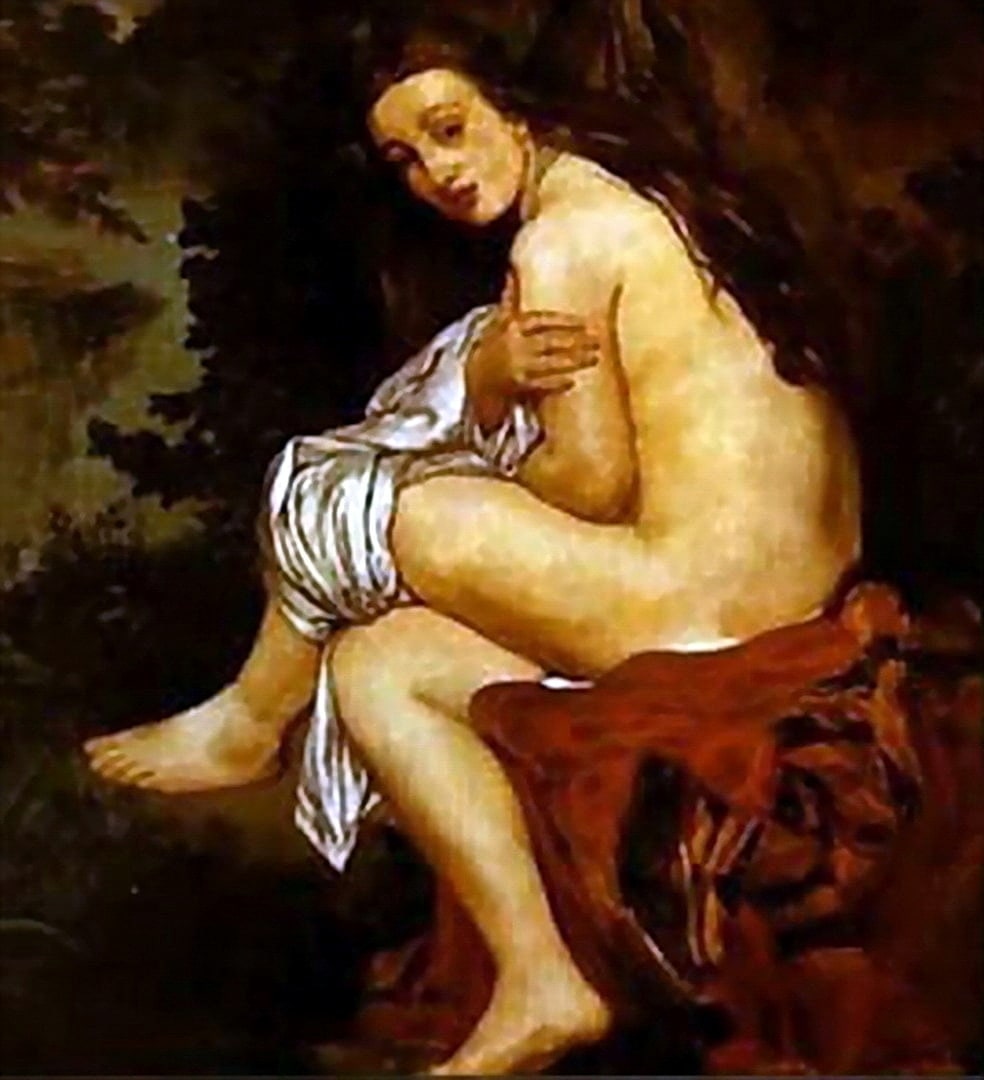
A nymph has just had a bath and idrying herself off with a towel as she sits on a rock

Bathing Nymph. Edouard Manet.

A naughty nude girl is drying herself after bathing. The lecherous young woman has been keeping herself clean in time for the next round of hanky panky! Her motto is be prepared! The naked nymph has very long hair down passed her breasts. The horny lady will be on the hunt for something to satisfy her love canal. It is always hot and moist in time for sexual pleasure. The lusty lady is always looking for something to satisfy her strong sexual desires. Males, females or satyrs or even all three would help feed her needs. She loves foursomes or moresomes. Anything to feed her love passage!

Buy computers online here


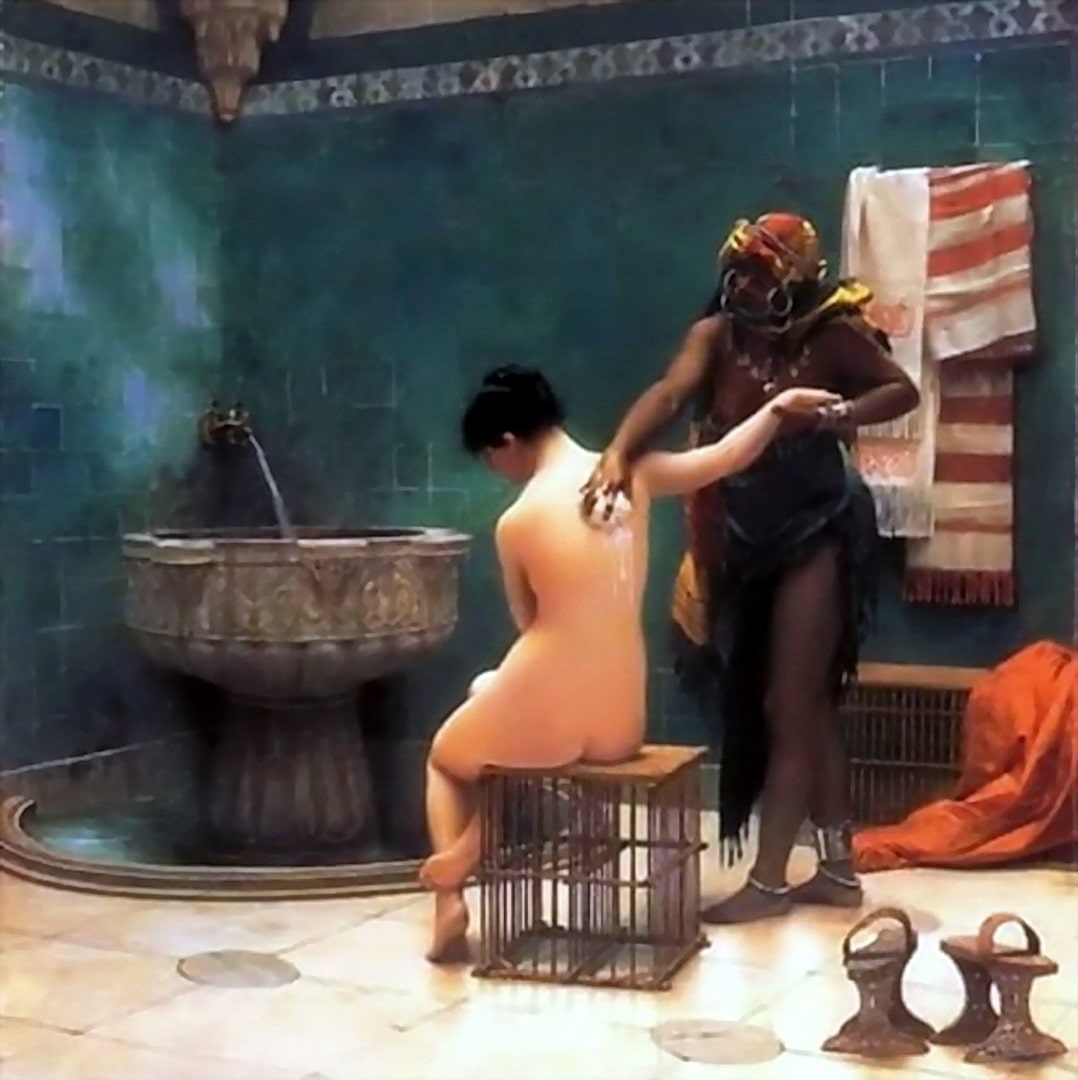
A harem girl is being bathed by her helper We must be clean for the Sultan

Bath. Jean Leon Gerome.

A nude girl from the harem is being washed. These two ladies are enjoying a bit of time together. The naked woman is being bathed for her next round of sex with the sultan. Harems were outlawed in the 1870's.

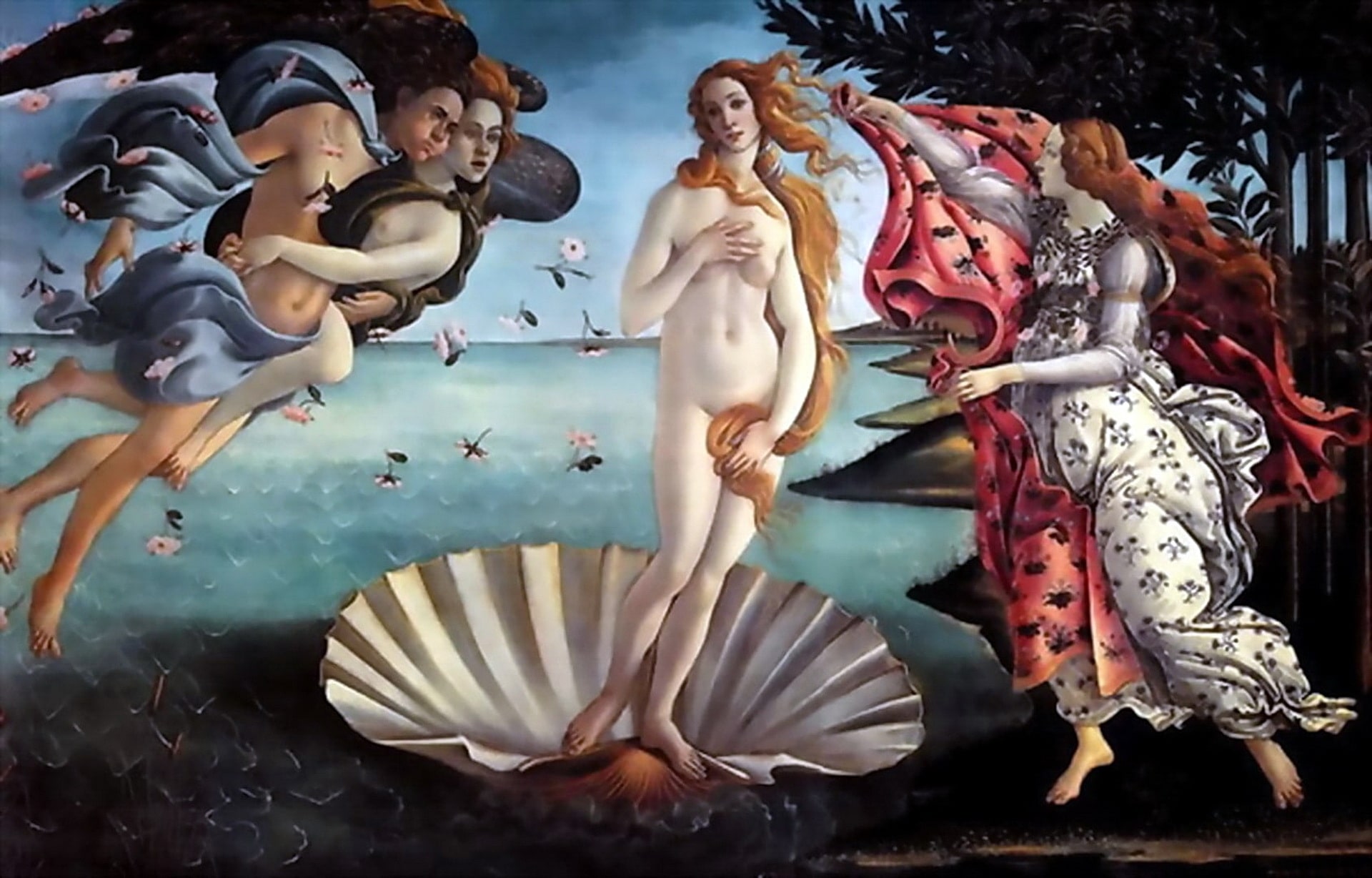
The Goddess of Love has been born Venus has just made her first appearance She has long goden hair flowing down to her knees

Birth of Venus. Sandro Botticelli.

She has beautiful long golden hair! The Goddess of Love has golden hair flowing down to her knees and she has lovely eyes. Venus looks like she's ready to go! There are flowers floating in the air behind Venus and it looks like she is finally coming out of her shell! The Goddess of Love will share her sexual pleasures with many men and women passing on her happiness simply by being in close proximity to them. Because the Goddess of Love can do that. Can't she? Spreading love all around. Love is in the air!


Sexy Art for Women 1 Find pretty paintings of lovely ladies and beautiful naked women 2.
Sensuous paintings of feminine beauty and lovely nude ladies with flowers and roses 2.
Paintings of very famous lesbians and their lovers 2. Gay ladies and famous females
The naughty nymph’s, sirens, fairies (related) all lust for sex. They are always hot and horny. They are very wicked girls and have sex with males, females, and Satyrs. Even all three at once!.
Harems are the home to Odalisques who provide sexual favours to Sultans.
Odelisques are the girls who provide sexual favours to the Sultans.
Venus the Goddess of Love. Lust,desire and sexual pleasure are what Venus gives to you.
Sexy Art for Women Page 2 Paintings of nude girls and foxy females Lusty ladies showing off their naked bodies in the name of art.
Lite Erotic Art 03 Nude paintings can help to improve a woman's sexuality and love.
Lite Erotic Art 04 Naked paintings of sexy women can help girls with better lovemaking.
Lite Erotic Art 5 Discover naked paintings of foxy females and lusty ladies in portraits.
Lite Erotic Art 6 Find nude portraits of sensuous women and flirty females having sexy fun.
Lite Erotic Art 7 Find vintage portraits of cute girls showing their sexy breasts.
Lite Erotic Art 8 Beautiful paintings of sexy nude girls and lovely females.
Lite Erotic Art 9 Elegant portraits of sensuous women and seductive females.
Lite Erotic Art 10 Pretty paintings of luscious ladies and dainty females.
Lite Erotic Art Page 05 with saucy paintings of naked women as well as hot nude girls and fleshy females You will also find wicked art of luscious ladies There are many naughty females on here for you to look at for sexy fun 69!
Lite Erotic Art page 07 with sexy paintings of horny nude women and lusty ladies Discover many seductive paintings of arousing naked females for your pleasure Be happy with lovely paintings of hot girls 96


GAUGUIN AND THE PONT-AVEN SCHOOL.

THE descriptive in art has always seduced the eye of the superficial majority. From this accidental and nugatory side of painting the public has derived all its enjoyment. The moment a depicted object is recognised, the general pleasure in the arts increases; and the moment the accepted vision of the object is modified or distorted, this pleasure decreases and in many instances ceases altogether. One school which deals with a certain class of subjects has its own admirers; while another school which treats of dissimilar subjects has a different following. Furthermore, the manner in which subjects are portrayed realistically or impressionably, poetically or prosaically has its individual adherents. Persons whose temperamental tastes make them antipodal to one method of transcription become enthusiastic over another, irrespective of the fact that the aesthetic merits of the different procedures are equal. Those whose criterion is prettiness are naturally attracted to Whistlerian and Cubistic modes. Idealists lean toward the symbolic and transcendental painters like Van Gogh and Redon. Hardy persons who live largely on the physical plane prefer Ribera, Franz Hals, Sorolla or Dürer. Simple sensualists admire Goya, Rubens, Bronzino, the erotic prints of the188 Japanese, or the pictures of the Little Dutchmen. Biblical students choose the primitives or the painters of religious subjects. Architects like Guardi, Gentile Bellini and Canaletto. Personal tastes in life dictate tastes in art; the reason some have a wider taste than others is because their interests are larger.

The average person forms his art attachments in the same way he chooses friends. For this reason many art27 lovers are passionately attracted to Gauguin, while others, obsessed with the theories of modernity, are impervious to the inherent appeal he incontestably possesses. The Impressionists were enamoured of nature. Their pictures have an almost human physiognomy and are thoroughly joyous. In them one senses the abstract love of beautiful country-sides, blue distances and scintillating lights. They arouse an emotion in the popular mind because of the familiarity of their themes. Gauguin was not content with the landscapes of civilisation. He wanted something more elemental scenes where an unspoilt and untamed nature gave birth to a race of simple and colourful character. He felt the need of harmonising his people with their milieu. To him it seemed inconsistent to place a fully dressed man or woman in a primitive forest or on the banks of a turbulent stream innocent of commercial traffic. There was a positive immodesty in combining a puny figure, whose body was too distorted by work to show itself unclothed, with the majestic nakedness of a primeval landscape. Millet’s peasants in plowed fields and Raffaelli’s clothed figures in busy streets were not incongruous; but in most of the landscapes189 of Gauguin’s day cultivated moderns stalked where Corot had once put nymphs and Titian, Antiopes.

Gauguin’s sense of harmony in idea precluded any such irrelevancies and anachronisms. His painting was perhaps the highest and most consistent type of illustration the world has produced. Judged from this standpoint, on which it was based consciously, his art was complete. And inasmuch as he did not21 strive for profounder things, it is from this standpoint that he must be approached. What impetus he gave to art came out of his desire to view nature simply, like a child, at the same time equipped with all the weapons of a modern intelligence. His art consequently has not only the interest of historic reconstruction but an added interest which, in spite of our veneer of cultivation and education, we all feel at times for perfect lassitude and elemental unrestraint. No man is so intellectual that he cannot enjoy occasional recreation and a forgetfulness of mental activities. Indeed the greatest minds react so completely at times that they demand the crudest stimulants melodrama, wild Arabian chants, romance and physical intoxication. Gauguin, appearing in the midst of gigantic and epoch-making aesthetic endeavours, embodied this spirit of reaction. It was a grave and serious world in which he found himself the world of Cézanne, Impressionism and Neo-Impressionism. His nature was too timid and simple for him to throw himself into the whirlpool. Instinctively he sought a haven far removed from the strife about him.

In the contemplation of the canvases of this modern savage we190 enter that side of the broad field of aesthetics where the whole world can escape, as for a holiday, from the stress of intellectual research, there to enjoy art simply and receptively, as one enjoys a dream of strange lands. In Gauguin there is a power which impels our interest, hunts out our instinct for the exotic and calls to the fore a romantic love of adventure and a desire for far countries. In this appeal no other painting succeeds like his not even the Persian landscapes, the Chinese pictorial visions of heaven, or the lurid images of Gustave Moreau. In Gauguin’s South Sea Island canvases are crystallised our hopes for a Utopian peace, our vague memories of an untramelled prehistoric age. Calm and sunlight, the sea and wild mountains all are here. And we find ourselves amid a peaceful, music-loving and simple people who, we imagine, would welcome the tired traveller and gather round him with offerings of fruit and flowers as he lands on their golden beach.

Gauguin is purely an image-maker. So abstract a painter is he that his pictures are merely the point of departure from which our thoughts leap into an unlimited world of pleasurable visualising. They move us emotionally, even mentally, but never aesthetically. We feel before them exactly what we feel when reading that extraordinary and unique book of his, Noa Noa. Indeed he was more literary than artistic, and to appreciate him fully one should read first his biography written by Jean de Rotonchamp, then Noa Noa. After that his pictures will take on a new meaning. He makes his191 dreams so forceful that we too start to dream before them. His art is of the same calibre as that of Altichiero, Michelino da Bosozzo, Ortolano, the Borassa school, Manet and Degas. All these men are illustrators of a high order; all are impelled by the complete sincerity of their visions; and all are interesting because of their freedom of expression. It is a new adventure each time we see one of their works, for adventure is merely contact with the unexpected. In Gauguin this imprévu is not restricted to unconventionality of balance and the extraordinary arrangement of objects; but expresses itself in the actual subject-matter as well. His savages, ready to kill or love with equal unconcern, bring up to us our childhood enthusiasms for the tales of Swift, Defoe and Pierre Loti. His pictures epitomise the call of the natural, the delight in perfect freedom, the ideal of an unclothed age.

But though his work is calm and outside the world of strife and endeavour, his life was turbulent, and tortured by reiterated disappointments. Toward the end he wrote to a friend that he fell over-often, and arose only to fall again. As with the sailor new horizons ever stretched before him, and their promise of better things was never consummated. His energy was drained by a continual struggle against the forces of civilisation just as the sailor’s is weakened by unceasing battles against the elements. The spot where at last he found refuge was far from his ideal. But in this ideal world he always imagined himself living, and his painting took on its colour and atmosphere. Just as he advised his followers to draw a curtain in front 192of their models, so he drew the veil of imagination before his eyes and saw only what he wished to see. In this almost fanatic idealism he was undoubtedly actuated by fear of life’s gross realities, for he was not content merely to live apart: he was forever attempting to ameliorate the trying conditions which arose from French misrule in the Marquesas. For his pains he was condemned to gaol and later was made an outcast. This friction with the established order, however, had to do only with Gauguin the man. Gauguin the artist remained to the end a contented and passionate dreamer.

To understand his art and its actuating impulses it is necessary to know something of his colourful and adventuresome life. Of all modern painters, he, more than any other, was reflected in his work. As a youth he had gone to sea and served a six-year apprenticeship before the mast. He next became a successful banker and to all outward appearances was satisfied with the status of a wealthy citizen. But all the time the love of change and the nostalgia for strange lands were at work within him, and though spending six days a week in an office he painted every Sunday. It was Pissarro, admired by Gauguin from the first, who persuaded him to forego everything save his art. This he did in 1883. From that time on he became a derelict who had to seek support from his friends. Although at times he was forced to work in offices, edit papers and grow fruit, the donations from those he knew were the backbone of his resources. He had met Van Gogh in Paris in 1886, and two years later accepted the latter’s invitation to visit him on the bounty of Van Gogh’s brother Theodore at193 Arles in the south of France. Here, where he had expected to find conditions conducive to work, his life was, according to his own accounts, in constant danger. The Dutchman, he says, attacked him often, and sometimes Gauguin, awaking with a start, would see Van Gogh stealing across the room to him with a knife. Such a life was impossible, and after a regrettable incident in which he was blamed for the amputation of Van Gogh’s ear, he returned to Paris. The year before this he had made a short trip to Martinique, and while in Europe had lived at Pouldu, Copenhagen, Rouen, Pont-Aven, Concarneau and Paris. Again he went to Brittany. He wanted quiet and was ever ill at ease among the superficialities of a hypocritical civilisation. But there, while protecting a negress, he was attacked by some sailors, and his injuries forced him to return once more to Paris. The negress had preceded him, and when he arrived he discovered that she had robbed him of his entire studio equipment.

At this time, Verlaine, Moréas, Aurier, Julien Leclerc and Stuart Merril, who called themselves the symbolist poets, saw in him a comrade. In 1891 they gave a benefit performance in the Vaudeville for him and Verlaine. Maeterlinck’s L’Intruse was staged for the first time, and Gauguin’s share of the proceeds was enough to pay his passage to his longed-for tropics. Two years later found him back again with many canvases and a strange and grotesque costume, heavy rings on every finger, wooden shoes and a cane of his own carving. He was impatient for praise and194 admiration and large sales; but none of these came to him. At a sale of his work in the Hôtel Drouot in 1895 so small a sum was realised that his friends again took pity on him, and Carrière secured him a cheap passage back to his beloved islands. His adventures in the tropics make poetic and romantic reading. His premature death, at which only one old cannibal was present, was a fitting climax to a life given over to a hopeless search for the ideal.

While still in a banker’s office, and before he had met Pissarro, Gauguin had painted as an amateur; and as early as 1873 he had exposed a landscape. But when he became personally acquainted with Pissarro, who had a way of inflaming the minds of the younger and naturally revolutionary men of his day, his impulses toward art became overpowering. His early training under this violent heretic was so thorough that he never made a concession to the public or retrogressed toward scholastic formulas. Being a born painter, he quickly absorbed the ideas of the Impressionists, and exposed with them in the Rue des Pyramides in 1880 and 1881. His first canvases were wholly Impressionistic and much like Guillaumin’s. Even as late as 1887, after he had known Cézanne and had become imbued with the blazing brilliancy of Martinique, Gauguin still clung to his earlier technique. His Paysage de la Martinique is one of his best-ordered works and also one of his most fluent. However, he had become dissatisfied with Impressionist precepts and had gone to Brittany to get closer to a more natural people, to a cruder and more rugged landscape. There195 he had seen and admired the Gothic statues, the simplicity of which appealed to him intensely. On his return from the South Seas these statues, direct, stiff and archaic, combined with his late vision of scintillant light and hot, luscious colour, became active influences in his work.

Gauguin had a considerable amount of Peruvian Indian blood in him, and his desire for the South was not a superficial one. Rather was it an atavistic necessity for the wild that made him intolerant of cities and culture and highly complex modes of living. This same instinct, manifesting itself through his art, drove him toward a simple and direct statement of a vision, toward an unrestraint which no civilised community would permit him. He wanted something naïve something expressed by broad planes and rich colours. He had imitated the Impressionists, copied Manet’s Olympia and seen Giottos; and by reducing these varied influences to their simplest terms he made his art. Émile Bernard, an indifferent painter and writer, who temperamentally was not unlike Gauguin, claims priority for this manner of painting; but even if it were true, it would mean nothing. Gauguin’s canvases of 1888 give undeniable promise of what he would eventually do, and in 1889 his Jeunes Bretonnes fully reveals the trend of all his later endeavours. Bernard was at best but a clever imitator, and his canvases 23in Gauguin’s style appear inferior and superficial when compared with such pieces as Tahïtiennes and Ruperupe.

The Impressionists went toward descriptive beauty, but Gauguin searched for and found an emotional interpretation of nature adapted to large decoration. It is problematical whether or not he is artistically indebted to Van Gogh, for 196one can attribute the fact that he painted his best European pictures immediately after his return from Arles either to Van Gogh’s teachings or to the effects of southern colour and atmosphere. The question though is of little importance. Every man, no matter how great or small, goes through a formative period in which he receives numerous influences. At any rate, just before Van Gogh died he called Gauguin “maître.” During their final periods, however, we know that the two men differed totally; and in 1891 Gauguin showed that he was under no man’s influence. In the Femmes Assises à l’Ombre des Palmiers and Vaïraoumati Téi Oa, he was already the Gauguin we know so well. The first is a sunlit landscape with the hills and palm-trees broadly and flatly painted. The women who are seated in the great pool of cool shade have all the sagely childish drawing that we find later in his more complete pictures. In the second, the flowered stuffs, the heavy limbs and the perpendicularity of design, which appear so frequently later on, are more than suggested; and the colour has all the beauty of his best efforts.

It was after Gauguin’s first sojourn to the Islands that he came back to France a barbarian, eager to stupefy the world of arts not only by his pictures but by his very attire. In this he failed. The public had barely recovered from its Impressionist shock, and Gauguin went to Brittany. Here he gathered about him many of the painters he had known before, as well as some new ones, and formed a group of young men who were ready to react against the pettiness of the197 Neo-Impressionistic methods and to establish a new art school. They called themselves Synthesists, afterward Cloisonnists, and some of them later became Classicists. Here forgathered Sérusier, Maurice Denis, Filiger, De Hahn, Seguin, Verkade, Anquetin, Laval, Louis Ray, Chamaillard, Fauché, Bernard and Schuffenecker, few of whom are discoverable today. Among these painters the slightest tendency toward divisionistic methods was looked upon as heresy; and religious pictures were in the ascendant, especially with Verkade. The enthusiasm of these young men for their simple and “synthetic” retrogression to the elemental led them to decorate tavern walls and ceilings, to paint windows and barn doors, and to proclaim themselves on all occasions as the only authoritative and vital artists of the day. They had forgotten Renoir and Cézanne because they detested all intellectual and scientific accuracy. And they had not known the latter with sufficient intimacy to be directly influenced by his work. Under the sway of Gauguin’s unsophisticated aesthetics and Bernard’s rhetorical eloquence they went far afield in their search for a simple and elemental synthesis. Zeal was not wanting. They argued, caroused and fought continually. This last activity was the cause of Gauguin’s lameness all the rest of his life. Little or nothing of lasting merit came out of this group which, though it moved from Pont-Aven to Pouldu, has come to be known as the Pont-Aven School. Most of its members are dead or have been swallowed up in the commercial currents of today. A few, like Bernard, Fauché and Schuffenecker, are198 doing indifferent art. They contributed nothing to the modern idea outside of the impetus they gave to the anti-academic spirit. There was among them more enthusiasm than talent, more polemical energy than genius.

Gauguin, though he talked as loudly as the others, painted also. At length their conversations lost their novelty for him. He felt once more the call of his Islands. He was still after an ideal, a congenial setting. These things France could not give him. Again, the necessity of accepting charity from his friends was too humiliating a trial for a nature so timid. His high-handed attitude was only a mask to hide his desire to shrink away. He was always uneasy in cities and unhappy among people who did not try to understand him. He detested the artificialities of Parisian women. His robust sensuality craved a more solid and artless Eve. In France his nature, so responsive to the glow of colour and the primitive lure of archaic forms, saw only chill tints and inutile complications. To him the South meant the richness and heat of romantic emotions, the satiety of the senses. It appealed to his deep love of chaotic and untrammelled nature. He had tasted it before in his seafaring, and he turned to it now as to an only salvation. It was at this time that Carrière arranged the passage. Gauguin was never to see Europe again.

The Impressionists had made infinitesimal spots of colour in order to imitate as exactly as possible the colour 199effect of nature and to increase the dynamic power of a canvas by making it give off a light of its own. By this technique they had incorporated both air and sunlight into their art. The Neo-Impressionists made mathematical the Impressionists’ haphazard stippling and had turned the spots into almost symmetrical squares. The squares were slightly separated, and the bare canvas was permitted to show between them in order to achieve a greater brilliance and a more vivid light. Van Gogh later elongated these squares into threads until his pictures resembled tapestries. There was no longer the technical unconcern in painting which Pissarro and Monet had prescribed. Paradoxically enough, while art was growing more scientific it was also becoming less significant. With the men of Pont-Aven the reaction against a too technically self-conscious painting began to set in. Their ardent advocacy of primitive conception and method was the rebound from the pseudo-scientific verbiage which, in the “advanced” studios, took the place of good painting. Consequently they favoured the broad arrangement of surfaces; classic, if the artist leaned temperamentally in that direction; barbaric, if his tastes so inclined him; Gothic, Chinese, Japanese or primitive all according to which his inclination led him. But all work had to be completed during the first fury of inspiration, conceived imaginatively, and executed from the decorative standpoint. Gauguin, by his quick wit and youthful impetuosity, easily dominated the circle and developed, through the constant interchange of opinions, his vague ideas concerning a “synthetic” art. On his third and last voyage to the Islands his greatest work was done. Here he carried out those ideas which had had their inception at Arles and which had become crystallised 200at Pont-Aven. He made his art entirely out of colour, but instead of profiting by the teachings of Daumier and Cézanne whose visions were the most simultaneous in the history of art, he chose rather to emulate the early and ingenuous schools of plastic expression. In this his painting was retrogressive.

But there was another and more important side to Gauguin. He at least strove for a larger and more purely emotional interpretation of nature than had been attempted before: and our interest in him is due largely to the broad and peaceful vision he gives us. Monet put many greens in one tree. Gauguin saw the tree as green, but by depicting it in broad planes of pure pigment, he made it a more intense green than Monet could ever have done. “A metre of green is greener than a centimetre of green,” said Gauguin; and this principle he applied to all his work. Instead of portraying light by colour as the Impressionists did, he interested himself only in the colour which resulted from light. Thus he was able to raise his paintings to the highest possible pitch of purity, while still being preoccupied with nature. In painting a landscape where a woman with a cerulean blue dress was seated among green trees on an ochre beach with purple hills in the rear, and where the yellow sunlight shone on the tree trunks and in the woman’s hair, Gauguin would first of all draw apart the blues as much as possible. The woman’s dress would be painted almost blue-green, and in order to contrast this colour with the other blue in his subject, he would paint the sky blue-violet-violet. Thus he would produce a greater range of emotional colour than if the two blues had been pale and201 similar in tint. Furthermore, he would make the sunlight a yellow-orange-orange and the sand a spectrum yellow. The trees would then be recorded as yellow-green and the hills as red-red-purple. By this process all the parts of the picture were differentiated, with the result that the canvas had a strong carrying power. This power was further increased by the figures being sharply outlined.

Gauguin’s composition has little importance. It takes the form of perpendicularities, and rarely is any rhythmic order discernible. It is of a piece with the Romanesque painting in Saint-Savin near Poitiers. All his objects are personifications of calm, and are rooted in their environment as well as in the earth. They do not seem merely to pose there: Gauguin’s work is not superficial to this extent, but they grow naturally out of their matrix like flowers or trees, unconscious but immovable. The passivity which pervades them is not the calm of completion or of the perfect rest which comes after mental exercise, but rather the calm of the lethargic mind which avoids thought, dislikes action and is content to dream. Technically this feeling is caused by lines at right angles to the horizon, by big simple planes on which the eye can rest free from the disturbance of line opposition, by large flat patterns of dark tonality conducive to peace and introspection. Even the contoured volumes have a greater extent of base than of apex and thus add to the picture’s aspect of immobility. Gauguin’s drawing is interesting in that it portrays a race highly susceptible of picturisation. His models are impelling because it is 202an adventure to explore their parts, their joints, their distortions and disproportions. Their beauty is heavy and cumbersome, like that of the stone images of the Aztecs.

That which interests us most in Gauguin however is his colour. In this medium he arrived at a sumptuousness unsurpassed by preceding painters. His art was a new application of the old principle of wall decoration. Many had made use of broad planes of colour before his advent, but none had heightened the significance of these planes sufficiently to express nature. He was the first realist in decoration, and from him come, by direct descent, Matisse and a horde of lesser men like Fritz Erler, Leo Putz, R. M. Eichler, Adolf Münzer, Rodolphe Fornerod, Alcide Le Beau and Gustave Jaulmes. The aesthetic import of a Puvis de Chavannes is almost equal to that of Gauguin, but the former’s greys and grey-blues appear washed-out and dead, while Gauguin’s pictures vibrate with the heat of tropical sunlight and the richness of tropical colour. Gauguin, however, could get no orders. His work was too sensuous. Interior decoration would have had to be far more joyous than it was at that time for his exotic creations to find a place on walls and ceilings.

Gauguin’s animating desire was to synthesise his picture to make each part of them relative to all the other parts, to order them as to colour, line and tone in such a way that they would give forth the impression of a simple vision, a perfect 203ensemble. This desire was in the air of the day. The Impressionists had unconsciously approached synthesis by using light and air as a solvent. Cézanne had gone much deeper and ordered form by means of colour. In Seurat Gauguin saw almost completely set forth an expression which by its simplicity satisfied him. Some assert that he was also influenced by Degas. But whether this is so or not, certain it is that there is more of Ingres in him than of Giotto. With Seurat as a starting-point that is, the linear Seurat of La Baignade and Un Dimanche à la Grande-Jatte Gauguin quickly abolished the tiny and labourious spotting which Impressionism and Pointillism had taught him, and branched out into simpler design and greater chromatic brilliancy. By these departures he achieved his synthesis. But this triumph must not be overestimated. There are degrees of synthesis. Rubens, Giotto, Degas, Ingres, Böcklin, Botticelli all are synthetic, but all are by no means of equal importance. While synthesis is necessary to art, it is not the ear-mark of great art alone. The order which is obtained by three harmonious lines is not so extended an order as that found in the multilinear drawings of Pollaiuolo: and this complication of aesthetic ordonnance is what makes a Donatello more significant than a piece of negro sculpture, a Scarsellino greater than a Matisse, and an El Greco more puissant than a Mazzola-Bedoli. Furthermore, when this complete surface order extends itself into three dimensions it becomes an infinitely greater moving power. When from simple straight lines on a flat surface the artist carries his creation into opposition, development and finality, he 204is pushing the frontiers of his painting to art’s extreme limits.

Gauguin’s temperament was simple in the extreme. He had fallen under the sway of Manet: he had gone to a rugged country of primitive instincts where singular costumes were a part of the landscape: he had studied the stone and wooden figures in the old churches and cross-roads of Brittany, and had found the elemental to his liking. Consequently in synthesising his art he used simple forms, straight lines and large planes of shadow and light, all of which were presented on a flat surface, so that all the parallelisms and elementary curves of the picture would deliver themselves to the average spectator at first glance. His method of filling or balancing a canvas was little more than primitive, and the curved lines of light and shadow, which are intended to entice the eye, are so isolated that when we at length arrive at their end we discover they are without rhythmic intention. Nor is there a generating line out of which the others grow.

Gauguin’s linear harmony is no greater, if a trifle more diverse, than in the Byzantine mosaic decorations in S. Vitale. Indeed the emotion we experience before each of them is to all purposes the same. The richness of medium in the mosaics is amply compensated for by Gauguin’s richness of foliage forms and floral designs. The decorative colours in both are equally effective. As moderns we might get more enjoyment out of Gauguin’s heat and brilliance and the diversity of his silhouette, but at the same time there is a greater archaeological attraction and a more spiritual interest for us in the ancient work. Intrinsically one is as great as the other. Those seeking for calm will find it in equal degree in both, for205 in each it is produced by the same method: by the static representation of form rather than by a sequence of movement. Gauguin’s sculpture has the same qualities as his paintings, and resembles the religious effigies of some barbaric tribe. The figures are upright and rigid, their backs against a straight support, as in Egyptian architectural art.


Gauguin said many times that when a painter was before his easel he must not be the slave either of nature or the past. This is true, but as a principle it is too limited. Although he himself lived up to it, he did not go far enough beyond it to do truly significant work. He arrived at the brilliancy of nature by a method distinctly different from nature’s; and while refusing to be dominated by the past, his temperament was such that he fabricated an art much closer to antiquity than that of the Zaks and the Rousseaus who servilely imitated it. He accomplished what he set out to accomplish. His failure to give birth to great art was due to the intellectual limitations of his ambitions. His place in modern painting, however, is secure.

That great cycle of aesthetic endeavour which was set in motion by the discovery of oil painting found its termination in Rubens. The cycle which Delacroix and Turner ushered in was less extended. Being more concrete in its aims, it took only five decades to reach completion in the works of Renoir. The first cycle, born with fixed materials, was based on an absolute and physiological law of composition which can never radically change, and therefore permitted of an extensive development and variation. Decadence206 naturally set in after its means had lost their ability to inspire artists. The second cycle was one of research, and during it artists were so narrowly focused on nature that they lost sight of the foundation laid down during the first cycle. Had their concentration not been rudely disturbed their data hunting would have carried them hopelessly afield. Gauguin exposed the futility of the meticulous imitation of nature’s effects, and by so doing took a step forward toward liberty of method. For this reason he is of importance. Painters were rapidly becoming scientists. By turning men’s minds away from nature to broadly natural pictures Gauguin invited them once more to become artists. He was the link which joined experimental research to pure creation. The first cycle gave us an absolute composition: the second furnished a scientific hypothesis for art: the third, of which Cézanne was the primitive, combined the first two and thus opened the door on an infinity of achievement. Gauguin prevented the second from running into decadence by showing its uselessness as an isolated procedure.

Continued on the next page .

Lite Erotic Art Page 05 with saucy paintings of naked women as well as hot nude girls and fleshy females You will also find wicked art of luscious ladies There are many naughty females on here for you to look at for sexy fun 69!
Lite Erotic Art page 07 with sexy paintings of horny nude women and lusty ladies Discover many seductive paintings of arousing naked females for your pleasure Be happy with lovely paintings of hot girls 96


Contents.


© 8th June 2024 sexyartforwomen.


Sexy Art for Women of cute girls & women. You can find hot babes & nude ladies as well. Female Erotica & Feminine Beauty.