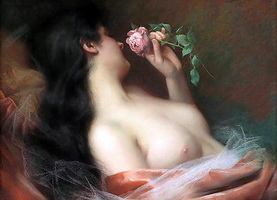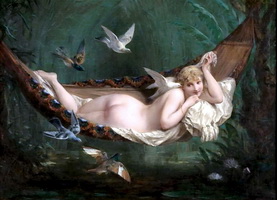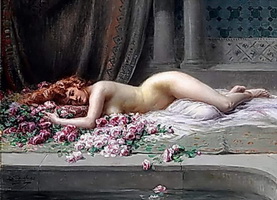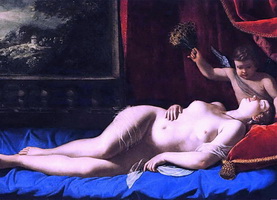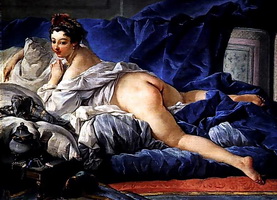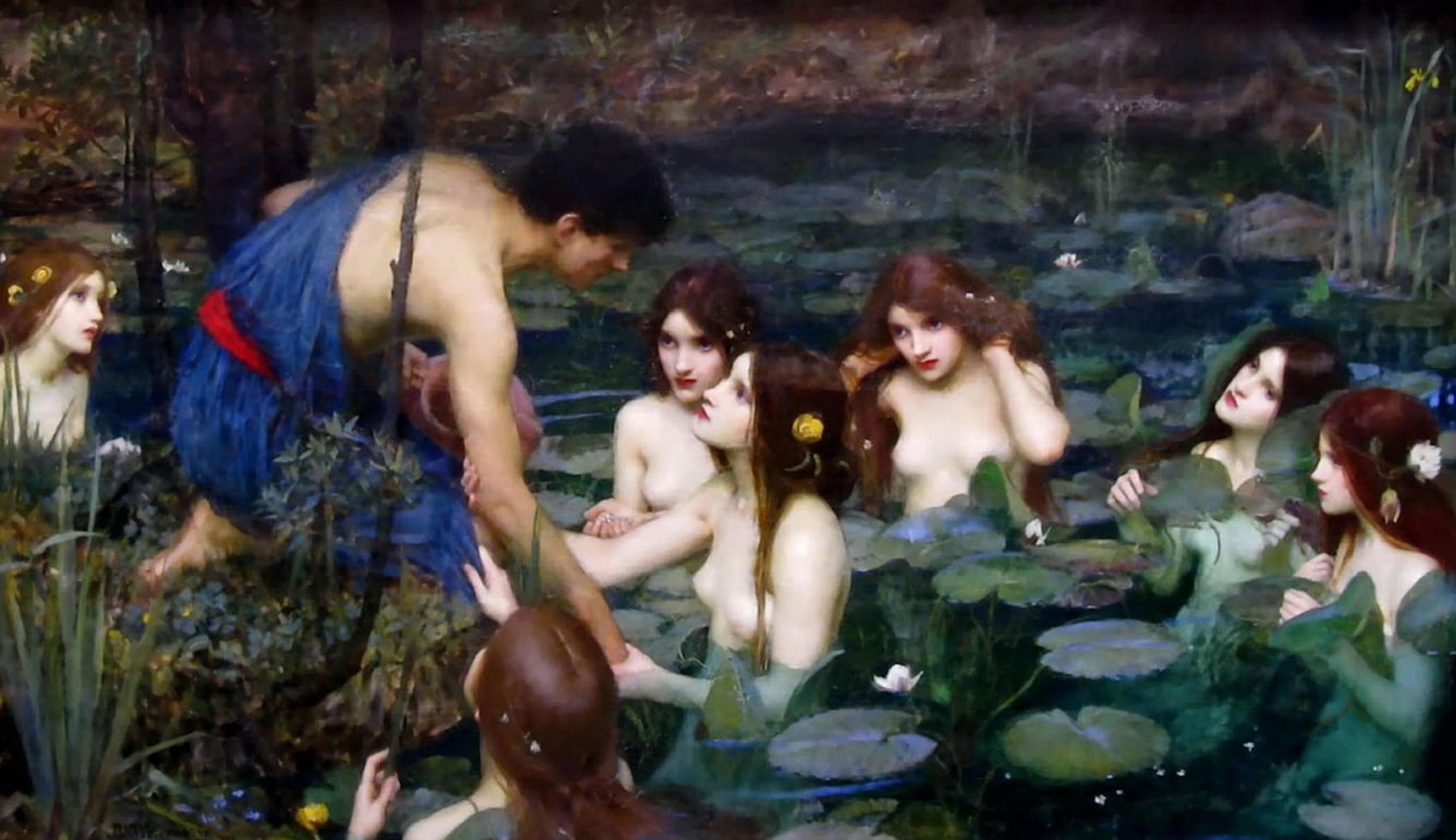
Hylas and the Nymphs. John William Waterhouse. I think Hylas could be in a bit of trouble here. Mind you, isn't this every males dream? Discover another painting of Hylas and the nymphs below! There are other similar paintings in this section on nymphs. We hope you enjoy the sexy nymph erotica that we have provided you! |

![]() |
|||

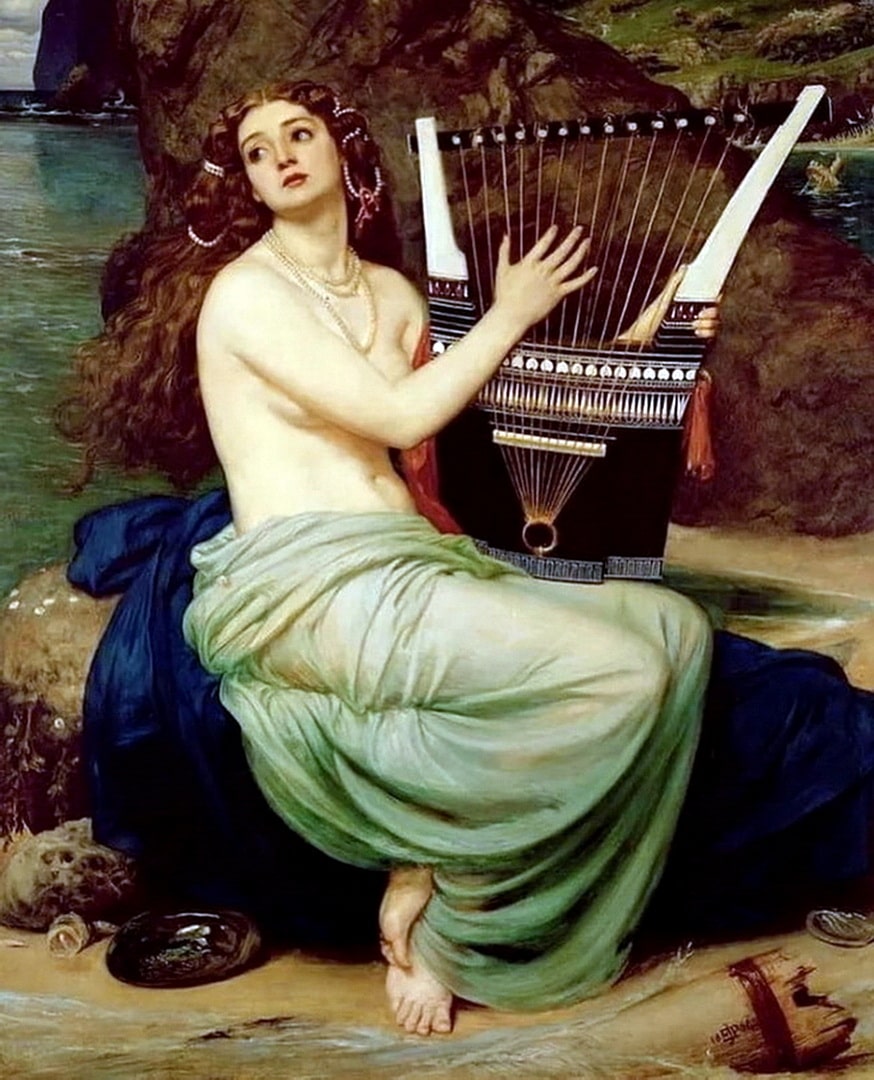
The Siren. Edward John Poynter. A pretty siren is luring sailors with her magic voice. She is semi-nude with a sheer dress around her waist. The siren has beautiful eyes and luscious lips. All the better to kiss you with! |
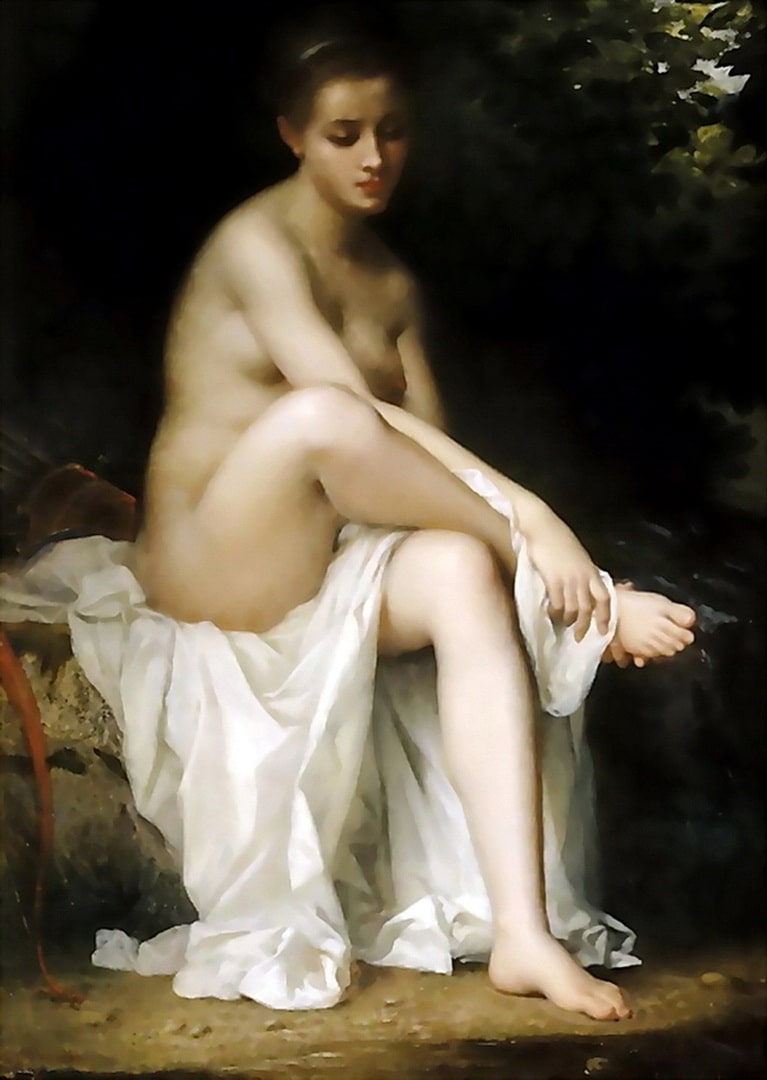
Ismenie, Nymph of Diana. A Charles Landelle painting. |
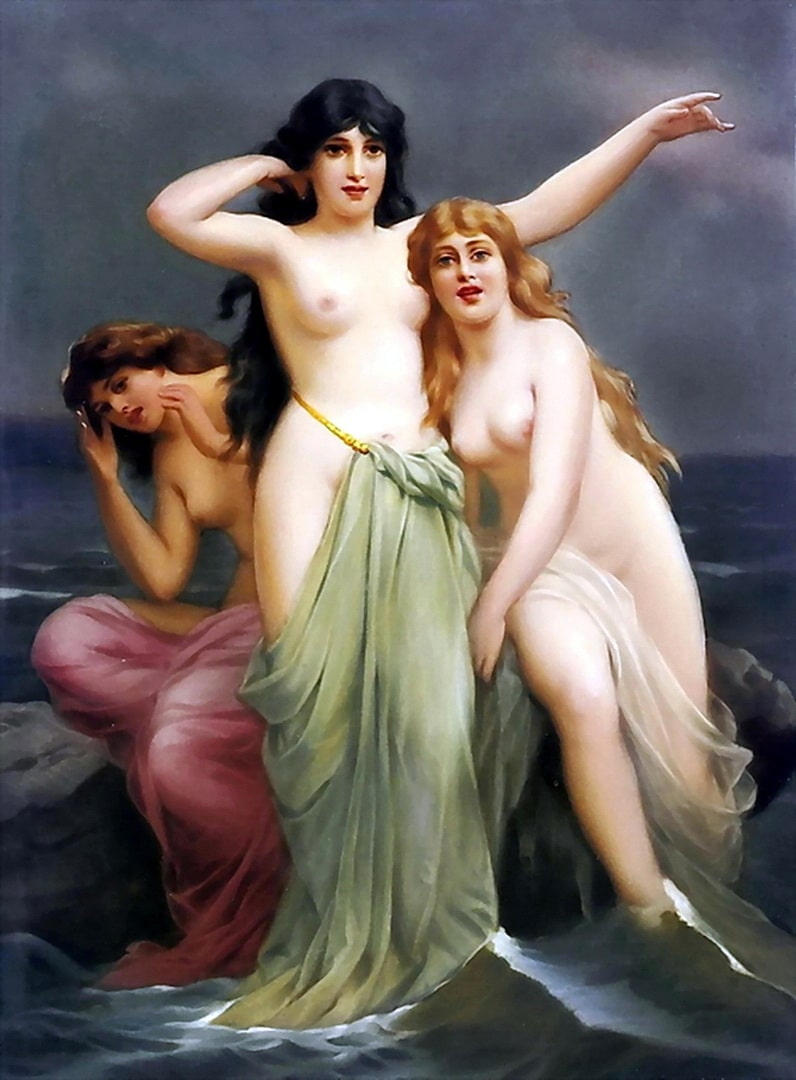
The Sirenes. Friedrich Paul Thumann. Three lusty sirens sitting on a rock showing off their feminine beauty to lure likely lads to lovemaking. They have sheer garments partly covering their nude flesh. |
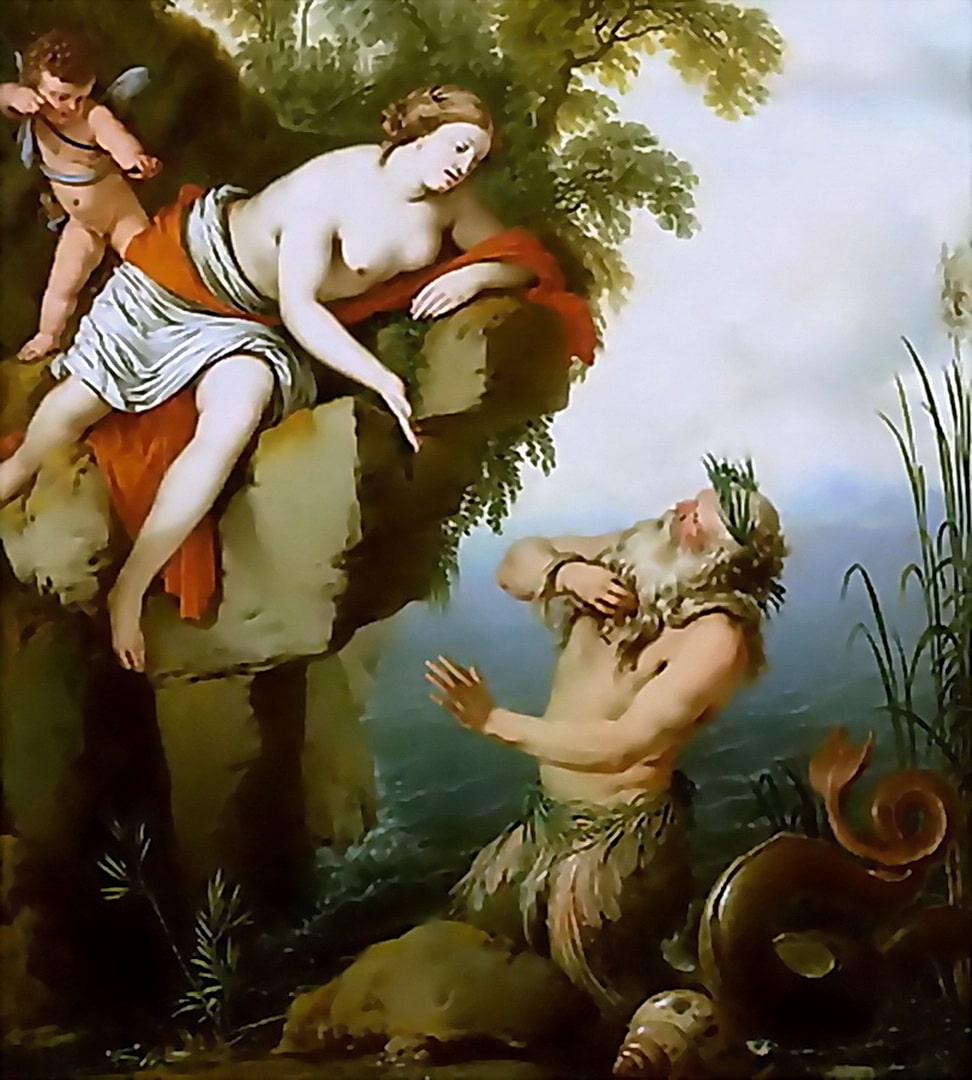
Nymph and Triton. Laurent De La Hire. Triton the Sea God and an erotic nymph with Cupid behind her. Cupid is shooting Triton with a love arrow. Resistance is futile! |
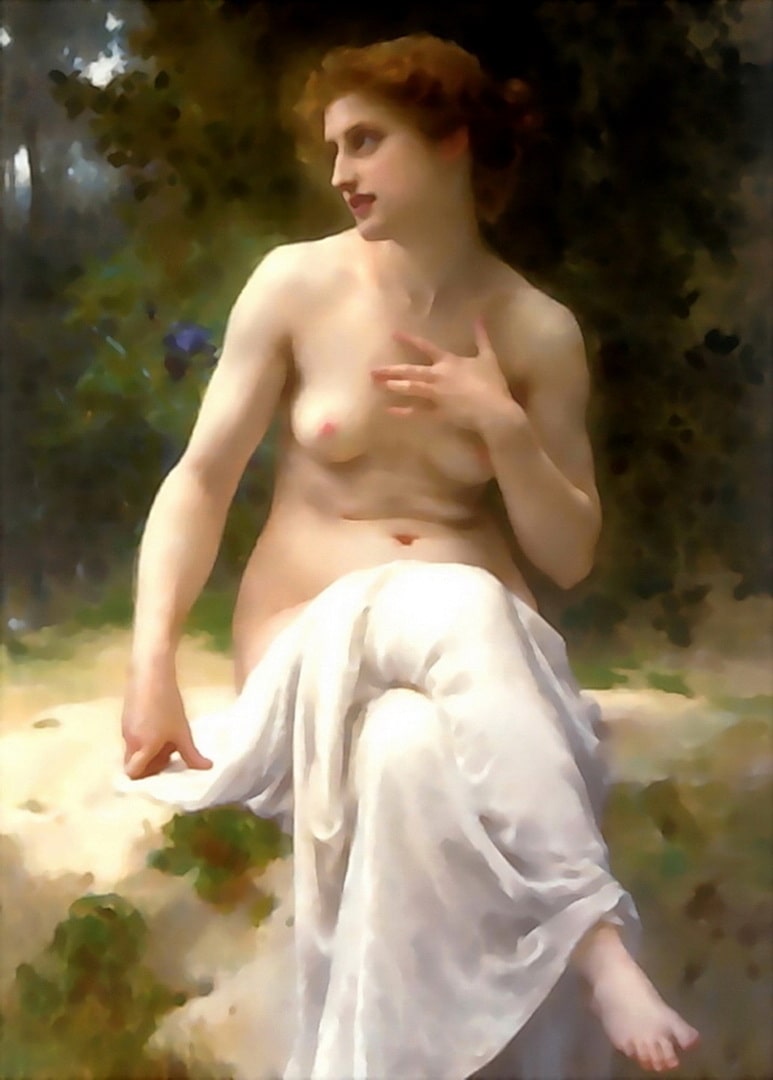
Nymphe. Guillaume Seignac. A nude nymph sitting on a rock with voluptuous breasts. She islooking around for someone to make love to. Nymphs have a HUGE sexual appetite. This is such an erotic nymph you had better watch out! |
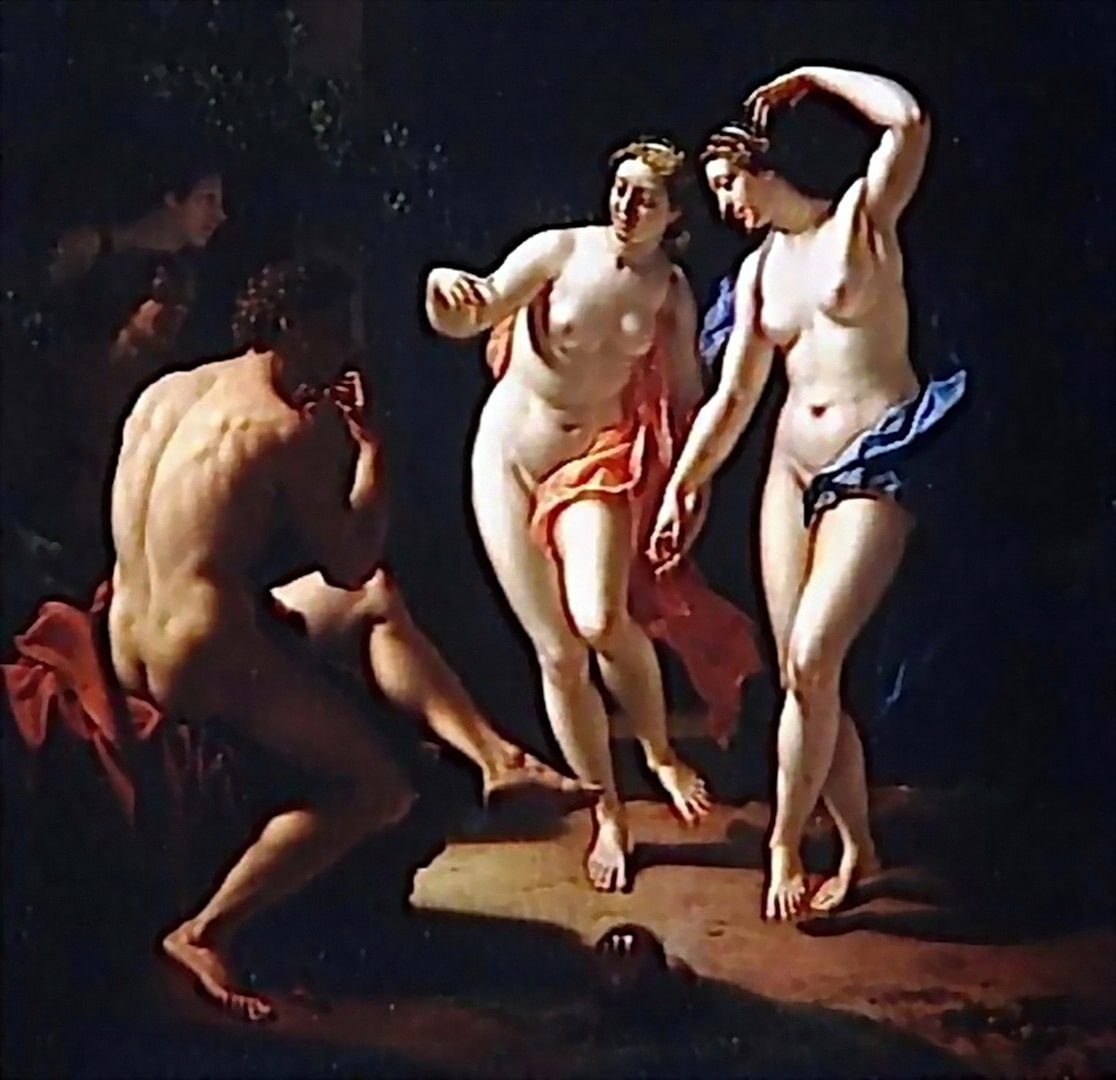
Nymphes Dancing. Adriaen and Pieter van der Werff. Two naughty nude nymphs dancing to the naked piper. They are using their feminine beauty to attract him into Making Love. There's a threesome on the way! Imagine enjoying that! |
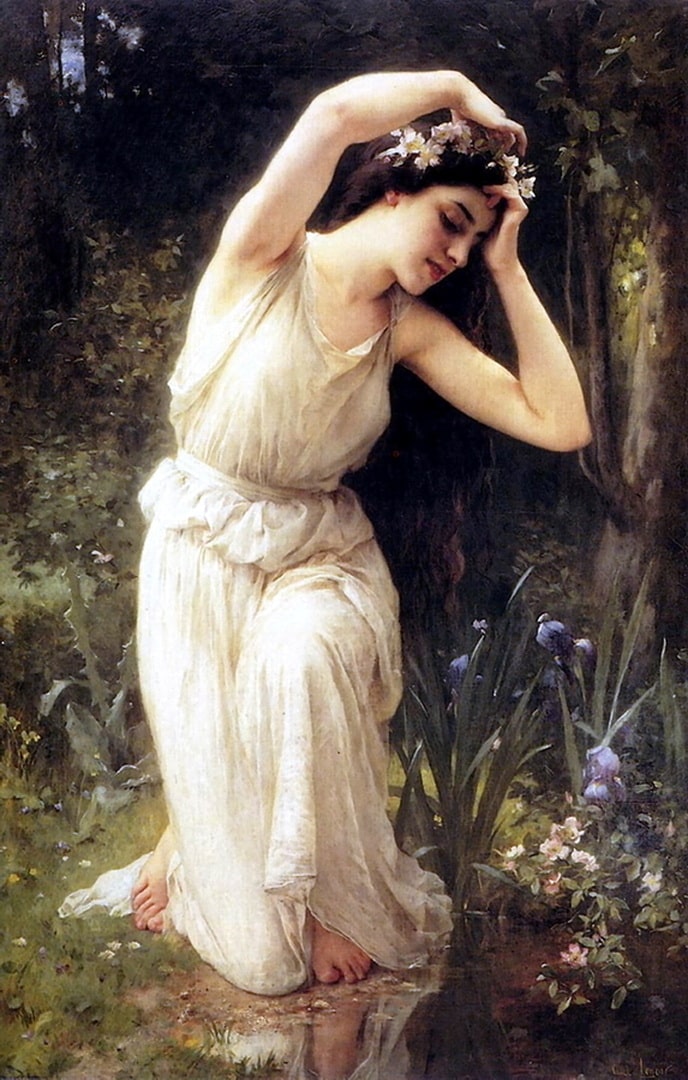
A Nymph In The Forest. Charles Lenoir. The erotic nymph is using the pond as a mirror for adjusting the crown of flowers on her head. She has many more flowers around her. |
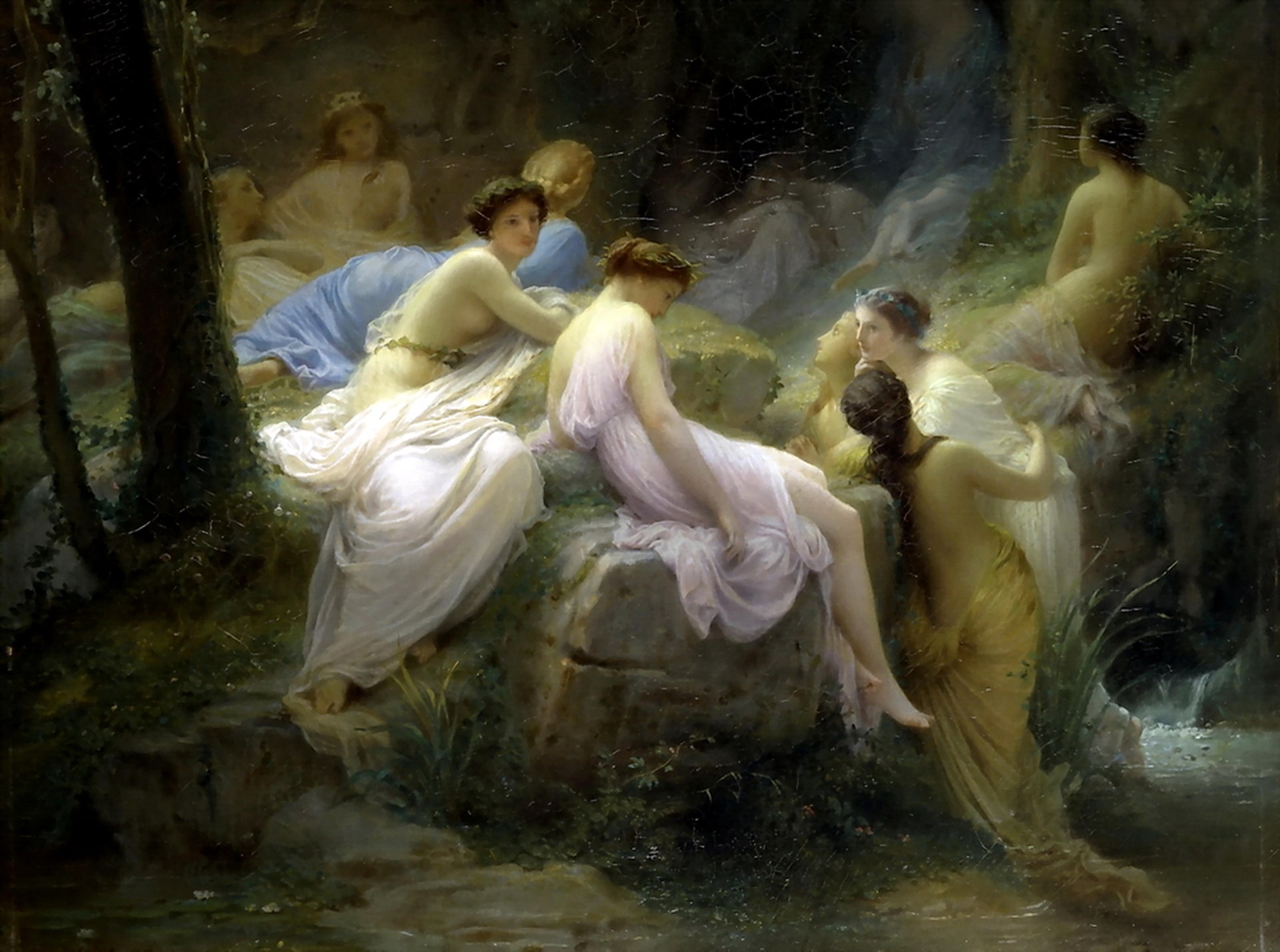
Nymphs Listening to the Songs of Orpheus. Charles Francois Jalabert. The magical music of Orpheus has won over some nymphs who are listening to him. The nymphs are sitting around in their seductive outfits while listening to his music. |

Prom Dresses and Evening Gowns!
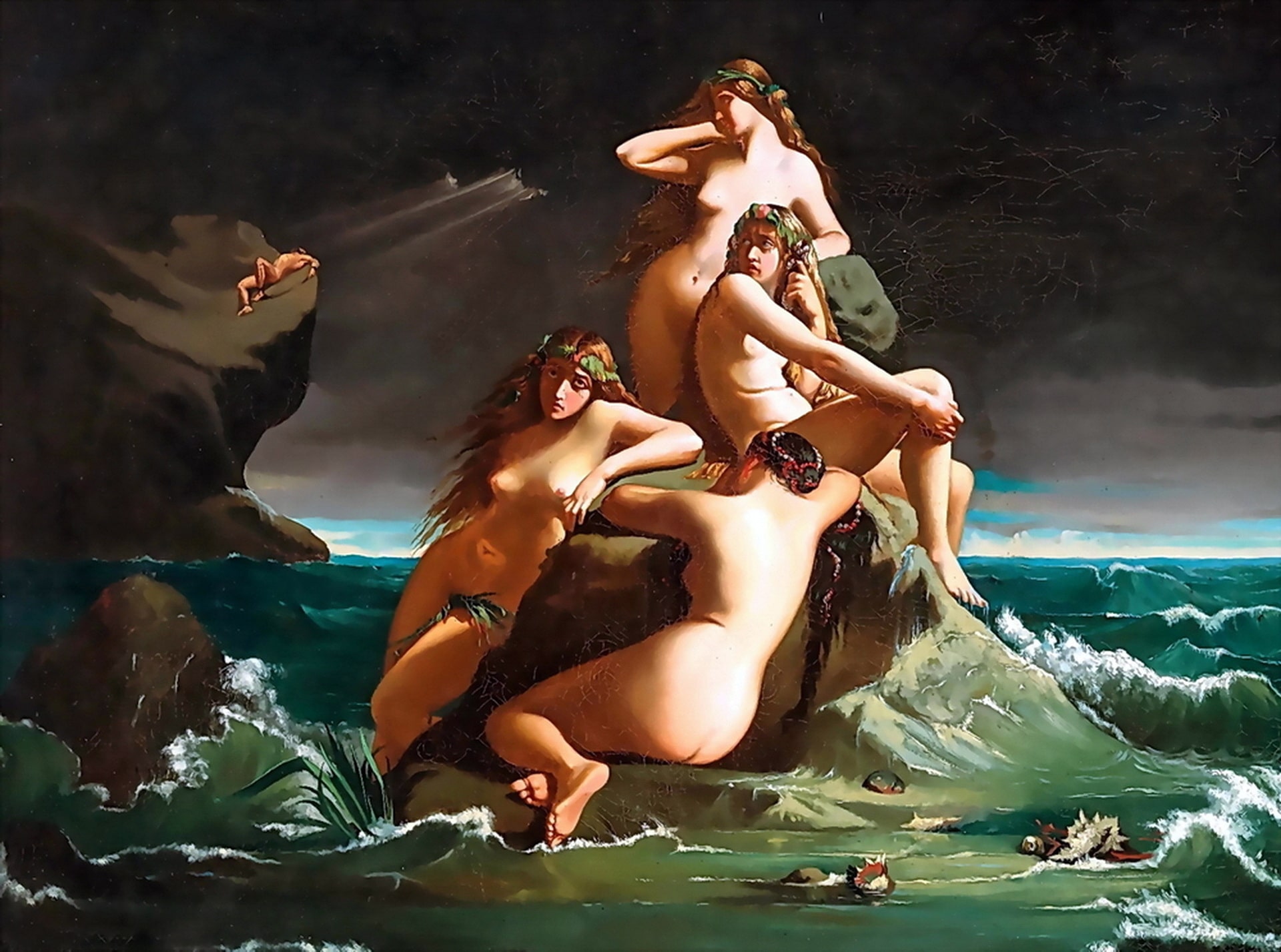
The Sirens Crying at the Bad Luck of Prometheus. Henri Lehmann. Prometheus has been chained to a rock for stealing fire and giving it to the humans. Zeus didn't like that and chose to punish Prometheus. The sirens are upset about the torture of Prometheus. |
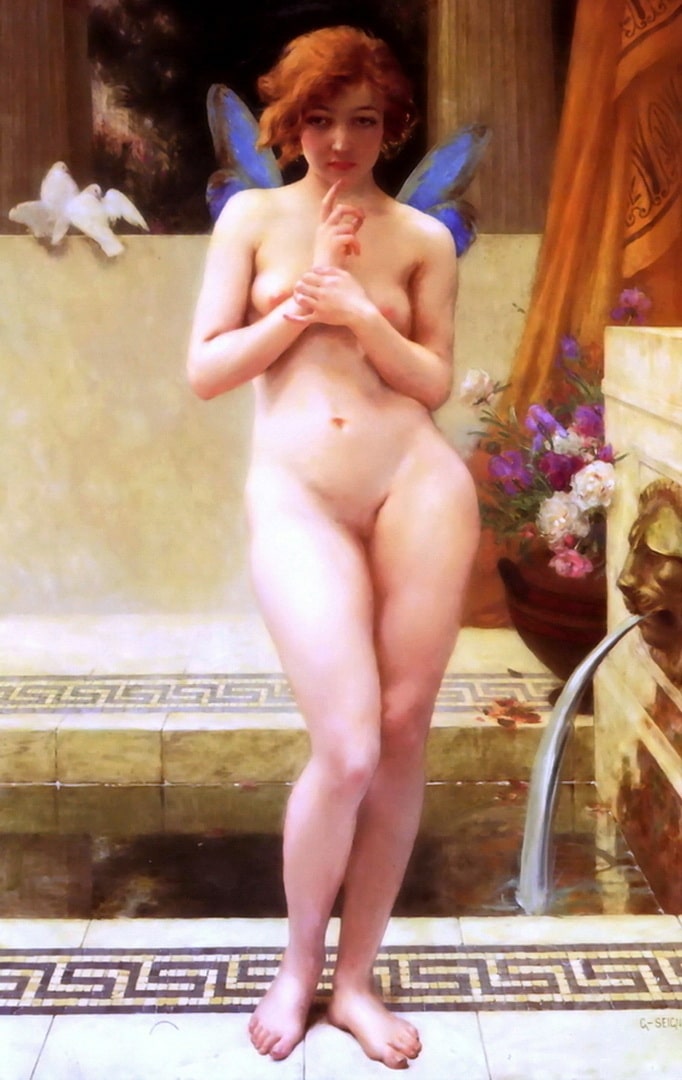
The Water Nymphe. Guillaume Seignac. A water nymph with perky breasts and naughty nipples as she stands naked next to a pool along with pretty flowers and two white doves. The nude nymph has beautiful eyes and luscious lips. All the better to make love to you with! |
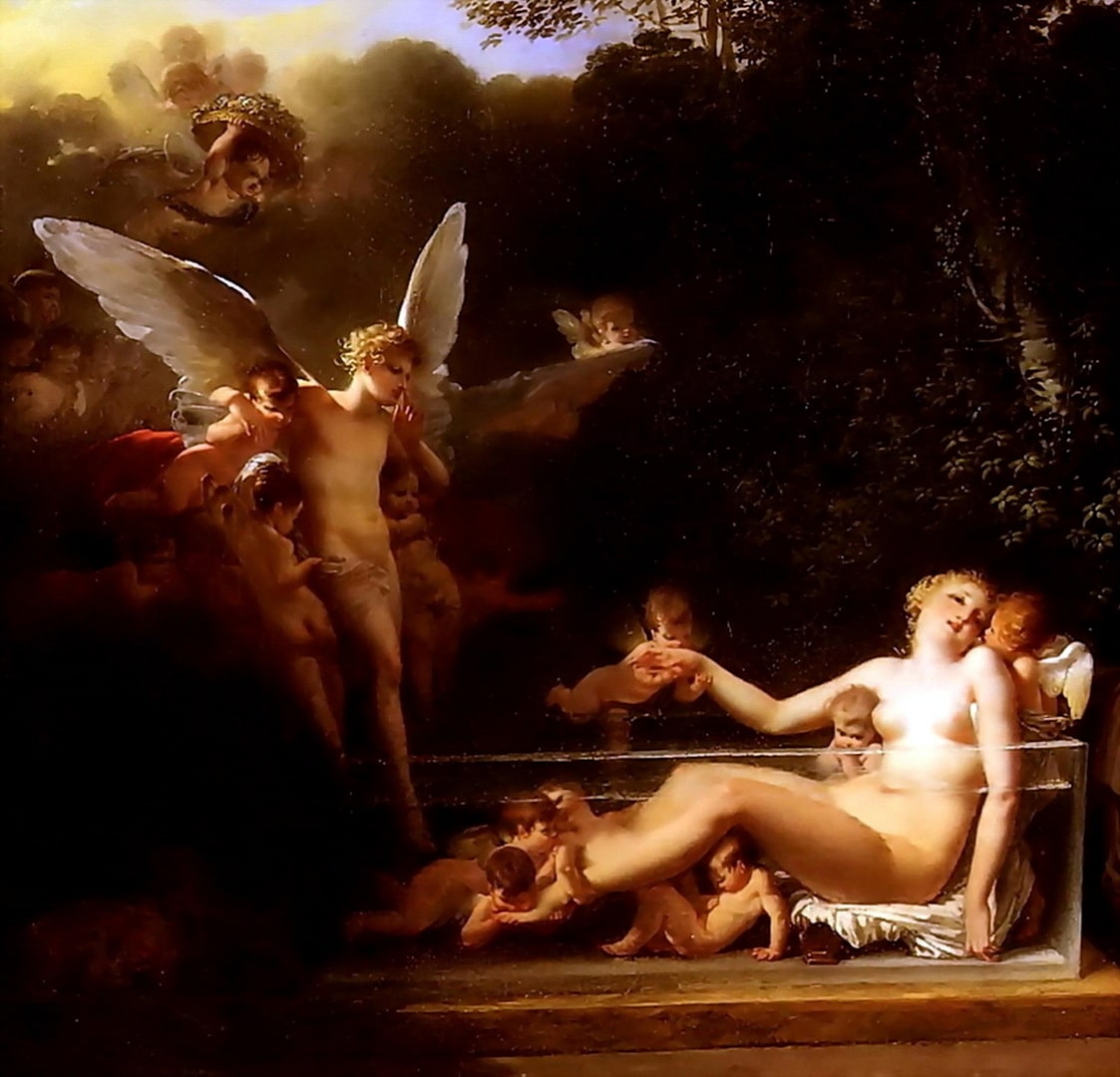
A Nymph In The Bath Surrounded By Cupids Jean-Baptiste Mallet. The erotic nymph is surrounded by Cupids. Love is in the air! Love is everywhere! |
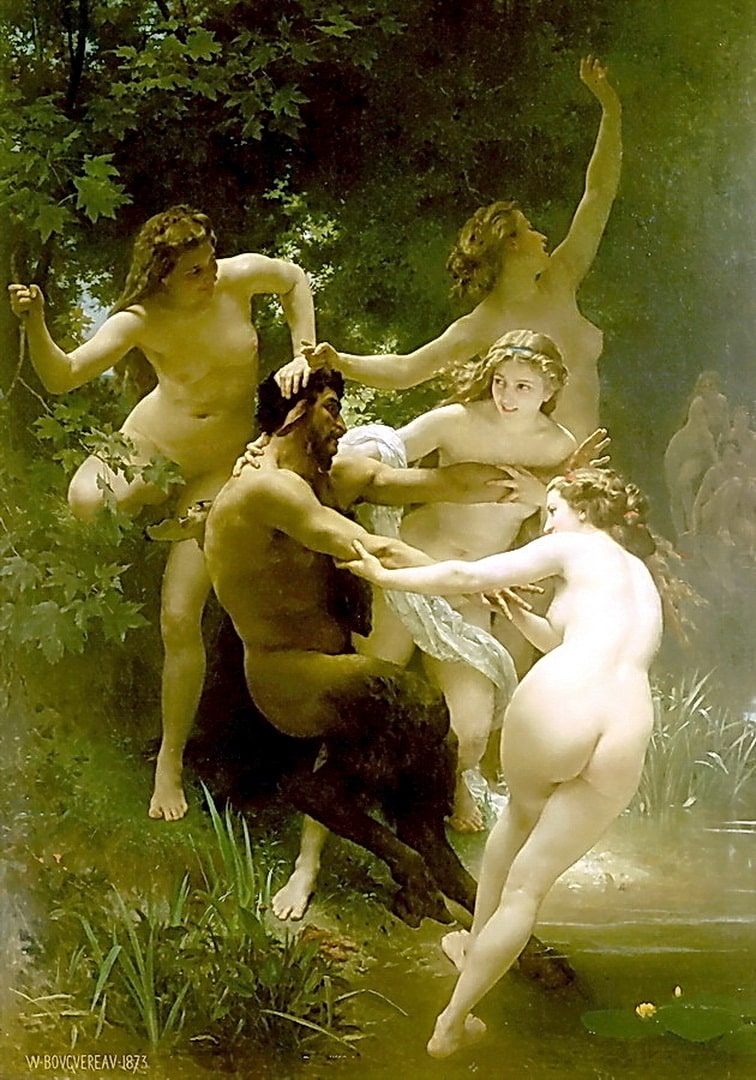
Nymphes and Satyre. William Adolphe Bouguereau. The naughty nude nymphs have caught a satyre to service all the nymphs. The nymphs are very hungry for it, and the poor satyre will have to satisfy them all! |
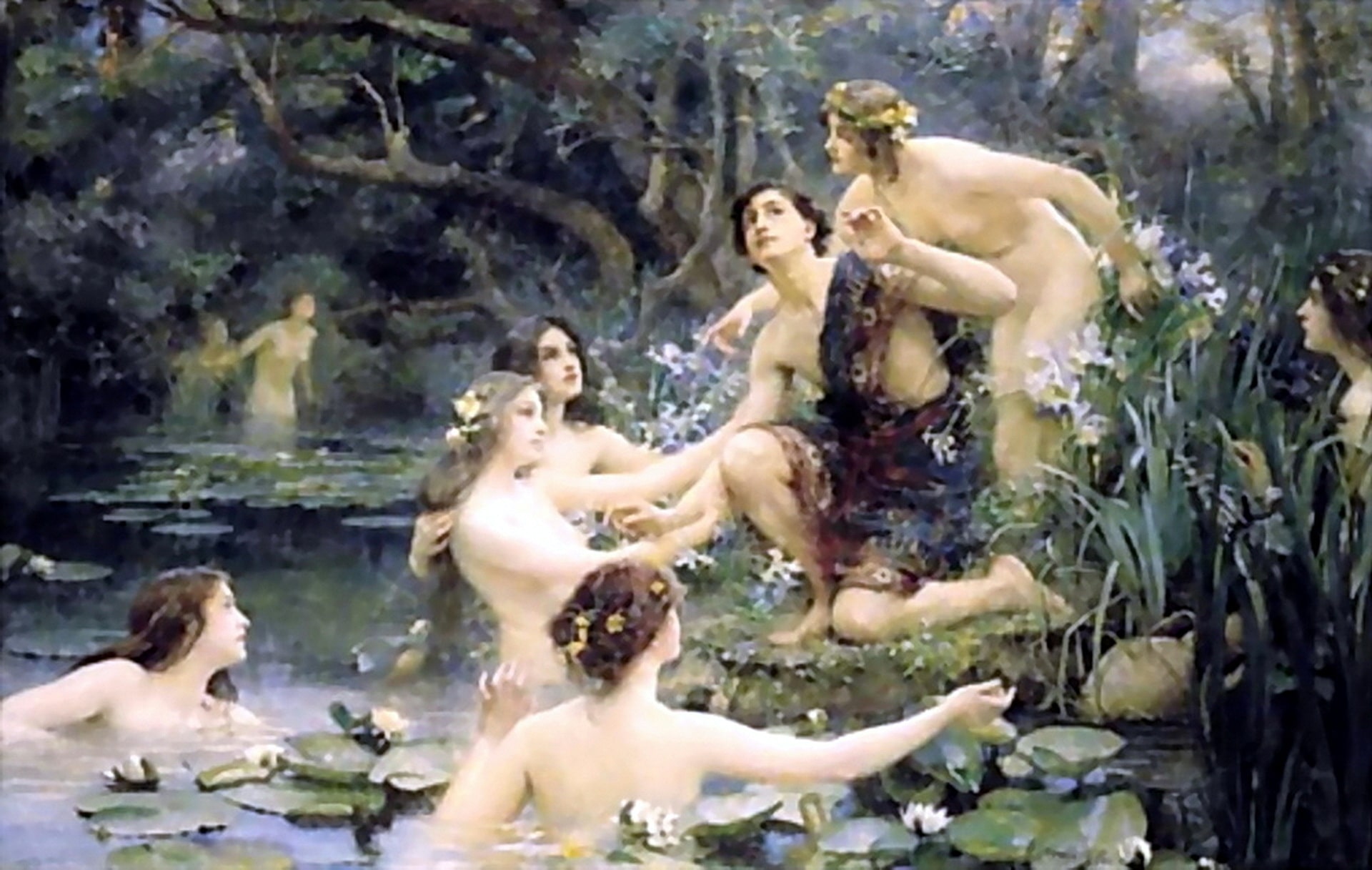
Hylas and the Water Nymphs. Henrietta R. Rae. They are out in their natural world. Nymph erotica galore! |

|
|||
|
|||
|
|||
More paintings. |
More paintings. |
||
![]() |
|||
After J. K. A. Musäus. Illustrations by Ignaz Taschner.
Printed by Christoph Reißer’s Söhne, Vienna V.
Three miles beyond Dinkelsbühl in Swabia, there once stood an old robber-baron’s castle belonging to a stalwart knight named Wackermann Uhlfinger--the very flower of fist-and-mace-wielding knighthood, and the terror of the Swabian League cities as well as of all travelers and carters who had not purchased a letter of safe-conduct from him. When Wackermann donned his cuirass and helmet, strapped on his sword, and the golden spurs clinked at his heels, he was--in keeping with the customs of his day--a rough, hard-hearted man who deemed robbery and pillaging the prerogative of the nobility; he waged feuds against the weak and, being himself a vigorous and martial man, recognized no law other than the right of the strong. Whenever the cry went up, "Uhlfinger is approaching! Wackermann is coming!" terror would grip all of Swabia; the people fled into fortified towns, and watchmen on the ramparts sounded their horns to herald the imminent danger. Yet at home, once he had laid aside his armor, this dreaded man was as gentle as a lamb, as hospitable as an Arab, a good-natured family man, and a tender husband. His wife was a gentle, loving woman--modest and virtuous--who managed their household with great diligence. She was also the mother of two daughters, whom she raised with great care to be virtuous and skilled in domestic arts. In this cloister-like seclusion, nothing disturbed her contentment save her husband’s brigandage and his enrichment through ill-gotten gains. She disapproved of these raids in her heart, and took no pleasure in the magnificent fabrics--interwoven with gold and silver--that he would gift her for splendid gowns. "What use is this rubbish to me," she often said to herself, "laden as it is with sighs and tears?" With a secret aversion, she would toss these gifts into her chest and deign to look at them no more; she took pity on the unfortunate souls who fell into Wackermann’s clutches, often securing their release through her intercession and providing them with a small sum for their journey.
At the foot of the castle hill, hidden deep within the thicket, lay a bountiful rock spring. It welled up inside a natural grotto said--according to ancient folklore--to be inhabited by a water nymph known as the “Nixe”; rumor had it that she would occasionally reveal herself whenever strange events unfolded at the castle. The noble lady would often stroll alone to this spring whenever she wished to breathe fresh air outside the gloomy castle walls during her husband’s absence, or to quietly perform acts of charity unseen by others. On one occasion, Wackermann had ridden out with his retainers to lie in wait for merchants returning from the Augsburg market, and he stayed away longer than expected. This distressed the gentle lady; she feared some misfortune had befallen her lord--that he had been slain or had fallen into enemy hands. Her heart was so heavy with worry that she could find neither rest nor peace. For days, she had been tormented by the struggle between fear and hope, often calling out to the dwarf who kept watch on the tower: "Kleinhänsel, look out! What rustles through the forest? What clatters in the valley? Where does the dust swirl? Is Wackermann trotting this way?" But Kleinhänsel would answer most dismally: "Nothing stirs in the forest, no one rides in the valley; no dust swirls, no plume waves in the wind." She continued this vigil into the night, as the evening star rose and the glowing full moon peered over the eastern mountains. Unable to bear remaining within the four walls of her chamber any longer, She threw on her rain-cloak, stole through the small gate into the beech grove, and made her way to her favorite spot--the Crystal Spring--so that she might dwell upon her sorrowful thoughts undisturbed. Tears streamed from her eyes, and her gentle mouth parted in melodic lamentations that mingled with the sound of the brook as it murmured through the grass, flowing away from the spring.
As she approached the grotto, it seemed to her that a faint shadow was hovering near the entrance; yet, because her heart was so troubled, she paid it little heed, and the initial sight prompted the fleeting thought that the incoming moonlight was conjuring up an illusory shape. As she drew nearer, the white figure seemed to stir and beckon to her with its hand. A shudder ran through her at this, but she did not retreat; she stood her ground to see clearly what it might be. She was well aware of the local legend concerning the water-sprite’s well. She now recognized the white woman as the nymph of the well, and the apparition seemed to herald a significant event for her family. What thought could be closer to her mind at that moment than the thought of her husband? She tore at her dark, curly hair and raised a loud lament: "Alas, this wretched day! Wackermann! Wackermann! You have fallen; you are cold and dead! You have made me a widow and your children orphans!" While she lamented and wrung her hands, she heard a gentle voice from within the grotto: "Mathilde, have no fear; I bring you no tidings of misfortune. Approach with confidence; I am your friend and long to converse with you." The noble lady found nothing alarming in the water-sprite’s appearance or speech, so she summoned the courage to accept the invitation; she entered the grotto, where the inhabitant kindly offered her hand, kissed her on the forehead, sat familiarly beside her, and spoke: "Welcome to my dwelling, dear mortal; your heart is as pure and clear as the water of my well, and for this reason, the invisible powers are favorably disposed toward you." I wish to reveal the destiny of your life to you--the only favor I can grant you. Your husband lives, and before the cock crows to herald the morning, he will be back in your arms. Do not fear to mourn him; the spring of your life will run dry sooner than his. Yet before that, you shall kiss a daughter who, upon the wavering scales of fate, will experience both happiness and misfortune. The stars are not unkind to her, but a hostile counter-influence will rob the orphaned child of the joy of a mother’s care.
The noble lady was deeply saddened to hear that her little daughter would be deprived of a mother's faithful care, and she burst into loud weeping. The nymph was moved by this; "Do not weep," she said, "I will act as a mother to your child when you can no longer guide her--but on the condition that you choose me as the tender maiden's godmother, so that I may have a share in her life. Bear in mind, too, that if you entrust the child to my care, she must return to me the christening coin that I shall bestow upon her." Lady Mathilde agreed to this request; the water-nymph then took a smooth stream-pebble and gave it to her, instructing her to have a faithful maidservant cast it into the well at the proper time and hour as a token of the invitation to stand as godmother. Lady Mathilde promised faithfully to carry out all these instructions, treasured every word in her heart, and returned to the castle; the nymph, meanwhile, went back into the well and vanished.
Not long after, the dwarf trumpeted joyfully from the tower, and Wackermann rode into the courtyard in high spirits with his retinue, laden with rich spoils. A year later, it came to pass that Wackermann received a challenge from a knight whom he had insulted while drinking--a man intent on a fight to the death. He diligently prepared himself and his armed men; yet as he was about to mount his horse and bid his wife farewell--as was his custom--she anxiously inquired about his plans. Contrary to her usual manner, she pressed him to reveal whom he was setting out to fight; and when he gently chided her for this unusual curiosity, she covered her face and wept bitterly. This touched the noble knight deeply, yet he did not waver; he mounted his steed and hastened to the lists, clashed fiercely with his opponent, slew him after a valiant joust, and returned home in triumph.
His virtuous wife welcomed him with open arms, caressed him affectionately, and persisted--using smooth words and sweet flattery--in trying to draw out of him the details of the adventure he had just undergone. Yet he quickly closed his heart, barred every avenue of access with the bolt of unresponsiveness, and revealed nothing to her; instead, he remarked mockingly: "Oh, Mother Eve, your daughters have not strayed far from the mold; curiosity and meddlesomeness remain the heritage of women to this very day." "Forgive me, dear husband," the clever woman replied, "but men, too, have received their fair share of Mother Eve’s inheritance. The difference is simply that a devoted wife has--and ought to have--no secrets from her husband. I would wager that if my heart were to conceal something from you, you would neither rest nor sleep until you had coaxed my secret out of me." "And I," he retorted, "give you my word that your secret will not concern me in the least; you are free to put this to the test." That was precisely the opening Mistress Mathilde had been hoping for. "Very well, then, dear sir," she said, "allow me to choose one of the godmothers to hold my newborn babe at the baptismal font. I have taken a friend into my heart--one unknown to you--and it is my wish that you never press me to reveal who she is, whence she comes, or where she dwells. If you pledge this upon your knightly honor and keep your word, I shall concede the wager and freely admit that the male spirit triumphs over female frailty." Wackermann gave his wife his solemn promise, and she rejoiced deeply at the success of her cunning ruse. Wackermann rode out in high spirits to invite his neighbors and friends to stand as godparents. They all gathered on the appointed day, and when the wife heard the sound of carriages, the neighing of horses, and the commotion of the household staff, she summoned a trusted maidservant and said: "Take this stream-pebble, cast it silently behind you into the water-sprite’s well, and make haste to carry out what you have been ordered to do." The maid obeyed the command, and before she returned, an unknown lady entered the reception room; she bowed modestly to the assembled ladies and gentlemen, and when the infant was brought forward and the officiant stepped up to the font, she took her place at the head of the godparents. Everyone respectfully made way for her as a stranger, and she was the first to hold the child in her arms over the baptismal font. All eyes were fixed upon her. She was so beautiful, so demure, and yet so magnificently attired in a flowing gown of water-blue silk with slashed sleeves lined with white satin; over this, she was adorned with jewels and pearls as lavishly as the Holy Virgin of Loreto on a high feast day. A brilliant sapphire held the sheer veil in place--a veil that floated down in wispy clouds from the crown of her intricately coiled hair, past her shoulders, all the way to her heels--yet the hem of the veil was wet, as if it had been dragged through water. The unexpected appearance of the stranger lady had so distracted the godparents during the solemn rite that they forgot to give the child a name; consequently, the priest baptized her Mathilde, after her mother. Once the baptismal rite was concluded, little Mathilde was brought back to the spot, and all the godparents followed to offer their congratulations and bestow the traditional christening gift upon the infant. The mother appeared somewhat taken aback at the sight of the stranger--presumably out of astonishment that the water-sprite had so faithfully kept her word. She cast a furtive glance at her husband, who responded with an inscrutable smile while otherwise appearing to take no further notice of the stranger. The christening gift now claimed the recipient's attention; a golden shower poured down from generous hands upon the child. Finally, the unknown woman approached with her christening gift, defying the expectations of all the other godparents. They anticipated a jewel or a keepsake of great value from the elegant lady--especially when she drew out a silk handkerchief and unfolded it with great deliberation--but she had wrapped nothing inside it save for a pomander turned from wood; she laid this solemnly upon the child’s cradle, kissed the mother kindly on the forehead, and left the room. A murmur of hushed whispers arose among the onlookers regarding this paltry gift, soon erupting into derisive laughter. There was no shortage of spiteful remarks; yet, as the knight and his lady maintained a profound silence, the inquisitive and the gossips were left with nothing but idle speculation to feast upon. The mysterious woman did not reappear, and no one could say whither she had vanished. Wackermann was secretly tormented by a desire to discover the identity of the stranger--whom everyone called "the Lady with the Wet Veil," since no one knew her name--but he was held back by a knightly reluctance to betray a weakness and by the inviolability of his pledged word. He resolved to coax the secret from her eventually. Yet in this, he miscalculated; Lady Mathilde knew how to guard her tongue, keeping the insoluble riddle as carefully in her heart as the pomander in her jewel box. Before the young lady had outgrown her leading strings, the nymph’s prophecy regarding the good mother came to pass; she fell ill suddenly and died, having no time to think of the musk-apple or to dispose of it for little Mathilde’s benefit as the water-sprite had directed. Her husband was away at the time, attending a tournament in Augsburg, and was returning home crowned with a knightly commendation from Emperor Frederick. When the dwarf in the tower saw his master approaching from afar, he blew his horn as was his custom to announce his arrival to the household staff; yet he did not sound a joyful note as usual, but instead blared a mournful melody. This pierced the knight’s heart and troubled his soul. "What sound," he said, "rings in my ears? Do you hear it, squires? Is that not the croak of the crow and a dirge for the dead? Little Hansel heralds no good news." The squires were all dismayed and looked sadly at their master; one of them spoke up, saying: "That is the cry of the bird Kreideweiß--may God avert misfortune--there is a corpse in the house!" Then Wackermann spurred his stallion and galloped across the open field, sending sparks flying. The drawbridge was lowered; he gazed anxiously into the castle courtyard and, to his sorrow, beheld the sign of death displayed before his door--an unlit lantern adorned with a fluttering black veil, and all the window shutters closed. From within, he heard the sobbing and wailing of the servants, for Lady Mathilde had just been laid out for burial. At the head of the coffin sat the two elder daughters, draped in mourning cloth and veils, weeping countless tears for their departed mother. At the foot of the coffin sat the youngest, the darling daughter; As yet unable to comprehend her loss, she playfully and with childish unconcern plucked apart the remnants of the flowers adorning the corpse. This poignant sight overcame Wackermann’s manly fortitude; he wept and lamented aloud, threw himself upon the ice-cold body, bathed the pale cheeks with his tears, pressed his trembling mouth against the lifeless lips, and gave free rein to all the anguish in his heart. Afterward, he hung up his weapons in the armory, sat by the coffin--clad in a broad-brimmed hat and a black mourning cloak--mourning his departed wife and paying her his final respects with solemn funeral rites.
[14] Yet, since--as a great man once remarked--the most intense pains are always the briefest, the deeply grieving widower soon forgot his heartache and replaced his lost spouse with a second wife, who was the very antithesis of the pious, modest Mathilde. Consequently, the management of the household took on a different character; the young woman loved splendor and extravagance, and behaved haughtily and imperiously toward the servants; there was no end to the feasting and banqueting. Little Mathilde was placed under the care of a nursemaid and moved to a remote little room, where she was kept well out of sight of the vain woman, who had no desire to concern herself with domestic cares. Her lavish spending grew to such an extent that the proceeds from the knight’s practice of "fist-law"--tireless though he was in this pursuit--no longer sufficed to cover the costs; she often found herself compelled to plunder the estate of her predecessor, turning the rich fabrics into cash or borrowing money against them. One day, while rummaging through drawers and chests in search of something valuable, she stumbled upon a secret compartment in a vanity cabinet and, to her great delight, discovered Lady Mathilde’s jewel box. The sparkling gems--diamond rings, earrings, bracelets, apron clasps, and other ornaments--captivated her greedy eyes. She examined everything closely, inspecting piece by piece, and calculated in her mind the profit this magnificent find would yield. Among these treasures, her eye fell upon the wooden pomander. For a long time, she did not know what to make of it; she tried to unscrew it, but the wood had swollen shut. She weighed it in her hand and found it as light as a hollow nut; That is why she thought it was just some spare ring case, and since she didn't know what to do with it, she threw it out the window as an object of no value whatsoever.
As it happened, little Mathilde was sitting down in the kennel garden, playing with her doll. When she saw the wooden ball rolling along the sand, she dropped her doll and reached for the new toy with childish eagerness, taking just as much delight in this find as her mother had in hers. She amused herself with the plaything for many days, never letting it out of her hands. One fine summer day, the nursemaid felt a desire to enjoy the cool freshness of the rock spring with her young charge. Around vesper time, the child asked for her honey-roll, which the nursemaid had forgotten to bring along. Not yet wishing to return, and wanting to keep the little girl happy, she went into the bushes to pick a handful of raspberries. Meanwhile, the child played with the pomander, tossing it back and forth like a ball, until one throw went awry and--quite literally--her childish joy fell into the well. Instantly, a young lady appeared, as beautiful as an angel and as gracious as a Grace. Startled, the child thought she was seeing her stepmother, who always scolded and beat her whenever she came into sight. But the nymph caressed her with gentle words: "Fear nothing, dear little one; I am your godmother--come to me. Look, here is the toy that fell into the well." With this, she coaxed the child to her, took her onto her lap, pressed her tenderly to her bosom, cuddled and kissed little Mathilde, and moistened the child's face with tears. "Poor orphan," she said, "I promised to take a mother's place for you, and I shall keep that promise. Visit me often; you will always find me at this grotto whenever you drop a stone into the well." "Keep this pomander safe and do not play with it again, lest you lose it; one day it will grant you three wishes. When you grow older, I will tell you more; for now, you cannot grasp it." She gave her further good counsel befitting the child's age and bade her keep silent; the nurse returned, and the nymph vanished. Little Mathilde had the good sense not to mention anything about her godmother to the nurse; upon returning home, she asked for a needle and thread and carefully sewed the musk-apple into the lining of her dress. Her thoughts were fixed entirely on the Mermaid’s Well; whenever the weather permitted, she would suggest a walk there to her guardian. Since the guardian could deny the charming girl nothing--and perhaps because this inclination seemed innate, given that the grotto had been her mother’s favorite haunt--she readily granted the child’s wish. Mathilde would then always find a pretext to send the nurse away; the moment the woman turned her back, the stone would drop into the water, bringing the clever girl the company of her lovely godmother. After a few years, the little orphan blossomed into young womanhood; she lived quietly among the household staff, sitting in her chamber and attending to domestic chores, yet--once the day’s work was done--she found ample compensation for the lively pleasures she lacked in the company of the nymph at the well. The nymph was not merely her companion and friend but also her teacher, instructing the young lady in all manner of feminine arts and molding her character entirely after the example of her virtuous mother. One day, the nymph seemed to redouble her affection for the charming Mathilde; she clasped her in her arms, let her head rest upon the young lady’s shoulders, and was so filled with melancholy and sorrow that the maiden joined in her mood and could not refrain from letting a few tears fall upon the hand of her godmother--a hand she was, at that moment, silently pressing to her lips. This gentle sympathy made the nymph even more sorrowful; "Child," she said in a mournful voice, "you weep without knowing why, yet your tears are a premonition of your destiny. A great change awaits the house upon the hill; before the reaper whets his scythe and the wind blows across the wheat-stubble, it will stand desolate and waste. When the castle maidens go out at dusk to draw water from my well and return with empty buckets, know that misfortune is approaching. Guard the musk-apple well--it shall grant you three wishes--and do not squander them! Fare you well; we shall not meet again in this place." Thereupon, she instructed the maiden in certain magical properties of the apple--to be used in times of need--and wept and sobbed so bitterly as she departed that words failed her, and she was never seen again.
Around the time of the wheat harvest, the water-bearers returned to the castle one evening with empty pitchers--pale, terrified, and trembling in every limb as if shaken by the chills of a fever--reporting that the White Lady was sitting by the well, wringing her hands and wailing in a manner that boded ill. The soldiers and men-at-arms mocked this, dismissing it as an illusion and old wives' tales. Driven by curiosity, some ventured out to investigate the truth of the matter; they saw the apparition themselves, yet mustered the courage to approach the well. By the time they arrived, the figure had vanished, giving rise to all manner of speculation and interpretation; yet no one hit upon the true meaning--known only to Fräulein Mathilde, though she kept it to herself, for the nymph had sworn her to silence. She sat alone and despondent in her chamber, filled with dread and anticipation of what was to come.
[19] Wackermann Uhlfinger could never rob and plunder enough to satisfy his extravagant wife; when he was not out waylaying travelers, she ensured he lived in luxury day after day, summoning his drinking companions and keeping him in a whirl of pleasure so that he never roused himself to notice the ruin of his household. Whenever ready cash or provisions ran low, the wagons of Jakob Fugger or the rich shipments of Venetian merchants provided fresh spoils. Weary of these depredations--and since admonitions and warnings had proved fruitless--the General Congress of the Swabian League resolved upon Uhlfinger’s downfall. Before he realized the gravity of the threat, the banners of the League’s cities were already flying before the gates of his mountain stronghold, leaving him no choice but to sell his life dearly. Bombards and blunderbusses shook the ramparts, and crossbowmen on both sides did their utmost; a hail of bolts and arrows filled the air, and one of them--loosed in an ill-fated moment when Wackermann’s guardian spirit had forsaken him--pierced the visor of his helmet and drove deep into his brain, causing him to reel and collapse instantly into the cold slumber of death. The fall of their commander threw the garrison into great consternation; the faint-hearted hoisted a white flag, only for the brave to tear it down from the tower again. Perceiving the disorder and confusion reigning within the castle, the besiegers launched an assault, scaled the walls, seized the gate, lowered the drawbridge, and put everyone they encountered to the sword. Even the woman who had caused the calamity--that spendthrift creature--was slain along with all her children by the furious soldiery, who were as embittered against the predatory nobility as the insurgents in the Swabian Peasants' War would later be. The castle was thoroughly looted, set ablaze, and razed to the ground.
The Nymph of the Fountain. Continued on the bottom of the next page. |
![]() |
©7th June 2024 sexyartforwomen.
Nymphs and Sirens love lots of sex, morning, noon and night! These erotic nymphs just can't get enough sex!
Find Female Erotica and Feminine Beauty. Hylas and the Nymphs.