




Female Erotica and Feminine Beauty.

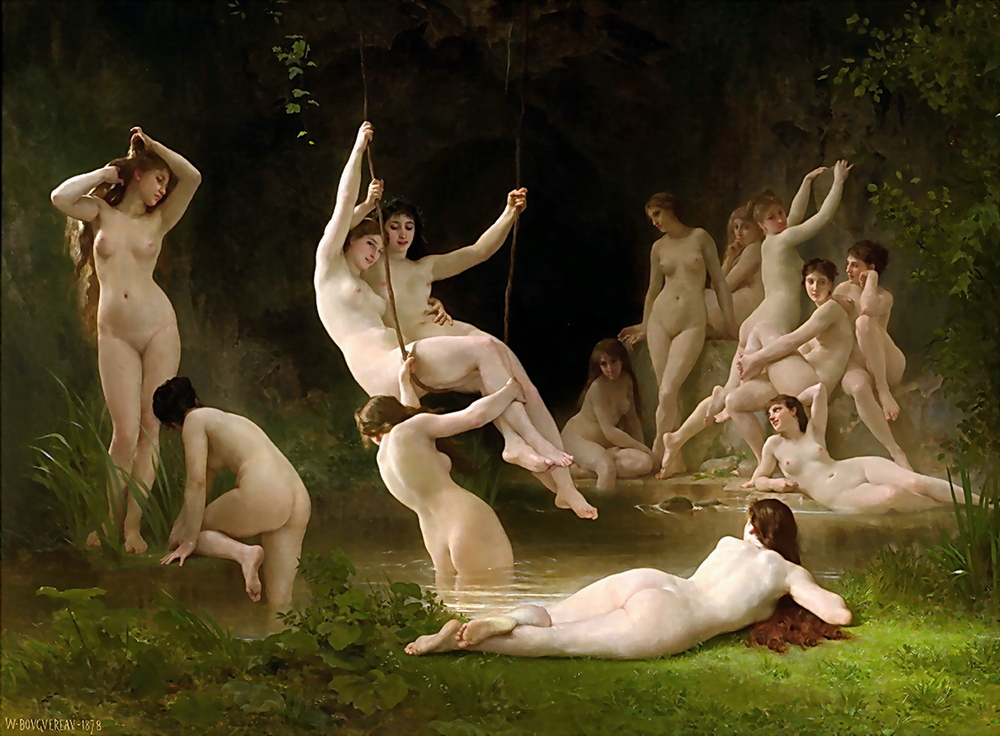
The Nymphee. William Adolphe Bouguereau. A gathering of voluptuous
erotic nymphs around a
pond. They desire sex and
lots of sex. These are real |

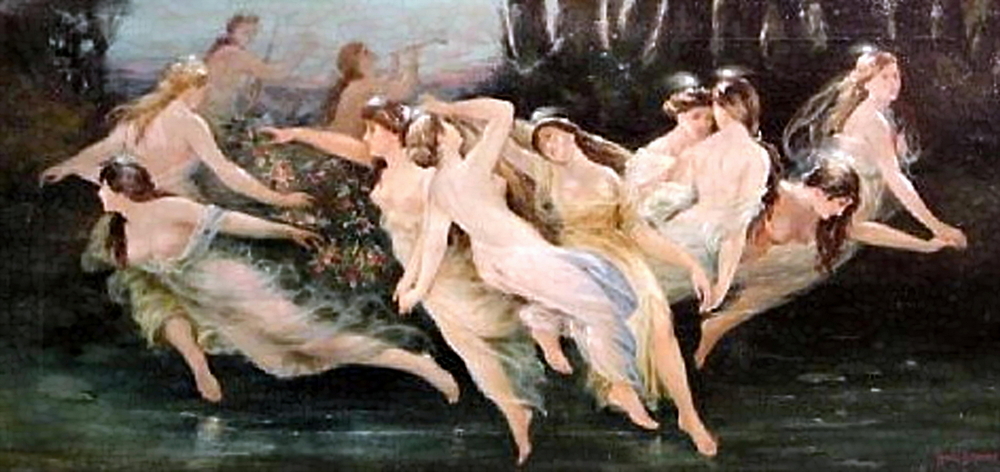
Dancing Nymphs. Louis Frederick Berneke. The nude erotic nymphs are dancing their lustful hearts away. They are always on the lookout for sexual pleasure. But dancing takes their mind off things for a short time. To say they like anything of a sexual nature would be a huge understatement. So watch out or you could be next! Runaway! There are sea nymphs, water nymphs and tree nymphs. Just to name a few types of nymphs. Tree nymphs can drop out of trees on you. Just like the drop bears in Australia! |

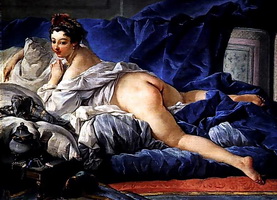
Nymph Bathing. Francois Boucher. A nymph has been bathing in a pond and now she is drying her feet. She has a pretty face, nice bosoms and lovely legs. All the better to love you with! |

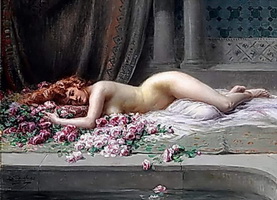
Nymphe. Luis Ricardo Falero. A nude nymph with golden hair is swimming across a lake. The beautiful lady with lovely eyes and luscious lips is looking for more love. |
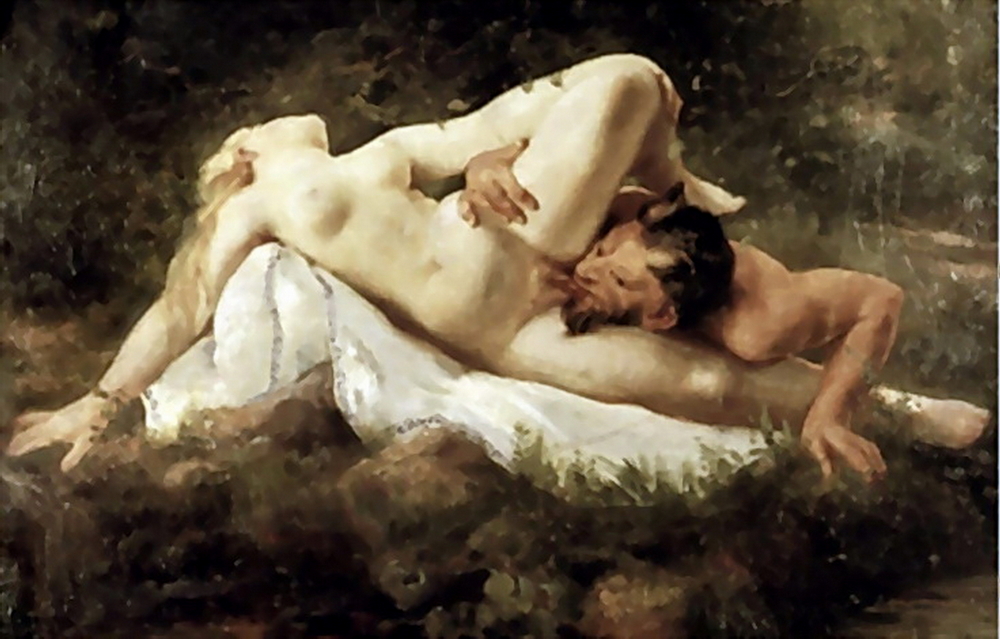
Satyr Satisfies Nymph.
Arthur Fischer.
After finishing servicing
the nymph with his giant
member she is still hungry
for more pleasure so the
satyr gives her more
satisfaction by tonguing
her clitoris. Watch out the fun busters don't find
out about this!

Buy sex toys for your tunnel of Love!

Spring. Charles Joseph Frederic Soulacroix. Four erotic nymphs celebrating the arrival of Spring. The naked ladies are dancing around showing off their hot bodies. They have lovely golden red hair and happy smiles on their faces.
|
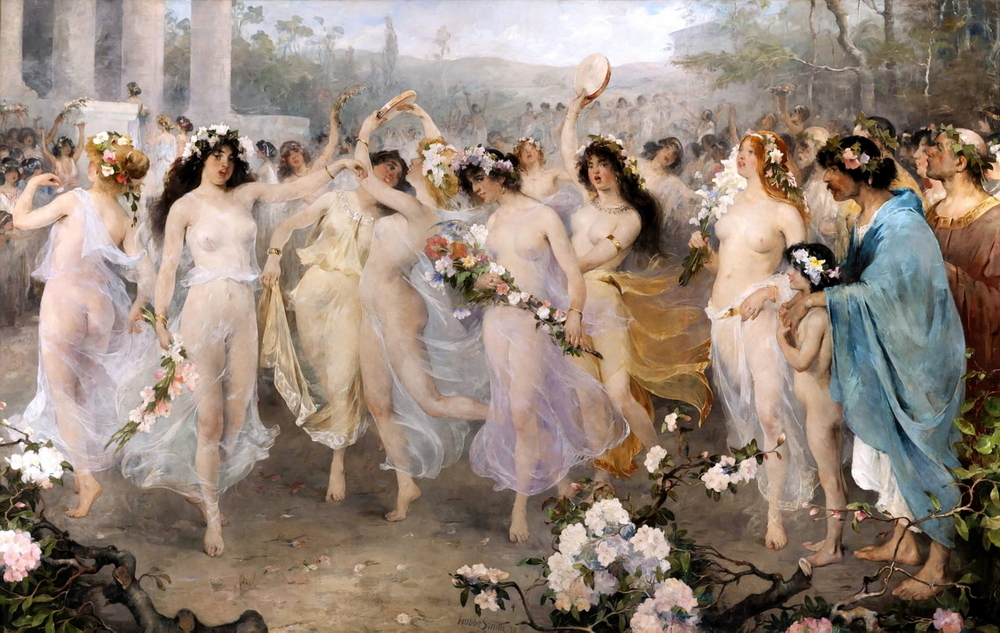
Floralia. Hobbe Smith. Floralia. The goddess of flowers, fertility, and vegetation. A nude festival full of promiscuous women and girls full of debauchery and lustful intent. |
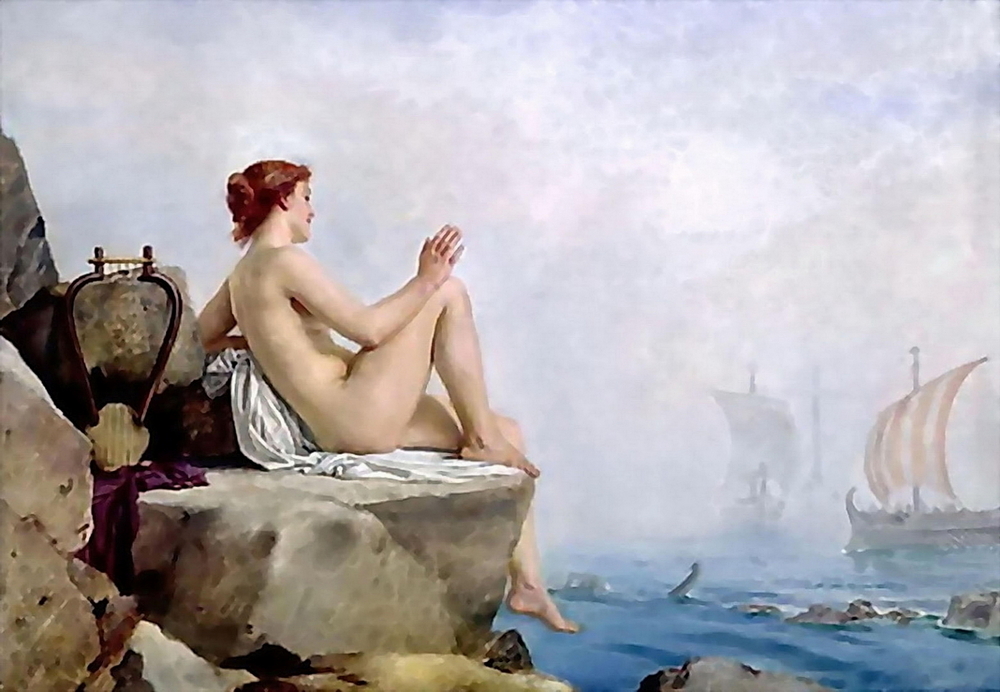
The Siren. Edward Armitage. A saucy siren is luring the sailors towards her. She is using her sexy naked body to attract the sex starved sailors on to the rocks below her.
|
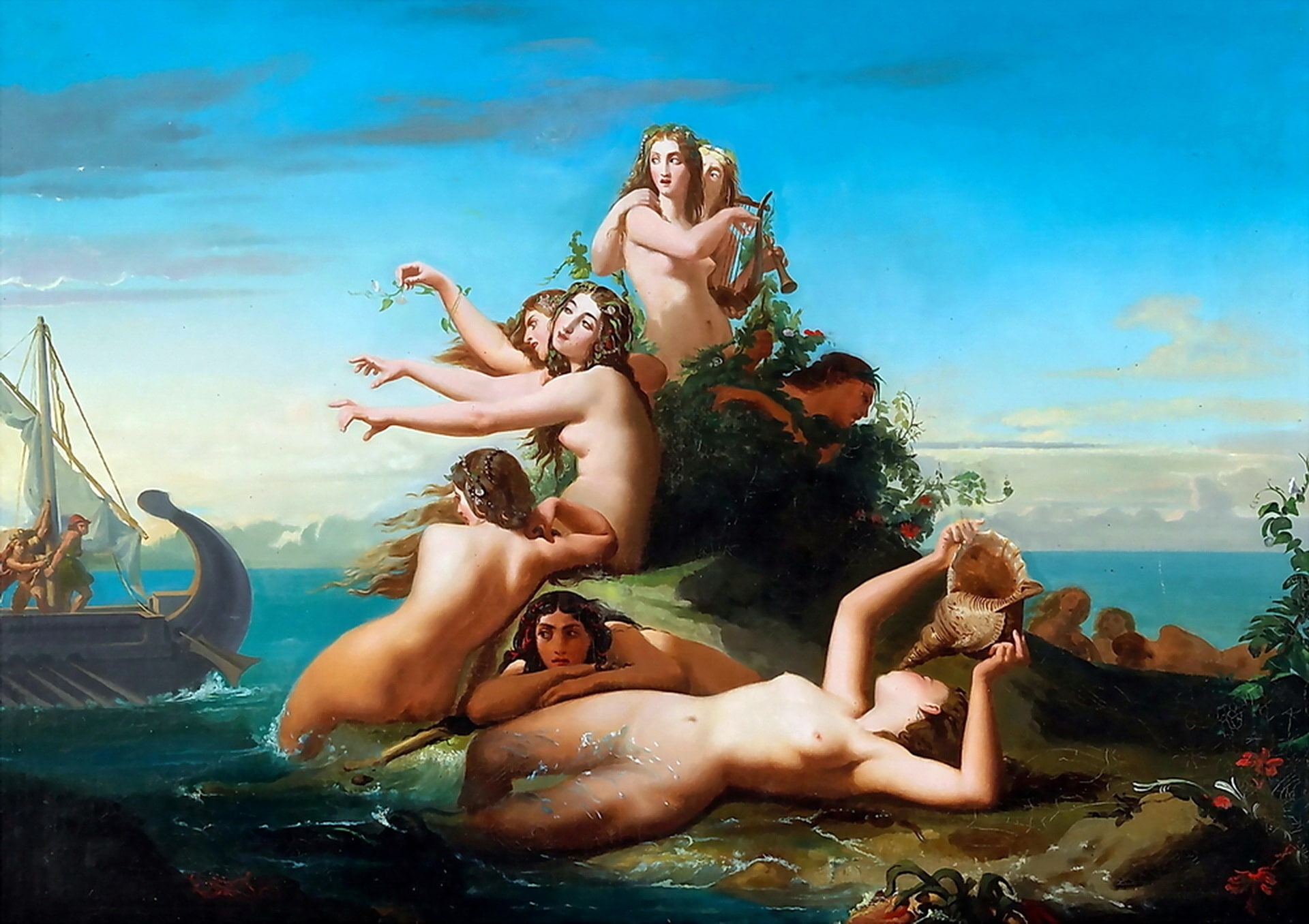
The Sirens Call for Odysseus, also known as Ulysses. Henri Lehmann. The sirens are trying to lead Odysseus astray with their lustful nude bodies. These naughty girls are using their erotic power over men. They are singing their sensuous songs of desire to catch some attention. |

The Water Nymph. Herbert James Draper. A nude Water Nymph
sitting in the middle of a
pond on pretty white
flowers. She is showing off
her voluptuous breasts
and sexy naked body to |

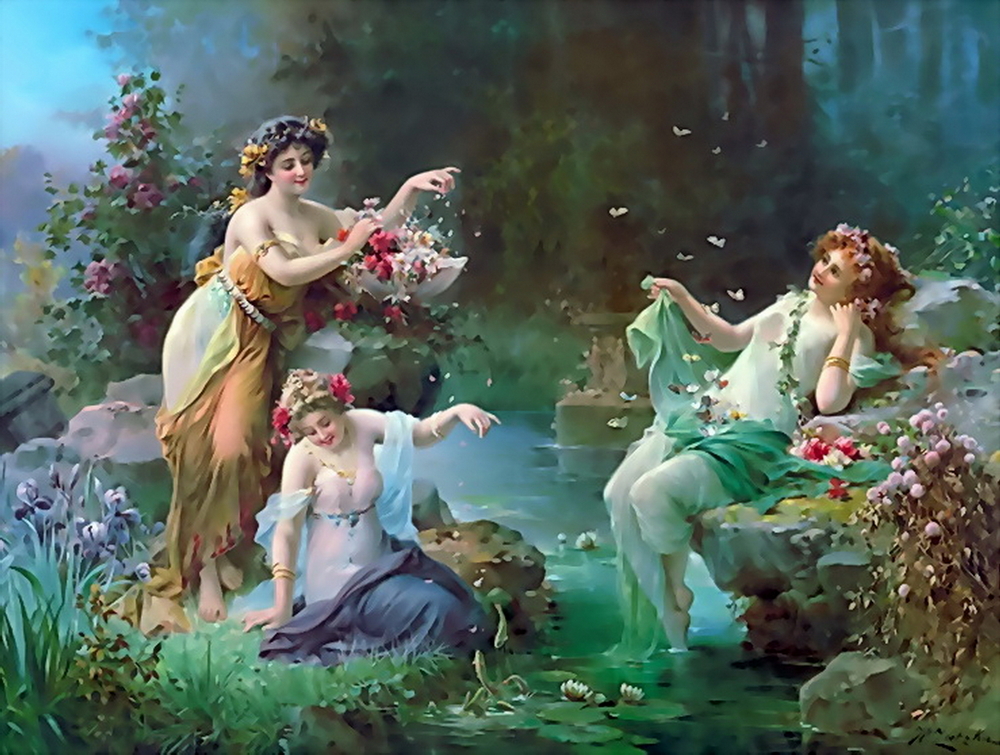
Three Nymphs by the Pond. A painting by J.P. Zoutzka. Three very erotic nymphs playing beside a pond in sensuous dresses. The alluring ladies are surrounded by pretty flowers. |
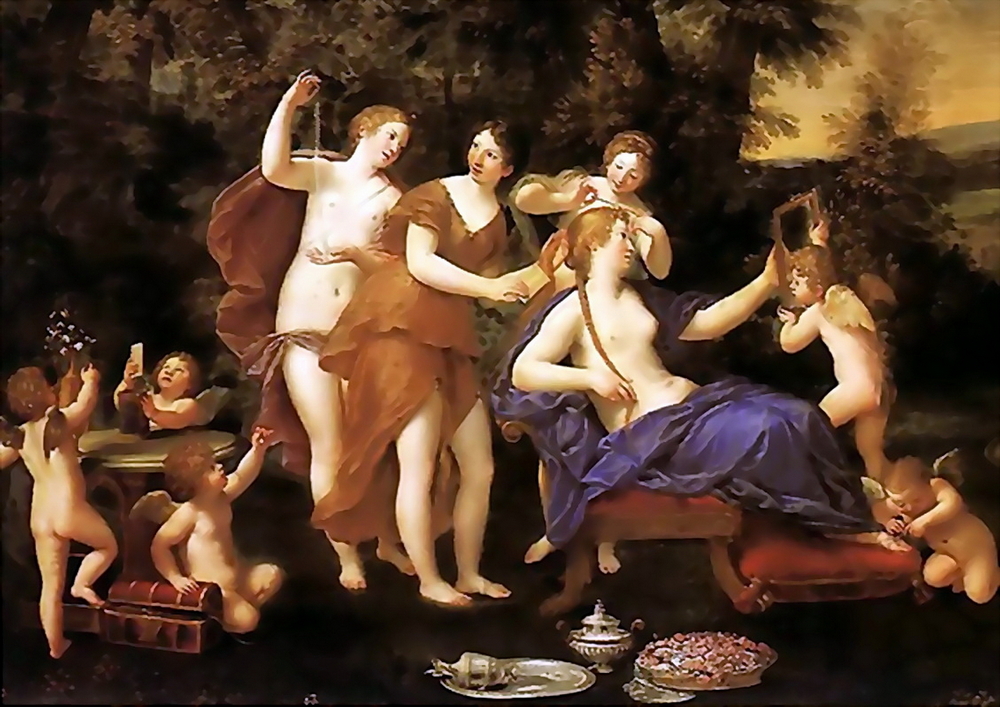
Venus Attended by Nymphs
and Cupids. Francesco Albani. The Goddess of Love is being
looked after by nude erotic
nymphs and cupids. Her
lovely golden hair reaches
down to her waist as |
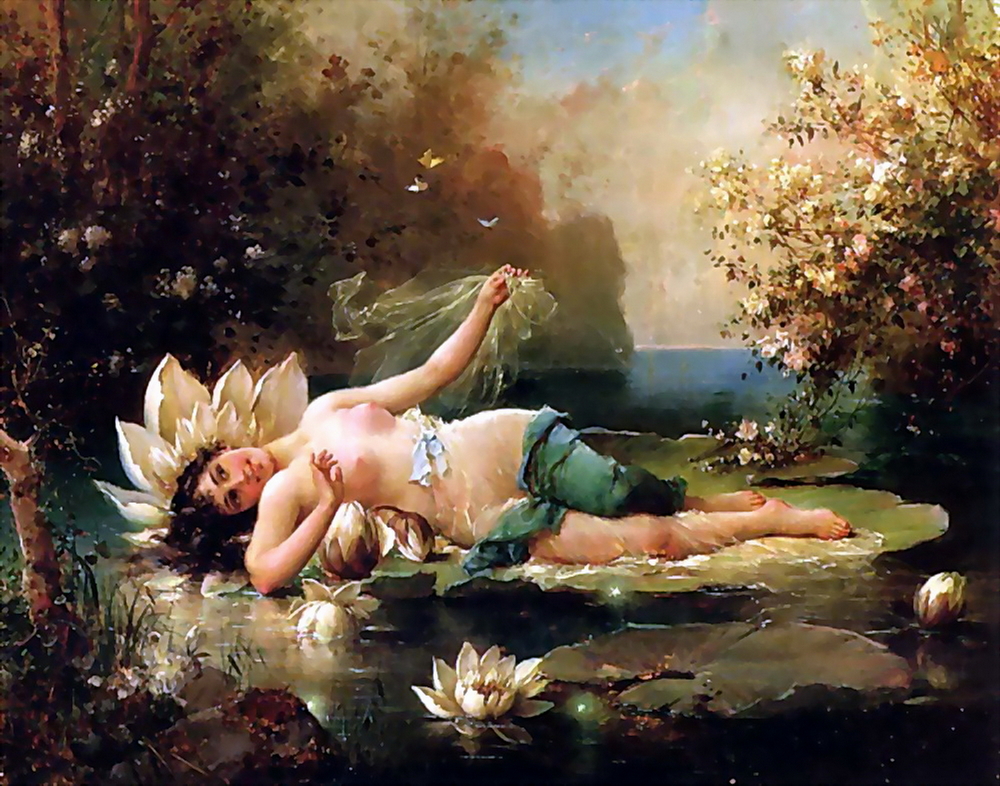
Water Idyll. Hans Zatzka. A seductive water nymph is lying on a water lily showing off her buxom boobs. The lustful girl has pretty eyes and a green cloth and a sheer garment covering her sexy naked body. |

Water Nymph. Otto
Theodore Gustav Lingner. An attractive water nymph
is standing beside a pond
with the moonlight shining
on her sensuous bosoms. Her
elegant naked body is shown |
More paintings |
||
Nymph of the Fountain.
Before daybreak, while the morning dew was still gathering in small droplets on the grass, she continued her uncertain pilgrimage and soon arrived at a village, where a kind-hearted peasant woman took her in and refreshed her with a morsel of bread and a bowl of milk. She exchanged her garments for peasant clothes with this woman and joined a caravan of teamsters who were heading to Augsburg. In her wretched, destitute state, she had no choice but to seek employment as a maidservant; yet, as it was not the usual season for hiring, she could find no master for a long time. Count Konrad von Schwabeck--a German Knight of the Cross, as well as the secular protector and advocate of the Diocese of Augsburg--owned a commandery there, where he was accustomed to staying during the winter. In his absence, a housekeeper named Frau Gertrud managed the household. This woman was notorious throughout the city as a shrew; no servant could endure her, for she would storm and rage through the house like a poltergeist. The maids feared the rattling of her keys just as children feared the bogeyman; the slightest oversight--or even merely her foul moods--would result in blows to heads or the smashing of pots; in short, if one wished to describe a wicked woman, one would say she was as terrible as Frau Trude of the commandery. One day, she exercised her disciplinary authority so violently that all the servants fled; it was then that gentle Mathilde arrived and offered her services. To conceal her noble bearing, she had padded one shoulder to make herself appear deformed; a broad headscarf hid her silky blonde hair; and she had smeared soot over her face and hands to simulate a swarthy, Gypsy-like complexion. As she announced her arrival and pulled the door-bell, Frau Gertrud stuck her head out of the window; catching sight of the strange figure, she took her for a beggar and called down: "This is no charity office; go to the Fuggerei--that’s where they hand out alms!" and hastily slammed the window shut. Fräulein Mathilde was not deterred; she kept ringing until the woman in charge reappeared, intending to meet such importunity with a torrent of scolding. But before the woman could open her toothless mouth, the young lady explained the nature of her request. "Who are you," asked Gertrud, "and what can you do?" The disguised maiden replied:
"I am an orphan, Mathilde by name; I can press and smooth, sew and spin, embroider and knit, chop and pound, roast and cook; I am skilled of hand, and nimble and deft." When the housekeeper heard this little rhyme and learned that the nut-brown girl possessed so many fine talents, she opened the door, gave her the hiring fee, and took her into the kitchen. She attended to her duties so faithfully that Mistress Gertrud quite lost the habit of hurling pots at targets. Though she remained stern and surly, finding fault with everything and insisting she knew best, the maidservant never once argued back; instead, through gentleness and forbearance, she deflected the outbursts of the woman's black bile. Gertrud became more bearable and improved more than she had in years--proof that pious servants also foster good governance, fair weather, and masters who are both godly and faithful. Around the time of the first snowfall, the mistress of the house had the entire dwelling swept and cleaned, the windows washed, the curtains hung, and everything prepared for the arrival of her lord; he arrived at the onset of winter, surrounded by a colorful retinue of servants and a great throng of horses and hunting dogs. Mathilde paid little heed to the lord's arrival; her kitchen work had increased to such an extent that she took no time to look out for him. By chance, however, she encountered him in the courtyard one morning as she was drawing water. His gleaming eye, his cheerful countenance, the air of well-being and abundance about him, his wavy, lightly curled hair--partially hidden beneath the shadowing ostrich plumes of a hat pulled low over his brow in a masculine fashion--and his firm stride and noble bearing pleased her greatly. For the first time, she now felt the vast gulf between the station in life into which an unhappy fate had cast her and the one into which she had been born; this realization weighed upon her more heavily than the heavy bucket of water. She returned to the kitchen, lost in thought, and for the first time oversalted all the broths--earning herself a harsh reprimand from the housekeeper.
Count Konrad seemed to live solely for pleasure; he missed no festivity or merry banquet in the wealthy city, which trade with the Venetians had made opulent. Now there would be a tilting match or a joust at the lists, then a change of the town council or some other splendid celebration; nor was there any lack of public round dances at the town hall, in the market square, and throughout the streets, where noblemen bestowed gold rings and silk scarves upon the daughters of burghers and engaged in playful banter. When the Carnival revelries began, the frenzy of joy seemed to reach its peak. Fräulein Mathilde took no part in any of this; she sat in the smoky kitchen, weeping until her longing eyes were sore, and lamented the waywardness of Fortune--which showered its favorites with the joys of life in torrents, yet begrudged the unfortunate even a single happy moment. She still possessed the musk-apple given to her by the Water-Nixie, which was to grant her three wishes. She had never felt the desire to open it and test the power within; now, however, the thought occurred to her to make the first attempt. To honor Emperor Frederick upon the birth of Prince Max, the citizens of Augsburg had arranged a magnificent banquet--scheduled to last three days--to which they had invited many prelates, counts, and lords from the surrounding region. Each day, jousting contests were held for a prize; in the evenings, the fairest maidens were escorted to the town hall to dance with the noble knights, and the festivities continued until the break of dawn. Knight Konrad did not fail to attend this celebration. Mathilde resolved to embark upon an adventure on this occasion. After she had finished her work in the kitchen and all was quiet in the house, she went to her room, washed the sooty grime from her skin with fine soap, and let lilies and roses bloom upon her complexion. Then she took the musk-apple in her hand and wished for a new dress--the most magnificent and splendid one imaginable--complete with every accessory. She opened the lid, and out poured a length of silk fabric; it stretched and spread, cascading down into her lap like a rushing stream. When she examined it closely, she found a complete outfit with all the matching trimmings, and the dress fit her body to perfection. Filled with heartfelt joy, she turned the magic apple three times in her hand and said: "Eyes shut tight, stay still for the night!"
Before long, a deep sleep fell upon the entire household staff, from the vigilant housekeeper down to the doorkeeper. In a flash, Fräulein Mathilde slipped out the door, walked unseen through the streets, and entered the ballroom with the poise of a Grace. Everyone marveled at the lovely maiden’s figure, and a whispering sound arose from the high gallery encircling the hall--like the murmur when a preacher says "Amen" from the pulpit. Some admired the stranger’s beautiful form, others the tastefulness of her attire, while others still sought to know who she was and whence she came--though no one could enlighten his neighbor on the matter. Among the noble knights and gentlemen crowding forward to gaze at the unknown maiden, the Knight of the Cross was not the last. He approached her and invited her to dance; she modestly offered her hand and danced with breathtaking grace. Her light foot seemed scarcely to touch the ground, while the movement of her body was so noble and unforced that she delighted every eye. Knight Konrad stayed constantly by her side, whispering many a charming compliment; he was eager to discover the stranger’s identity and where she lived, so that he might pursue her. Yet all his inquiries were in vain; she parried every question, and only with great effort did he extract a promise that she would return to the dance the following day. He resolved to outwit her should she fail to keep her word, and stationed servants to lie in wait and discover her lodging--for he took her for a native of Augsburg, whereas the other guests believed she belonged to the Count’s circle of friends. Morning had already dawned before she found an opportunity to slip away from the knight and leave the ballroom. As soon as she stepped out of the hall, she turned the musk-apple three times in her hand and recited her little rhyme: "Night behind me, day before, May no one see me anymore;"
And so she reached her chamber without the Count’s twilight birds--which fluttered up and down every street--noticing her. Upon her return, she locked the silk dress away in the chest, put on her dirty kitchen clothes again, and set about her work; she rose earlier than the rest of the household staff--whom Mistress Gertrude roused from their beds by jingling her bunch of keys--and earned a word of praise from the housekeeper.
Every hour seemed like a year to him. At vesper-time, he prepared for the ball, dressing more carefully than the day before; this time, the three golden rings--ancient symbols of nobility--sparkled with diamonds at the edge of his ruff. He was the first to arrive at the scene of revelry, scanning every newcomer with the keen gaze of an eagle and waiting impatiently for the appearance of his ball queen. The evening star had already risen high on the horizon before the young lady found a moment to go to her chamber. She wished for a different gown--one of pink satin--along with jewels as beautiful and magnificent as those worn by the daughters of kings. The obliging pomander provided whatever lay within its power, and the attire surpassed even her own expectations. She dressed herself with high spirits, and with the talisman’s aid, she arrived--unseen by any mortal eye--at the place where she was so eagerly awaited. She was more beautiful than the day before; when the Knight of the Cross caught sight of her, he once again led her out to dance, and the other couples stepped aside to watch the magnificent pair waltz.
When the dance had ended, Count Konrad led the weary lady into a side chamber under the pretext of seeking refreshment; there, with the polished speech of a courtier, he uttered many flattering words--such as a suitor might use when wooing a bride. The maiden listened to the knight with bashful delight, then spoke with great modesty: "Noble knight, what you have said to me today and yesterday pleases my heart well, for I do not believe you speak with deceitful words. Yet how can I become your wife, seeing that you are a Knight of the Cross and have sworn a vow to remain unwed all the days of your life?" The knight answered earnestly and forthrightly: "You speak as a virtuous and wise maiden; therefore, I shall now answer your honest question and resolve your doubt. At the time I was admitted to the Order of the Cross, my brother Wilhelm--the heir to our line--was still alive; but since he has passed away, I have obtained a dispensation allowing me, as the last of my lineage, to marry and renounce the Order should I so choose. I firmly believe that Heaven has ordained you, and no other, to be my wife. If, then, you do not refuse me your hand, nothing shall sever our union but bitter death." "Reflect well," replied Mathilde, "lest regret overtake you; for hasty action followed by afterthought has brought much woe into the world. I am a stranger to you; you know not my rank or station, nor whether I match you in birth and fortune, or if it is but a borrowed luster that dazzles your eyes." "It befits a man of your station to make no promise lightly, yet to fulfill his pledge inviolably, in accordance with the code of nobility." Knight Konrad hastily grasped her hand, pressed it firmly to his heart, and spoke with warm affection: "I swear it upon my soul and salvation! Were you," he continued, "the child of the humblest man, I would still honorably take you as my wife and raise you to high station." Thereupon, he drew a diamond ring of great value from his finger, placed it on her hand as a pledge of his fidelity, and continued: "To ensure you harbor no doubts regarding my promise, I invite you to my home in three days' time; there, I shall gather my friends--prelates and noblemen, as well as other men of honor--to witness the formalizing of our union." Mathilde resisted this with all her might, wishing first to test the constancy of his intentions. He would not be dissuaded from seeking her consent, however, and she gave neither a yes nor a no in response. As on the previous day, the company parted at the break of dawn; Mathilde vanished, and the knight--unable to find a moment’s sleep--summoned the alert housekeeper at an early hour and ordered the preparation of a magnificent banquet.
Just as Grim Death--that fearsome skeleton with the scythe--wanders through palaces and straw huts alike, relentlessly mowing down and strangling all he encounters, so too did Mistress Gertrud roam the chicken and duck coops on the eve of the banquet; armed with a slaughtering knife in her unyielding fist, she held the lives and deaths of the poultry in her grasp. By the dozens, the unsuspecting inhabitants fell to her gleaming blade, beating their wings in panic one last time; chickens, pigeons, and foolish capons bled out their lives beside the lecherous tom-turkey. Fräulein Mathilde had so much plucking, scalding, and trussing to do that she was forced to forgo her precious sleep all night long; yet she minded none of the toil, knowing the grand feast was being prepared for her sake. The banquet began; the jovial host hastened to greet the arrivals, and whenever the doorkeeper rang the bell, he imagined the unknown bride stood at the threshold--only to see a prelate, a solemn matron, or a dignified official step inside. The guests had long since gathered, yet the steward hesitated to serve the meal. Knight Konrad was still awaiting the beautiful bride; but when she delayed too long, he signaled the steward--with a touch of secret vexation--to lay out the feast. They took their seats and discovered there was one place setting too many; yet no one could guess who had spurned the invitation to the banquet. From moment to moment, the host’s cheerfulness visibly waned; he could no longer banish the gloom from his brow, try as he might to keep his guests in good spirits through forced gaiety. A sour leaven soon soured the sweet dough of convivial joy, and the atmosphere in the banquet hall grew as hushed and solemn as at a funeral feast. The fiddles intended to play for the evening’s dancing were sent away, and thus the celebration at the Komterhof ended this time without song or music.
The disgruntled guests dispersed earlier than usual, and the knight longed for the solitude of his chamber. He tossed restlessly upon his bed, unable to fathom how to interpret his dashed hopes. Morning came before he had closed his eyes; the servants entered to find their master wrestling with feverish delusions, seemingly gripped by a violent fever. The entire household was thrown into consternation; physicians rushed up and down stairs, scribbling interminable prescriptions, while in the apothecary’s shop, every mortar was clattering away as if ringing for early matins. For seven days, Count Konrad wasted away from secret sorrow; the roses faded from his cheeks, the fire in his eyes died out, and his life and breath hovered upon his lips like a light morning mist in the valley, waiting for the slightest gust of wind to sweep it entirely away. Fräulein Mathilde was kept fully informed of all that transpired in the house. It was not out of obstinacy that she had declined the invitation. In part, she wished to test the knight’s steadfastness; in part, she hesitated to demand the fulfillment of her final wish--for she felt that, as a bride, she required a new gown, and her godmother had advised her to be prudent with her requests. Nevertheless, on the day of the banquet, her heart was heavy; she sat in a corner and wept bitterly. The knight’s illness distressed her even more, and upon learning of the danger he was in, she was inconsolable.
According to the doctors' pronouncement, the seventh day would decide between life and death. Early in the morning, Mathilde went to the housekeeper as usual to consult on the day's menu; but Frau Gertrud was so distraught that she could not bring the simplest matters to mind or organize the choice of dishes; large tears, like drops from the eaves, rolled down her leathery cheeks. "Oh, Mathilde!" she sobbed. "Our work here will soon be at an end; our good master will not survive the day." That was truly sad news! The young lady felt faint with terror, yet she soon gathered her courage and said, "Do not despair for our master's life; he will not die, but recover; I had a good dream last night." The old woman was a living dream-book; she would hunt down every dream the household staff had, and whenever she got hold of one, she always interpreted it in a way that suited her--for even the most delightful dreams, in her view, foreshadowed strife, quarreling, and harsh words. "Tell me your dream," she said, "so that I may interpret it." "It seemed to me," Mathilde replied, "that I was back home with my dear mother; she took me aside and taught me how to brew a broth from nine different herbs--a remedy for any illness, provided one consumes but three spoonfuls. 'Prepare this for your master,' she said, 'and he will not die, but recover from that very moment.'" Frau Gertrud marveled greatly at this dream and, for once, refrained from any symbolic interpretation: "Your dream is strange," she said, "and not without significance." "Make haste and prepare a little broth for breakfast; I want to see if I can prevail upon our master to partake of it." Knight Konrad lay lost in quiet contemplation, weak and listless; he was preparing for his journey home and wished to receive the sacrament of extreme unction. Then Lady Gertrud approached him; with her glib tongue, she roused him from his meditation on the Four Last Things and tormented him with such well-intentioned chatter that, simply to be rid of her, he promised to do as she asked. Meanwhile, Mathilde prepared a magnificent, nourishing broth, adding various kitchen herbs and exquisite spices; when she served it, she placed the diamond ring--which the knight had given her as a token of his fidelity--into the bowl and bade the servant carry it in.
The sick man dreaded the housekeeper’s loud, voluble manner--her voice still ringing in his ears--so intensely that he forced himself to take a spoonful of soup. As his spoon dipped to the bottom of the bowl, he noticed an object; he fished it out and, to his astonishment, discovered the diamond ring. Instantly, his eyes gleamed once more with life and youthful fire, and he emptied the entire bowl with a hearty appetite--to the great delight of Frau Gertrud and the attending servants. Everyone attributed this extraordinary restorative power to the soup; the knight, however, had let none of the bystanders notice the ring. He then turned to Frau Gertrud and asked, "Who prepared this meal that does me such good, revives my strength, and calls me back to life?" The solicitous old woman wished for the recovering patient to remain quiet and not overexert himself by talking too much; thus, she replied, "Do not trouble yourself, noble sir, with who prepared the broth; it is a blessing for us both that it has wrought the healing effect we had hoped for." This answer did not satisfy the knight, however; he earnestly insisted on a reply to his question, prompting the woman in charge of the provisions to explain: "A young wench serves in the kitchen--known as 'the Gypsy' and well-versed in the virtues of herbs and plants--she is the one who prepared the broth that is doing you so much good." "Bring her to me at once," said the knight, "so that I may thank her for this life-giving panacea." "Forgive me," the housekeeper replied, "but the sight of her would displease you; in appearance she resembles a barn owl, she has a hump on her back, wears filthy rags, and her face and hands are covered in soot and ash." "Do as I command," the Count decided, "and do not hesitate for a moment." Frau Gertrud obeyed; she hastily summoned Mathilde from the kitchen, threw over her the shawl she was accustomed to wearing when attending Mass, and led her, thus attired, into the sickroom. The knight requested that everyone else withdraw, and once the door was closed, he spoke: "Maiden, confess to me freely: how did you come by the ring I found in the bowl where you had prepared my breakfast?" "Noble knight," the young woman answered modestly and decorously, "the ring came from you; you bestowed it upon me on the second evening of the festivities. Judge now whether my person and station warrant the deep anguish that has brought you to the brink of the grave. Your condition pained me; that is why I delayed no longer in dispelling your error." The Nymph of the Fountain. Continued on the bottom of the next page. |
Nymphs and Sirens are such naughty girls. Full of lust and desire for sexual pleasure.
©7th June 2024 sexyartforwomen.
Erotic Nymphs and Sirens are very naughty girls who love a lot of sex with men, women and satyrs (because they are built like a horse)!
Find Female Erotica and Feminine Beauty here.