Sexy Art for Women 9.

Female Erotica and Feminine Beauty.

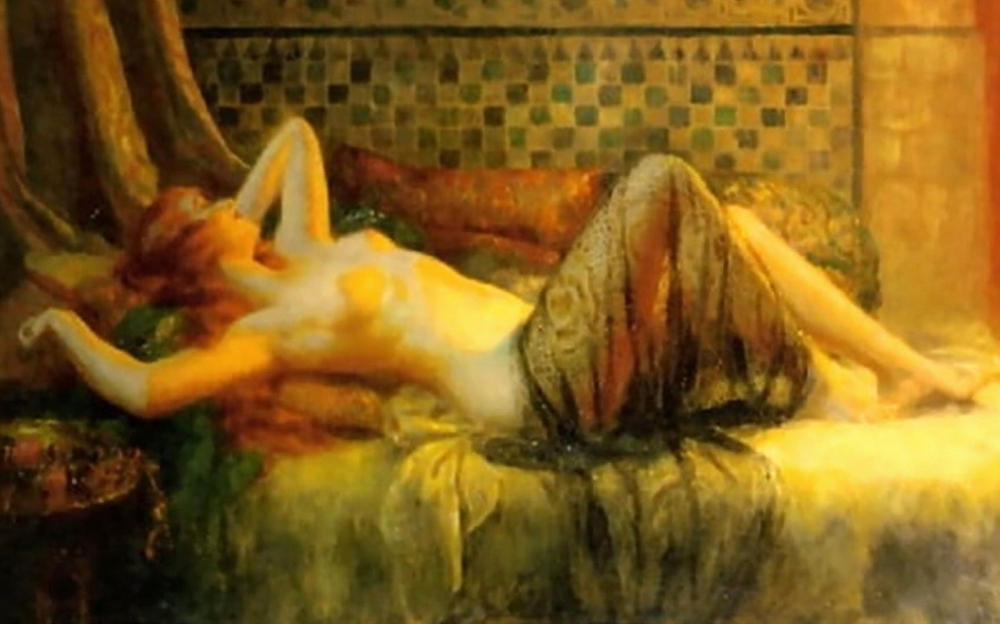
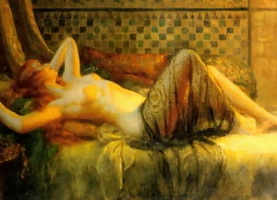
A sexy nude lady In bed having a fantasy with sheer black garment draped over her lovely long legs The naked woman has buxom breasts and red hair

Reverie. Delphin Enjolras.

An erotic lady off in fantasy land thinking of naughty boys and what she'd like to do to them. The naked woman has beautiful breasts long red hair and a sheer garment over her long sexy legs. The horny girl has erotic desires for sexual pleasures. She is a very lusty lady. What this foxy female needs is some sex toys to get her rocks off with! They will tide her over till her lover turns up!

Sexy Art for Women Page 8 with saucy paintings of naked women as well as hot nude girls and fleshy females You will also find wicked art of luscious ladies There are many naughty females on here for you to look at for sexy fun!
Sexy Art for Women page 10 with sexy paintings of horny nude women and lusty ladies Discover many seductive paintings of arousing naked females for your pleasure Be happy with lovely paintings of hot girls
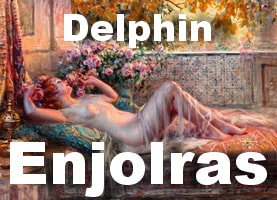
Lite Erotic Art 1 Find pretty paintings of lovely ladies and beautiful naked women.
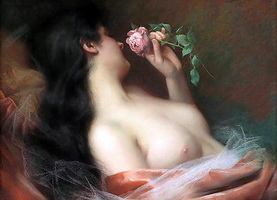
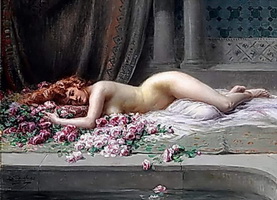
Sensuous paintings of feminine beauty and lovely nude ladies with flowers and roses.
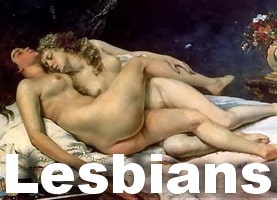
Paintings of very famous lesbians and their lovers.
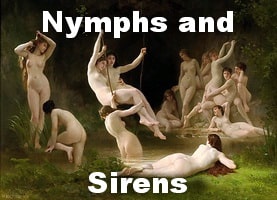
Naughty nymphs lust for sexy. They are always horny. The Sirens are close relatives of them.

This post contains affiliate links, we may receive a commission if you make a purchase using these links.
 

Contents.


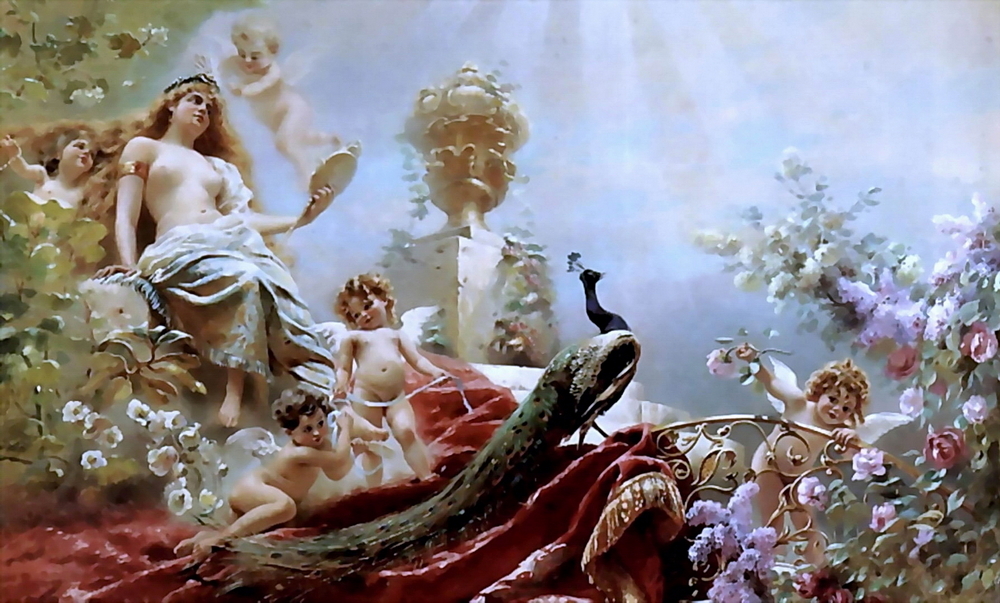
The Love Goddess has roses and many other flowers as well as five Cupids and a peacock in her toilet She has nice bosoms as well

The Toilet of Venus. Konstantin Makovsky.

With pretty pink roses and many other nice other flowers. The Goddess of Love is showing her breasts and naughty nipples. Venus certainly has nice bosoms and lovely long hair with very nice eyes. That peacock is strutting around like he owns the place! Love (Cupid) is everywhere! You could say Love is in the air. With the power Venus and Cupid have, there will be a whole lotta Love going on!

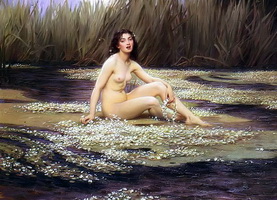
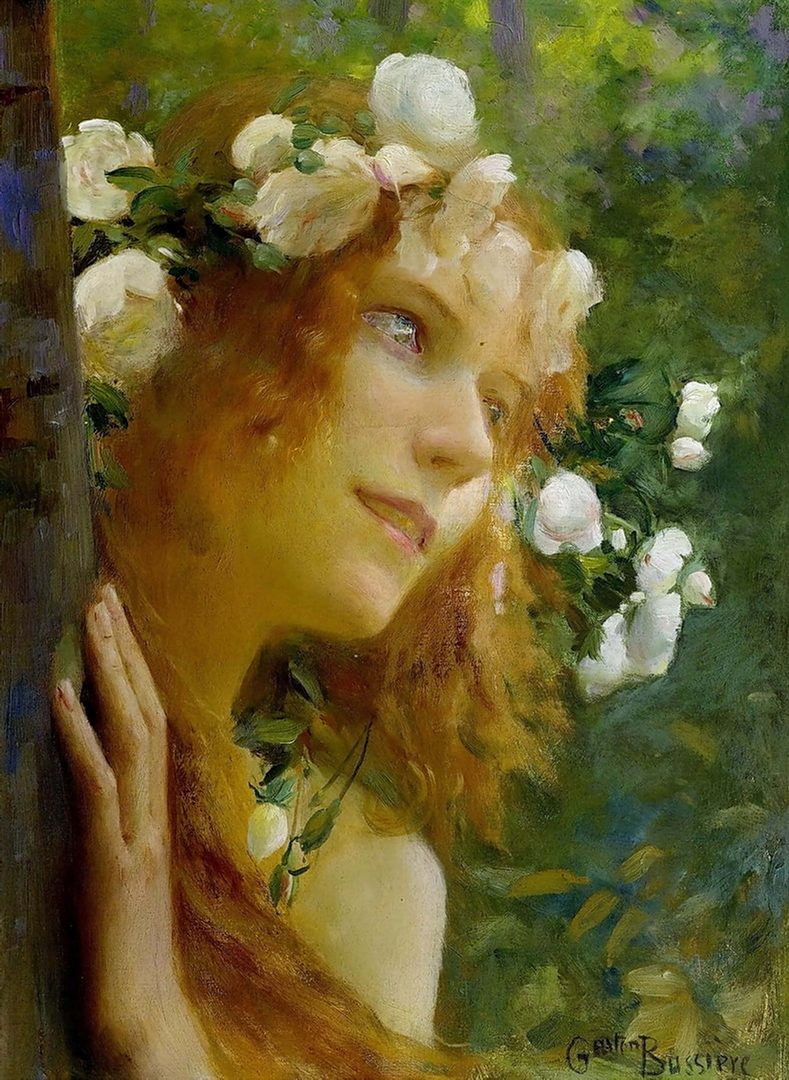
A naughty nymph looking for someone to satisfy her sexual desires A male of female it doesn't matter Pleasure is the name of the game

Nymphe. Gaston Bussiere.

A hot nymph looking for a lover with flowers in her hair and pretty eyes. The naughty girl has luscious lips. All the better to kiss you with! The young woman also has long flowing red hair and pretty eyes. You had better watch out or she'll pounce on you from behind and have her way with you!Her erotic powers will make you surrender and when you recover from the passionate lovemaking you know you had a very good time. With no guilty conscience! In fact you will feel very happy!

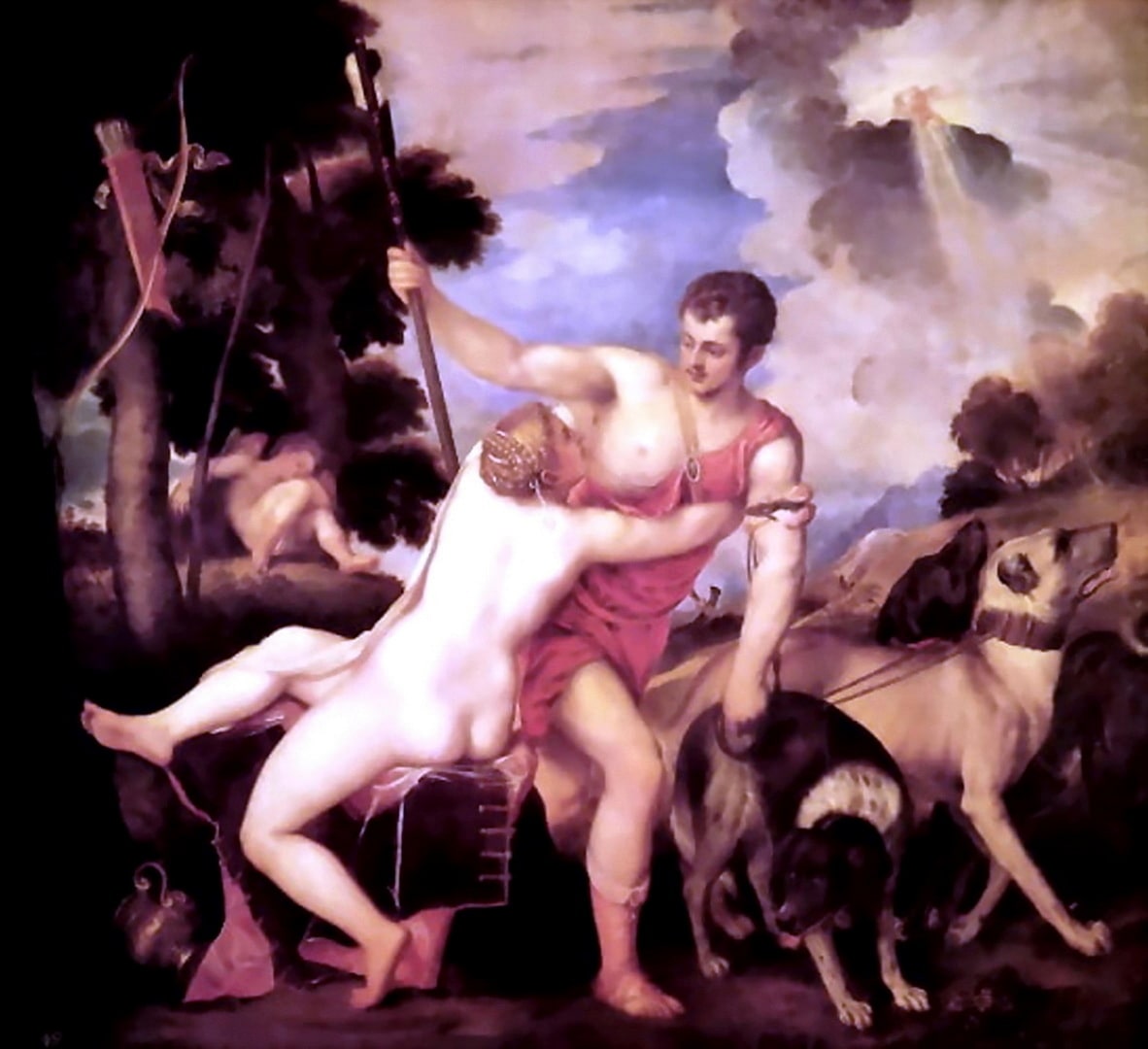
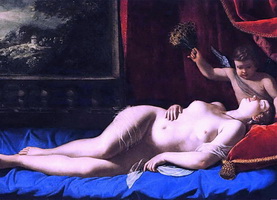
Venus has been hanging around with Adonis and having a lustful time of sexual pleasures The Goddess of Love hasn't finished yet but he has to go to work

Venus and Adonis. Titian.

What? You are going so soon? I want more! Whimp! The Love Goddess wants more sex! Adonis can't hack the pace! Apparently, Adonis ran out of energy after six sessions! Imagine that! Running out of energy after six orgasms in a row! Well now, Venus will just have to move on to her next lover! Anyone would think she is competing in a loverthon! Nymphomaniacs look out! Venus is in the room! She is working her way through the Karma Sutra, and then she will be moving on to The Joy of Sex! Alex Comfort will be pleased as he hasn't written The Joy of Sex yet! But she's willing to wait! It should be released by the 1970's. Then Venus can read it.

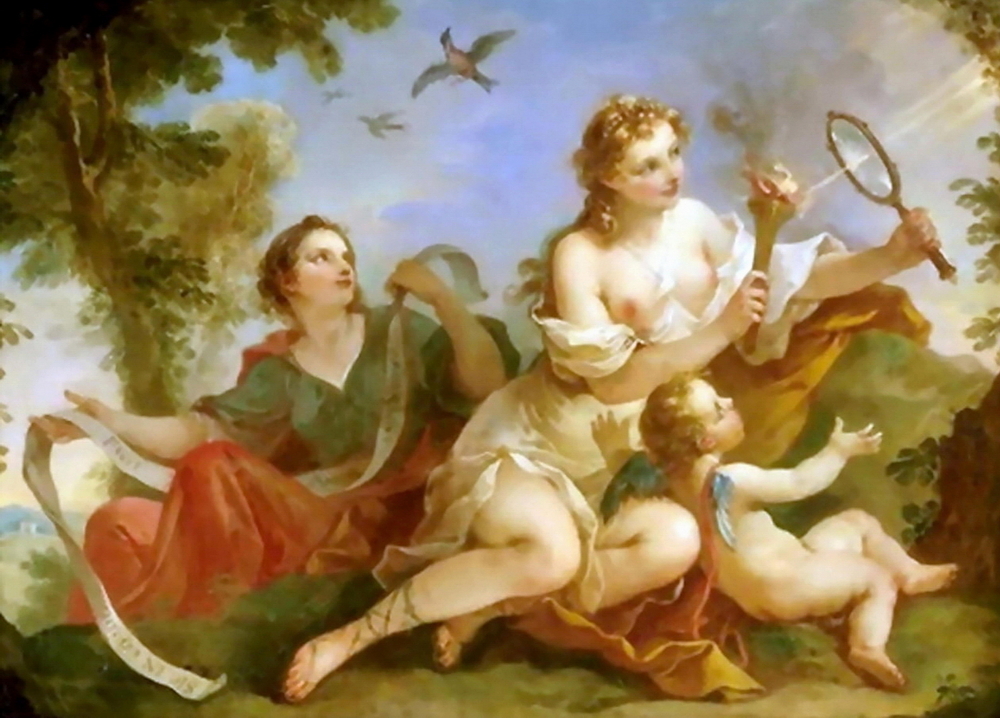
Beauty has long hair down her back and pretty eyes as well as voluptuous breasts and nice nipples Cupid is watching her do her magic trick

Beauty Rekindles the Torch of Love by Bruce Natoire.

A very seductive lady showing her tits and nipples. The beautiful woman has lovely eyes and erotic bosoms and long hair running down her back. Cupid the Little Love God is thinking that he will have to go out shoot a lot more couples with his arrows of love! Whoops! He hit that couple with too many arrows. Well, it looks like they'll be making love all night long, and a lot more! We hope you are enjoying the sexy art for females.

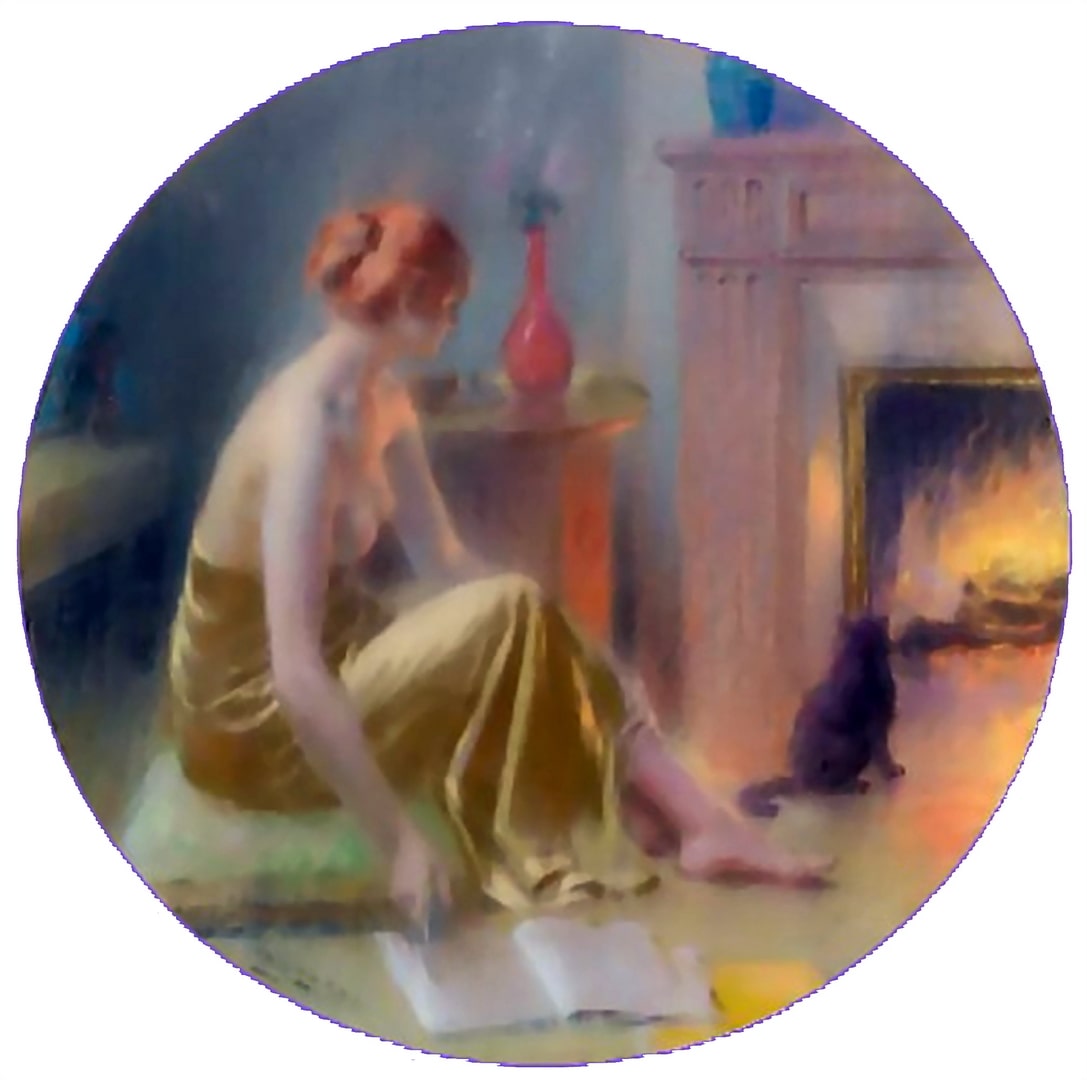
By the Warmth of the Fire by Delphin Enjoras.


By the Warmth of the Fire by Delphin Enjolras.

A black cat and a young woman are enjoying the fire. The young lady is warming her tits by the fireplace. In fact she is keeping her pussy warm too! The hot girl has lovely red hair that she has tied up in a bun! She is patiently reading a book while her partner is still at work. The black cat is certainly enjoying the fire.

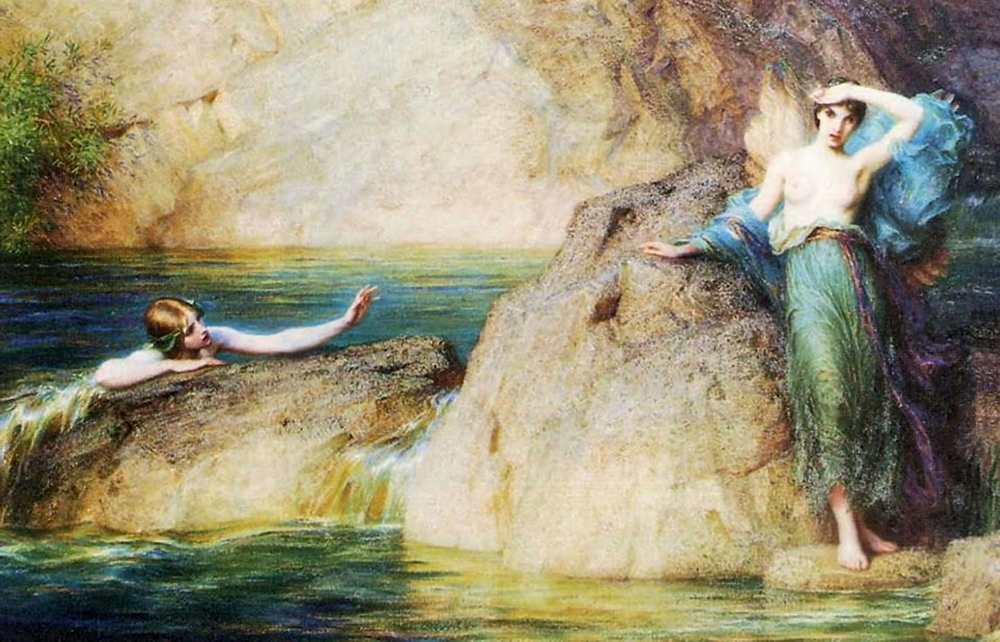
The pretty girl has nice eyes and beautiful breasts and is wearing a sheer dress as she stands on the rocks

Halcyone by Herbert James Draper.

A lovely lady showing off her breasts as she stands on the rocks is wearing a see-through dress and has pretty eyes and lovely lips. The water nymph is beside her asking of she's ok. The water nymph will be able to cheer her up!

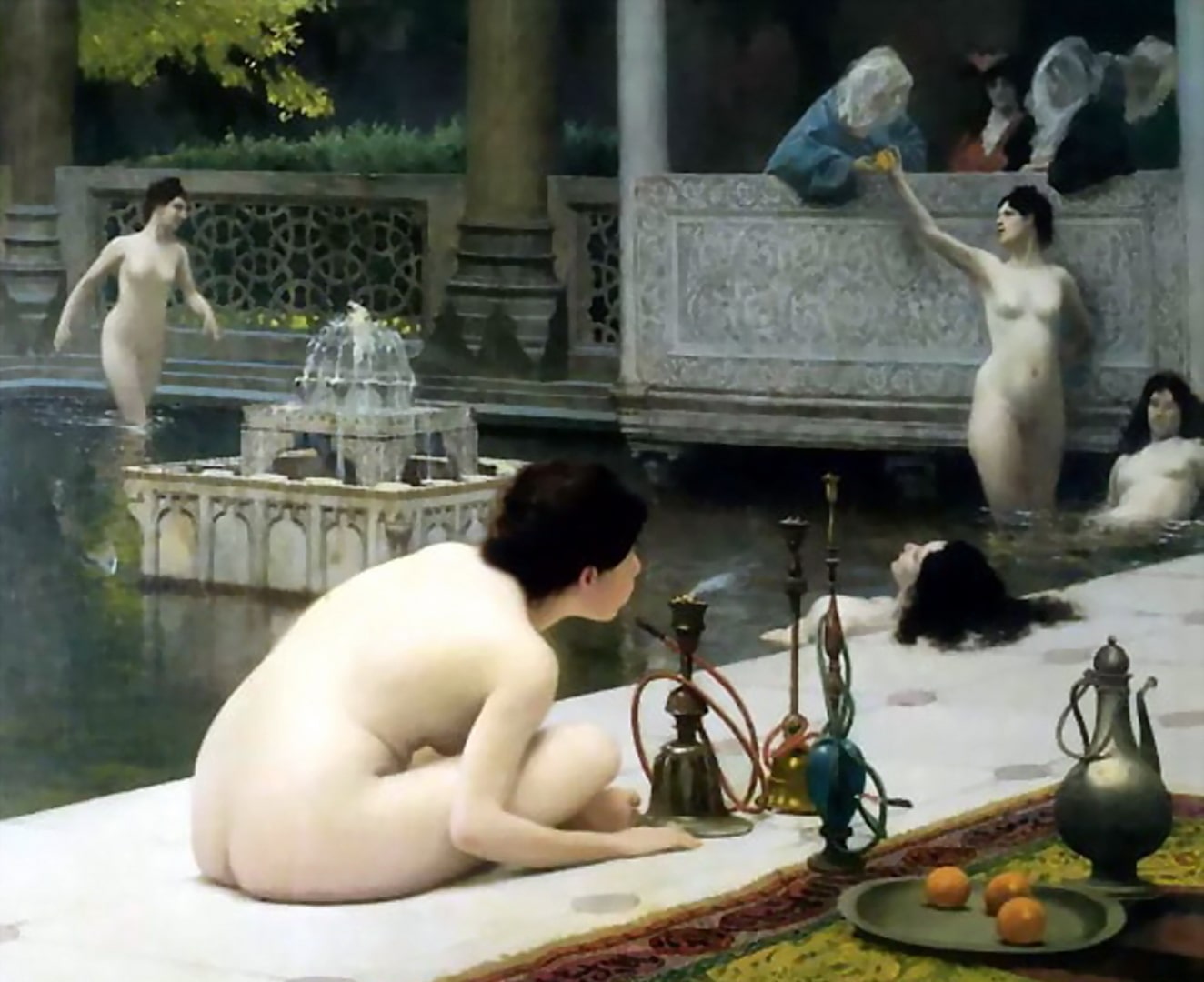
A naked harem girl taking a relaxant What's in the pipe she is smoking? There's a nice bottom on the nude woman

Lighting the Pipe. Jean Leon Gerome.

Girls need a relaxant if they are working in a Harem. A naked lady with a cute bum is sitting beside the pool for the women to freshen up in for when it's their turn! The relaxant helps keep the girls calm and puts them in a sexy mood for a session with the Sultan. The pool would help the ladies relax too.

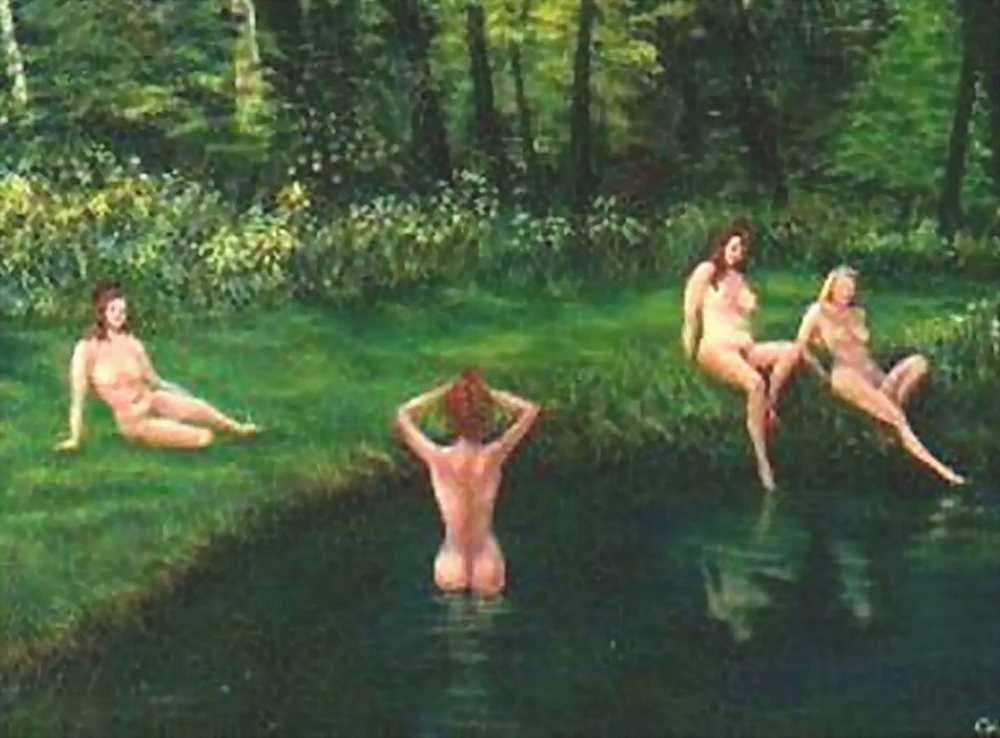
Four buxom nymphs playing beside the lake and taking a dip the naked girls aren't ashamed of their nude bodies and sexy boobs! Nice bum!

Nymphs in the Woods. The artist is not known.


A very erotic painting of four horny naked girls taking time to wash themselves. They are displaying their nude bodies and sexy boobs for all to see! Nymphs make the world a happier place! There's no relaxant needed for these erotic ladies. They want sex and as much as they can get! They want sex many times in a day. All of the day and all of the night to be precise. They just can't get enough love! More, more, more, that's how they like it!

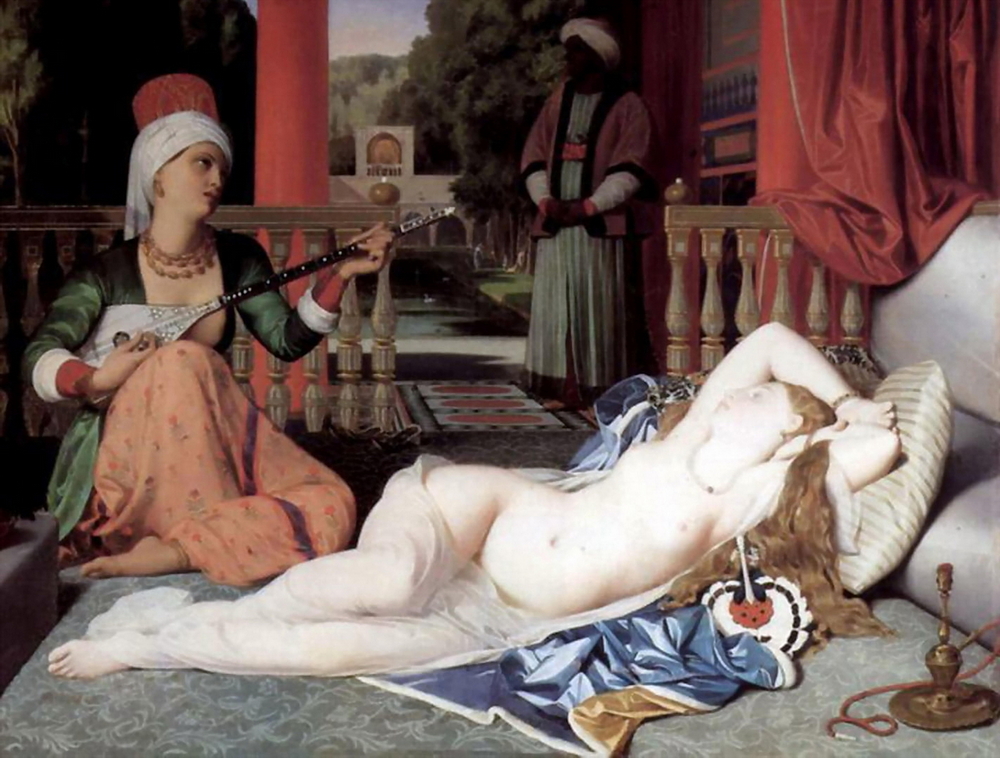
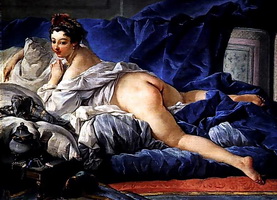
A Harem girl relaxing with music and weed The buxom babe li lying naked and has long hair down her back and a see-through garment

Odalisque and Slave Girl. Jean Auguste Dominique Ingres.

The nude woman is flaunting her sexy breasts! The naked harem girl is enjoying a break with a bit of relaxation music as she lies back with her bosoms on show and her relaxant is sitting in the corner. It's not being used at the moment. The slave girl has nice bosoms and pretty eyes. The odalisque has drifted off to sleep while listening to the music. She has lovely long hair that wouldreach down to her cute bottom.


Sex toys are great for improving female sexuality and desires and hotter lovemaking

Sexy Art for Women 1 Find pretty paintings of lovely ladies and beautiful naked women 2.
Sensuous paintings of feminine beauty and lovely nude ladies with flowers and roses 2.
Paintings of very famous lesbians and their lovers 2. Gay ladies and famous females
The naughty nymph's, sirens, fairies (related) all lust for sex. They are always hot and horny. They are very wicked girls and have sex with males, females, and Satyrs. Even all three at once!.
       
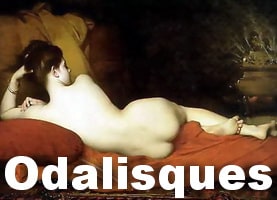
Harems are the home to Odalisques who provide sexual favours to Sultans.
Odelisques are the girls who provide sexual favours to the Sultans.
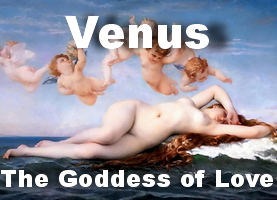
Venus the Goddess of Love. Lust,desire and sexual pleasure are what Venus gives to you.
Sexy Art for Women Page 2 Paintings of nude girls and foxy females Lusty ladies showing off their naked bodies in the name of art.
Sexy Art for Women 03 Nude paintings can help to improve a woman's sexuality and love.
Sexy Art for Women 04 Naked paintings of sexy women can help girls with better lovemaking.
Sexy Art for Women 5 Discover naked paintings of foxy females and lusty ladies in portraits.
Sexy Art for Women 6 Find nude portraits of sensuous women and flirty females having sexy fun.
Sexy Art for Women 7 Find vintage portraits of cute girls showing their sexy breasts.
Sexy Art for Women 8 Beautiful paintings of sexy nude girls and lovely females.
Sexy Art for Women 9 Elegant portraits of sensuous women and seductive females.
Sexy Art for Women 10 Pretty paintings of luscious ladies and dainty females.


More paintings.

Sexy Art for Women Page 8 with saucy paintings of naked women as well as hot nude girls and fleshy females You will also find wicked art of luscious ladies There are many naughty females on here for you to look at for sexy fun! 11
Sexy Art for Women page 10 with sexy paintings of horny nude women and lusty ladies Discover many seductive paintings of arousing naked females for your pleasure Be happy with lovely paintings of hot girls 69


Contents.


Adult toys can help boost female sexual desires and help with improving a woman's sexuality. Sexy paintings can help open the female mind. The biggest sex organ is the one between your ears. Feed it! Reading naughty books and look at nude art helps. One famous actress watches a lot of porn and that helps her get her rocks off fast! But as anyone knows if you are always horny, you have to do something to help. It's called sex toys! Not only do sex toys help you get an orgasm when your horny. They help to improve your sex drive. So don't neglect your horny desires. It's bad for you! Having many orgasms during a week keeps you happy and better at work!

PICASSO AND CUBISM.

CUBISM first and foremost is an attempt to make art more arbitrary in its selection of compositional forms. In all ancient painting only the human figure was used as a basis for organisation. Later landscape widened the scope of the painter's material possibilities; but even the introduction of this new element merely extended the boundary of subject-matter. The essence of art remained the same. Landscape permitted new forms to be interwoven with the old ones, without making the old more plastic. The elasticising process was what the painter had always desiderated, but his literalness was such that he never went beyond primary distortions of the human body distortions so small that they were almost unnoticeable. With the Greeks and Chinese these deformations were practised in order to beautify the body's relative proportions; with the East Indians and Michelangelo, to accentuate the emotion of forceful movement; with Renoir, to express form fully in its relation to the generating line of each picture; and with Matisse the distortions were the result, first, of a reaction against a hackneyed classic system, and later, of a desire to divorce aesthetic pleasure from mental association, in other words, to make form238 abstract rather than personal. In him there is no rhythmic composition, and while, as in the case of Renoir, his pictures are great as ensembles, each part of them is a separate item which does not depend, for appreciation, on its rapport to the whole. His is an art of colour, of sensitive and inspiring form in two dimensions a decorative art of a high order. As such it is at once a derivation of Impressionism and a development of Impressionistic colour through the channels of taste.

Cubism is a far more arbitrary art than Matisse's. In its extreme expression it depends, not so much on the artist's adroitness at interpreting nature, as on his ability to express pure aesthetic emotion in its relation to form form being used here in its extended sense to connote the solidity of the entire picture and the block relation of each part to the other parts. Composition prior to the Cubists had been the rhythmic organisation of a picture's integral parts by line, volume, chiaroscuro and colour. A totally unrelated set of objective figures or forms was drawn together into an ensemble by these abstract aesthetic means. Cubism retained the older methods of form and conception, and added to them the illustrative device of disorganising and rearranging objectivity so that the separated parts would intersect, overlap and partly obscure the image. Thus was presented a picture replete with all aspects of the model, that is, a picture in which the expression presented not only the vision of reality as it discloses itself to our eyes, but the vision which delivers itself to our intelligences, with its actions and reactions, its many and changing miens, its linear and voluminous struggles, its solidity and its239 transparency. In Cubism the details of this ubiquitous and omnifarious vision are subjugated to arbitrary order and expressed in tones of warm and cold.

At the outset Cubism was a Dionysian reaction against the flowing and soft decoration of the schools of Bouguereau and the Impressionists. The precise and masculine minds of a new cycle could not rest satisfied with the single melody of their immediate predecessors. Courbet, the Cubists' prototype on the side of painting which dealt entirely with objectivity, reacted against corresponding feminine tendencies in the schools of David and Ingres; and the decisive blow he struck in 1850 with his L'Enterrement a Ornans had a psychological parallel in the Cubists' exhibit in 1911. While Manet seemed to continue Courbet he in reality retrogressed to a classic prettiness. His achievements may be compared to those of the Orphists who, while seeming to carry on the principles of Cubism, nullified the effect of that school by the misapplication of colour. Cubism itself ignored colour and curved lines. It was a further step toward a more intellectual type of painting. The modern artist's mind, in becoming more self-conscious, was consequently growing more precise in its expression. And since the Cubists were the primitives of a new era, it was natural that this precision should express itself in straight lines and angular forms. The inconsistency of these artists lay in the fact that, while their first desire was to make their art arbitrary, they were so preoccupied with the dynamism of objectivity that the main object of their work was 240deputised. In the canvases of Picasso's followers naturalism is the first consideration. As a result the organisation of emotion-impelling form is obscured. It was from Cezanne that the Cubists garnered the greater part of their theories, and even the appearance of their work is not unlike his. Cezanne realised that a mere imitation of reality, no matter how interesting, could never set in motion the wheels of aesthetic ecstasy; and so he translated nature into a subjective impression of reality by expressing it in a complete order which was itself dynamic. The Cubists, profiting by his discoveries of linear and tonal modification, essayed to found a school on certain of his better-known and more easily grasped practices. The spirit of precision, the need for a renovation, and the example of Picasso who at one period copied the angularities of negro sculpture all gave momentum to the movement. Later were introduced the philosophical reasonings and scientific explanations of which there has recently been so much discussion.

The total absence of colour in the Cubists is ascribable to the same revolt against prettiness and ambiguity that made them alter their line and form. They felt the subjective solidity of Cezanne without understanding that it was brought about by the use of colour whose emotional possibilities he had profoundly penetrated. In fact his art was composed entirely of minute chromatic planes which, by their complete adaptability to a given position in space, produced the intensest form. The Cubists' planes are based, not on colour, but on objective form itself, and are expressed by tone. In this respect Cubism is diametrically opposed to the conception of Cezanne. With him form was a result of241 the plastic employment of colour. With the Cubists even tone is subjugated to formal planes. In them we do not experience the subjectivity of emotion which can be produced alone by colour. Their pictures represent a recognisable solidity which, by an image, expresses subjective processes. Cezanne's simultaneous vision of reality had to do purely with the most mobile element of art; the Cubists attempted to express psychological phenomena by the limited methods of the early primitives. Their inability to sound (not in theory but actually) the possibilities of colour in the creation of aesthetic form, has caused them to diverge from the direct path in the development of means, and has restricted permanently their initial desire for concentrated composition. The Impressionists experimented in a highly dynamic element; but the Cubists have only dabbled in mental processes which, even should they become perfected, could give us only the sequential vision of a human action. The Cubist doctrine embraces no more than a side issue in an art which primarily has to do with the organisation of form. In the effort of the Cubists to create a pure art they merely disguise objectivity by abstract thought. This is by no means the same as creating abstract form that is, form which is not reminiscent of a particular natural object; and by failing in this they let pass the great opportunity of taking the final step from Matisse to purity. They took only a half step, for in their exultation they forgot the preceding advances in composition.

In such forgetfulness there was nothing unusual. Every new movement242 in the progress of art has about it a certain isolation of ambition. The first innovators push out the boundary on one side; their followers, on another; and the final exponents of a method, having fully assimilated what has preceded them, combine the endeavours and accomplishments of their forerunners and go forward to new achievements. Cezanne had recognised that he could never round out his own cycle. No stricture can attach to his incompleteness: his life was too short for realisation. That the Cubists did not altogether achieve their desire does not detract from the importance of their departure from established precedent. Their reaction was a salutary event in the evolution of modern painting. The field of art was being overrun by the decadents of Impressionism and Cezanne, by the imitators of Toulouse-Lautrec and Degas, by those academicians who follow in the wake of every movement long after its methods have been accepted as vital. These scholastic men were incorporating spots and bright colours into their school-room drawings when Cubism came forward. By its unequivocal expression of opinions and by its neat delimitations of planes it has revealed the futility and pettiness of academic alterations. Besides their purely psychological innovations the Cubists have achieved all the ambitions of the academies in a way so net, so sure, so precise, that they have reduced the school, if not to silence, at least to ineffectualness. No longer can the admirers of scholastic art stand before a canvas exclaiming on the feeling, the atmosphere or the spirituality of the work. One must now use concrete terms and speak of those qualities which have to do with profound order; for243 although the theories of Cubism state one thing, the application of them has taken another and definite aesthetic form. In the Cubists' work lies their greatest importance. We may without loss lay aside their explanations, their manifestos and the reports of their lectures.

The idea of synthesis in painting had been so thoroughly assimilated through familiarity with successive movements that, with the advent of Cubism, it was an accepted and unquestioned law of painting. Synthesis had in fact become an almost unconscious knowledge. Ingres, Daumier, Manet, Seurat and Matisse had, in quick succession, proclaimed its value in eliminating the unimportant and unessential from models. With Cubism, as with Matisse and Gauguin, synthesis was the supreme ambition synthesis which had for its goal the artistic consistency of all the picture's qualities. Subject-matter, colour and the method of expression were all harmonised in Gauguin: with him the synthesis was illustrative. In Matisse it manifested itself in the reduction of form and colour to their simplest and most personal expression, and was therefore a step toward a pure art. With Picasso synthesis went still further. It became almost basic. We know that the curved line stands for life, colour and movement; that the straight line represents the dead, the sombre and the static. A solid dark is conducive to peace, while quickly succeeding light and dark promote liveliness. Bearing these fundamental postulates in mind we can easily analyse Picasso's quality of synthesis. The straight line which predominates in Cubism repudiates colour: the Cubists were not244 colourists. The curved line, when profoundly comprehended, expresses movement and fluidity; when used haphazardly mere prettiness results. There are seldom any curves in Cubism, and then only for relieving the monotony, for the sake of ornament. In the Cubists' scintillating succession of darks and lights, like a photographic negative of a Cezanne or an early Renoir, there is an unescapable feminine prettiness in which the twinkling of tone serves the same purpose as pretty colour. By their straight lines, subfuse tones and rigid forms, on the one hand, they achieve immobility. By their lights and darks, their curves and their dependence on nature, on the other hand, they reveal their emotional kinship to the illustrative schools of Whistler, Fragonard and Tiepolo. Now when we combine properly these two widely separated aspects of art the one almost Egyptian and the other almost English we obtain a combination of temperamental characteristics capable of the greatest achievements, for we have brought about the coalition of the purely masculine and the purely feminine. In Cubism, however, these two aspects are mingled disproportionately. The static predominates. The pretty is merely superimposed because of temperamental dictation: instead of functioning, it only attracts. But though in Cubism we do not find the perfect fusion of these creative sex impulses, the simultaneous presence of the two elements produces nevertheless a fundamental synthesis.

In order to bring about the greatest art, the form and order (which constitute the masculine side) must be all-pervading. Objective ornament and245 external beauty (which constitute the feminine side) must be only the inspiration to creation. This is an important principle, for all art, like all life, falls into either the masculine or the feminine category. All personal preferences for certain forms of art are imputable to the predomination of the male or the female in the individual. Necessarily all creation is to a certain extent masculine in it there has to be order; and by the predomination of the male or female is meant simply the accentuation of one of these qualities in their relative combination in each of the sexes. For instance, should the feminine "predominate" in a man, the fact would merely indicate that the percentage of femininity in his bisexuality had over-balanced the normal ratio. Decoration, which is an ornamental art, is feminine, and it will appeal to men who have a subnormal amount of the creator in them. The colossally ordered art of a Rubens will be understood and enjoyed only by one highly capable of creation, for in the contemplation and comprehension of a profound work of art the spectator reconstructs the artist's mind after his own formula, and thus recreates the work for himself. That side of art which is the recording of some emotion the artist has experienced so intensely that it demands concrete expression, is feminine. It is merely an overflow of receptivity into objectivity. To the contrary, when great art is produced it is not dependent on a specific exterior impulse. It grows abstractly out of a collection of assimilated impressions. When the will dominates the expression, these impressions must take plastic form. The desire to create is in itself feminine. The246 constructive ability is masculine. The first desire always is to decorate and beautify, but the masculine will dictates and rules the expression. In feminine art the will to co-ordinate is absent. Consequently the expression is only the direct result of the reception. The Cubists realise that the will must play a large part in painting, but they exert their will on the analysis of thought rather than on their actual productions. The result is that, while their expression is highly restrained and reasoned, the will is exercised only on the emotion of the received impression, and is not manifested on their canvases' surface. In all their work they are decorators first and significant artists afterward. They belong distinctly to the lighter side of artistic tradition. They are the lyric poets of the plastic.

This is markedly true of Picasso who instigated the movement. When he first came to Paris he threw himself into a style of painting which recalled Steinlen at his best. From Steinlen he went to Toulouse-Lautrec and Impressionistic colour. Next he did carefully drawn portraits which proclaimed him a greater Gauguin. Later he become infatuated with the rhythm and skeleton-like creations of El Greco. It was at this period that he began to do his significant work. His pictures for the most part were painted in blue. They were sensitive to a high degree, and were, in the sculptural sense, sometimes ordered into a solid block form. Then, adopting a reddish colour gamut, he began to create full figures of nudes, portraits and animal studies. At this time he commenced his research in precise form. He organised copies of negro sculpture of which he had heard much from Matisse, and it was a result of his247 studying these rigid figures that angularities began to creep into his art. Other artists set to work along the same lines, and from the friction of ideas which followed the theory of Cubism was evolved. Picasso's still-lives then became more precise, more hard-cut, more personal, more completely ordered. It is from this period we receive some of his greatest work.


Shortly after came the Cubist theory of simultaneity. The authorship of this theory is in doubt. There has been much controversy as to whether it originated with Picasso or with one of his followers. But it was straightway adopted by the entire group and made one of the dominating principles of the movement. Simultaneity to these painters meant the combined presentation of a number of aspects of the same object from many different angles. In the visualisation of an object in nature during the absence of that object, we conceive it, not only as a silhouette or as a form with three dimensions, but as a congeries of silhouettes which, when imagined simultaneously, constitute the appearance of the object from every known angle. In short, our minds envelop it and all its attributes at the same instant. Such a vision is the result of collected and concentrated memory. In a desire to disarm criticism the Cubists offered as a theory the picturisation of this multilateral vision; but in reality it was little more than an excuse to make the utilisation of natural forms more arbitrary than in the case of Matisse, Cezanne and Gauguin and also to rid themselves entirely of the illustrative obstacle. Their ingrained weakness lay in that they did not possess sufficient genius to alienate themselves entirely from248 document and to create new abstract compositions. Nor did their instinct permit them to throw document aside when they sensed their inability to replace it with something more vital. Their spirit of revolution worked on the form which illustration would take, rather than on the discontinuance of illustration. But even in this attitude they marked a decided progress, for while in the paintings of their predecessors the disposition of line and form had made a unity of many separated figures, these figures, even to a mind unusually free from the taint of anecdote and objectivity in art, presented themselves separately as integers of a whole. The Cubists, by breaking up a model into parts which separately bore little resemblance to nature, proved that they not only recognised the demands of pure organisation but that they knew those demands could never be met so long as there were recognisable objects in a painting.

The presentation of a nude or a landscape from many different viewpoints was in itself no more important than the methods of the Impressionists. Indeed the pleasure derived from so constructing a picture is similar to the pleasure derived from copying light. It represents the nearest approach of the enthusiastic painter of form to the enthusiastic painter of light. They are both interested in recording a rather puzzling and interesting phenomenon: the one is after that which creates the impressions of form; the other, that which creates the impressions of colour. Both, in the broad sense, derive the same enjoyment in deciphering the work after it249 is finished. The one records only broad waves of scintillating colours with no demarcation of silhouettes; and these colours gradually resolve themselves into a sunny and ambiguous landscape. The other makes a number of broad planes of brown and white which, when diligently studied in their parts, become the angular representation of water, ships, sky-lines which run into and through houses, trees which obscure near-by objects, and houses which melt into distant skies. Both schools of painting are impressionistic; each treats of exactly what the other neglects. No artist as yet has seen the distinct advantage of uniting the two methods. Cezanne might be suggested as having approached this alliance, but his means were too profound for him to be led into portraying by concrete symbols his impressions of a model.

In painting the enveloping mental vision of a model, however, the Cubists actually failed in the synchronism for which they strove. In reality they extended the effect of their pictures into time more than ever before. To grasp their illustrative import, long and arduous search must be made. While their canvases present a simultaneous vision, each picture as a whole is incapable of creating a unified impression. A Cubist painting is, let us say, like the momentary blare of a hundred musical instruments all of which play consecutive bars. By approaching each performer in order and studying his particular notes, until every musical detail is learned, we might intellectually construct from our memory an impression of a related musical composition. But should the blare be repeated, even after our research, the music's meaning would be no clearer than before. On the other hand, if, having first heard the composition in its natural development, we250 had studied its parts and motifs and then heard it repeated sequentially, a greater enjoyment and comprehension would result. In breaking up nature, either for the sake of extending the aesthetic appreciation into time like music, or for simultaneity of presentation, all the parts must answer to an organisation; in the first case, so that, after the spectator's first fleeting vision of the whole, his eye will be carried from one part to another by the rhythmic balance of volume, linear opposition and harmony of colour; and in the second case, so that the canvas will be an interdependent block-manifestation.

In constructing formal planes with definite tones whose values are mechanical and absolute, the Cubists have missed that possible subjectivity of movement which, in its highest degree, colour alone can give. They have constructed only primitively ordered bas-reliefs each plane and line of which has a distinct direction. And this direction, no matter what is added to or subtracted from the work, will remain the same. The planes are consequently static and absolute. In the great art of Cezanne there is only a relative absolutism. By any alteration in one of his pictures, the entirety is shattered: the direction of each plane and line is changed to concur with the needs of a different order. This is because Cezanne's work possesses the poise which is demanded in the highest art. And this poise is what Cubism, with its rigid lines and planes, has entirely missed. Illustratively the Cubists' conception was new, compositionally it was old; and an art cannot be significantly renovated save251 from the bottom upward. The foundation of all art is composition, and the only means which can be accepted as vital are those which increase the artist's power to express that which is more inherent in painting than in any of the other arts, namely: rhythmic form in three dimensions. That the Cubists failed to develop such means may be perceived by comparing the compositions of Picasso's "red" period, which were but slightly cubic and which contain a certain amount of arbitrary form, with his late and wholly cubic black-and-white drawings and paintings such as are seen at Kahnweiler's back of the Madeleine. The latter are almost wholly flat. His Femme a la Mandoline marks the transition from the early period to the late one. In all his pictures one finds a charming rhythm of lights and darks and a slight comprehension of surface form. But he never goes very deep. Even in his sculptured heads, while there is order, there is no form in the compositional sense.

To ascribe Picasso's Cubism to so childish an impulse as a desire to square an academic drawing is both untrue and unjust. Some have pointed to Durer as his artistic forbear merely because Durer once described a number of curves which he said could be made into a human body and drew a block-diagram of box-like forms which he said was the basis for the body's construction. But no relationship exists between these two artists. Cubism's first consideration was to cover the surfaces of its canvases with form, thus doing away with the empty spaces so prevalent in all art works, spaces which Cezanne left blank. To accomplish this logically it252 was necessary either to introduce superfluous figures, or to stretch the ones already present into impossible distortions. Since the elimination of all unessentials was the keynote of the day, Picasso decided to make multiplex his essentials. Herewith was born the Cubist conception of breaking up the model for the attainment of a more complete work and one in which there would be no dead planes. At first an extensive linear direction, which started at the lower frame, was carried up into the background by the demarcation of a shadow or an object, for the purpose of holding tightly together two or more forms. Later, in order to facilitate this procedure of multiplying their models, the Cubists began to walk round them. This process unchained them from the slavery to a single model and from the given contour of an absolute subject. At the same time it permitted them a fantastically arbitrary composition, and made their expression more dependent on the personality of the artist, and less contingent on preconceived ideas, than ever before.

Cubism expressed a laudable tendency toward an aristocratic vision as opposed to the popular vision of reality. Its pictures therefore became doubly complex, for in the contemplation of the picturisation of our mental process, another process is started which is far more complicated than the first. Herein we have an explanation for the fact that Cubism is incomprehensible to the untutored person who regards art as an imitation of nature. The very word "form" is aesthetically meaningless to the average spectator. In order to experience its meaning, aside from organisation, one's attention 253has to be given over to the object's weight, its force, its circumferential volume. A form in a picture cannot be considered merely as to its employment and its utilitarian destiny, or from the standpoint of one's experience with it. To the great artist an object exists as a volume with which to fill a given space. He completely forgets its raison d'etre in life, and views it only as a means for tightening a picture's order. To this extreme of pure artistic conception the Cubists never attained. And while Cezanne advanced from Courbet's surface realism to the realism of causes, the Cubists were unable to progress along similar lines. They simply translated abstraction into terms of concrete expression. The profound reasons for dynamism in art were left untouched by them. They endeavoured to portray objectively an abstract process, expecting its mere portrayal to be dynamic.

The dynamic, however, cannot be rendered by imitation. It is as impossible of attainment by this method as in the dancing-girl canvases of Degas. Behind the emotional power of nature there is a great abstract force; and the effect of dynamism can be got only when this force is expressed. Then the result is a natural outgrowth of a cause. Otherwise we have only a detached effect which does not lead us back into the undercurrents of causation. When a Cubist picture is interesting it will at most make us puzzle over the application of its theories; it can never move us aesthetically by the sheer power of its methods. The one dynamic element which the Cubists have in common with Cezanne namely: the modification of254 lines and forms through contact with other lines and forms they have nullified by constructing with rigid tones the planes which the lines delimit, thereby making their planes frozen and immovable. Because ignorant of the functionality of colour the Cubists were unable to present, at one and the same time, perfect mobility, planar solidity and indefinite depth. As a result of too much study of Cezanne's and El Greco's composition and too little study of Michelangelo and Rubens, they failed to achieve, even with the great arbitrariness and convenience of their means, a profound composition which is a rhythmic order of volume, as distinguished from a simple organisation of parts. Their accomplishments do not realise the promises of their programme because their theories were too inflexible. Cubism was too tightly bound by rigid systems and methods to produce plastically significant results.

The Cubists' greatest apport to art (not in theory but in achievement) is their almost total abolition of the painter's slavery to nature. It was but a step from Matisse to the complete elimination of recognisable objects, and though Cubism did not cover the entire distance, it nevertheless made an advance toward that pure expression which Cezanne saw was inevitable. Even today the followers of this school are beginning to realise their early mistakes and to throw off their self-imposed restrictions. They are launching forth into colour and are seeking expression in purely arbitrary form. But these new developments have not yet been productive of a new artistic worth. Indeed, it is doubtful if they will lead to255 important results so long as the geometrical phase of Cubism is adhered to, and so long as the Cubists ignore the dynamic possibilities of colour. In its present status Cubism can only continue striving toward a style that goes deeper than tonal prettiness and lyric immobility. Already Picasso has passed out of painting altogether. An artist with his extraordinary gift to do anything superficially well could not remain anchored to an idea after the novelty of its method had worn off. He is not a man who is the slave of thought, but rather an obstinate artist with a spark of genius who has passed through many different stages with a rapidity born of astounding dexterity and cleverness. Many of his early female heads rival in sheer classic beauty the best of the Renaissance painters. Some of his pen-and-ink drawings are the most sensitive of modern times. There are caricatures done by him which closely approach the fantasy of a Goya. Indeed it may be justly said that he is as great an illustrator as Raphael. And in this analogy lie both his glory and his limitation. Like Raphael he lacks that profound penetration of exteriors which would permit him a comprehension of his greater influences of El Greco, for instance. But, with a glance, he can sound the depths of a Toulouse-Lautrec, a Steinlen or a piece of negro sculpture.

Picasso's inability to conceive two elements at once and to construct a complicated development of composition, is exemplified in his earlier work, first, by his adherence to certain single colours at different stages of his career, secondly, by the extreme simplicity of his circus folk, and thirdly, by his figure compositions which, though they are never tedious or256 dull and possess an almost nervous sensibilite, are limited to one or two human forms. Again Picasso's limitation of compositional conception is attested to by his stubborn use of brown and white in his latest Cubist pictures, by his employment of line alone in the drawings of his architectural-plan stage, and by his application of objects at hand to the clay blocks which mark his latest metamorphosis. But no matter what his medium or style, he remains essentially unchanged. In all his work is felt the superficial lightness of one who conceives order only as an ornament to decoration and who is interested in three-dimensional form merely as an after-thought. His sculpture is but his painting in a solider medium. It is broken up into planes and organised as to each contour in exactly the same manner as is his work in oils. The difference between Picasso, the sculptor, and Matisse, the sculptor, is the difference between a man who has a slight genius for rhythm and a block order, and one who has a slight genius for characterisation and a perfect ensemble. The art of Picasso, having to do with form as decoration, is admirably adapted to sculpture. The art of Matisse, being flat and dealing with colour as decoration, is inexpressible in clay.


Fernand Leger, with the exception of Picasso, is the most genuinely talented artist of the Cubist movement. His work at first was much less radical than that of his confreres and gave greater evidence of depth because it had never completely shaken off perspective. His canvases, Les Toits and Maisons et Fumees, represent little more than a highly artistic257 angularisation of a subject which, being angular in itself, lends itself admirably to Cubistic treatment. Leger's method is to place in the foreground large planes which serve as a frame for the actual picture which is seen between them as through a tunnel. By this device he creates a diversity of form and with it a recognisable depth. His paint at first was light in tone, but is now taking on colour. Since his first Cubist exhibits he has made a logical progress in rhythmic conception, and if his past development can be assumed as a criterion of the future it is safe to prophesy that eventually he will be the most significant man of the original group. Albert Gleizes, Jean Metzinger, Marcel Duchamp, Georges Braque and Francis Picabia are all prominent figures in the Cubist movement. Gleizes manifested his first Cubist tendencies by giving form a solid angularity, thereby making it precise. His canvases are devoid of interest because so slightly creative. His well-known L'Homme au Balcon appears to us today almost Futuristic in conception. In fact, it was exposed at the Salon d'Automne in 1912 one year after the Futurist show; and when we compare it with his early and less significant Les Baigneuses, with which it was hung, it gives the impression of having been the result of a sudden and enthusiastic inspiration from the newer men. Later his work grew broader and simpler, but in it there is little or no composition. Even the order is that of the straight line. Metzinger is a better artist. In him is a greater order, although, as in Gleizes, it is produced by258 the straight line. During his artistic beginnings he was under the sway of negro sculpture and painted in small planes of light and dark. Later, turning from the influence of negro antiquity, he directed his talent on nature and began to interpret form into angularities. His La Femme au Cheval, done in 1912, was a distinct step, both as to form and composition, in advance of the naturalistic vision; and his Le Port is one of the finest examples of the Cubist theory of synchronous picturisation and interpenetrating lines and masses. Duchamp, a slighter talent than either Leger or Gleizes, is the Whistler of the movement. In his pictures are less form, less composition and less comprehension of volume than in any other Cubist work except that of Juan Gris whose lethargic canvases have not even the interest of an Aime Morot. Braque has added nothing to Cubism. He followed Picasso closely, and his whole creative impetus seems derived from the latter's canvases.

Picabia, despite his popularity, is but a second-rate Cubist. He was quick to grasp the fact that the Cubists were working away from illustration, and attempted to step beyond them. Where they had endeavoured to bring about the precise stylisation of form, he merely dealt in ribbon-like patches of colour which were without contour, shape, proportion or volume. His canvases wherein many of these strange amorphous hachures are grouped, have a highly bizarre appearance but are only remotely intelligible. He used almost monochromatic schemes, as did his master Picasso, and continued this style of work until his fellow Cubists, by diligent research and259 serious study, had approached the abstractappearance of his surfaces. Picabia then found a new impetus in the works of the Futurists an impetus toward movement expressed, not by bodies, but by line. This Futurist influence resulted in his making flat pictures of many sharply defined silhouettes tinted red, green, blue and grey. His lines serve only to accentuate the chaos of his ensemble, for in his work there is no definite conception of the whole.

Cubism's possibilities as a dynamic illustrative art have never been adequately exhausted, and, since the angular mode is rapidly disappearing as a result of newer and more vital visions, they probably never will. Picasso was its high priest up to two years ago, at which time colour, coming back on the wave of a counter-revolution, threw most of the Cubists into its application. Robert Delaunay was responsible for this reaction. Early in 1912 he came forward with a very large canvas entitled Ville de Paris, whose surface was broken up into many angular planes after the Cubist fashion. But instead of depicting forms and formal relations, the picture was painted in greys and high colours solely as a means of surface filling. Its contours recalled El Greco despite their being disguised by triangular dislocations. The picture represented three mammoth Graces standing before a distant Paris landscape, and so transparent and ethereal was it that it seemed as though a breath could have dispersed it into mist. It possessed the delicate loveliness of a butterfly, and the eye, in running over its glittering and pretty array of colours, was fascinated as in the contemplation of a kaleidoscope. But the260 canvas, while provoking a distinct visual pleasure, failed to arouse any aesthetic enjoyment.

Delaunay's L'Equipe de Cardiff the following year was equally unemotional. Fundamentally this picture was the same as his Ville de Paris, though treated differently as to surface. The same up-shooting type of svelte beauty as formerly bodied forth in his three Graces was here repeated in the bodies of the athletes, but there was in addition a very slight surface rhythm; and the colour, because its application was broader, had a greater fascination. In his Ville de Paris, not daring to paint a naturally drawn nude with the colours his sense of prettiness and ornament dictated, he fragmentised the surface by luxating the lines. Thus, while the sensitive contour was retained, the picture appeared as if viewed through a polygonal prism. In the second canvas this artifice for the sake of charm was discarded. The players were dressed in solid colours of bright pigment; the sky was blue-violet; the Eiffel tower, eminently appreciable, stood to the right; down the centre of the canvas was a large affiche in yellow; and overhead soared an aeroplane. The transition from a hackneyed theme to a modern one was the result of the artist's desire to pass beyond the methods of the day to more vigorous ones.

Before Delaunay's decisive work was done he had been influenced by the Neo-Impressionists, Cezanne, the Cubists and, in his two mentioned early works, by the Impressionists. Indeed these pictures are the expression of Impressionist methods broadened and extended to suit the dimensions of his canvases. His cityscapes with the Eiffel tower as the261 principal object are interesting though not profound, and such canvases as the Route de Laon and Les Tours are so dainty they seem breathed onto the canvas. He is essentially a decorator in that he works always in two dimensions. This surface quality enters into all art, but in itself it is never significant. Only when it is a result of ordered plasticity does it have power to move us. In Delaunay, however, there exists no fundamental order. Consequently his power is strictly limited. His desire is to make decoration which will be profound, instead of profound composition which will result in decoration. By thus reversing the natural order, effects are considered before causes; and only by the dynamism of causes can we be made to feel beauty. Beauty such as his is merely prettiness: it is only the objective mask of beauty, and is of no more aesthetic importance than a view of nature. The true beauty of a work of art is subjective; it is the effect of one's having sensed the accumulated and sequential aspects of co-ordinated expression. Herein lies the difference between aesthetic emotion and the pleasure aroused by a sunset, a stage setting or a dramatic story. When one is able to penetrate finally into art, neither dolour nor depression results, but always a feeling of exultation and joy, for by one's intellectual comprehension one has been physically aroused by a dynamic force, not merely moved by a scene or story which sets in motion the associative processes.

To the inadequate comprehension of this psychological truth is attributable the failure of the Cubists and of Delaunay. The latter strove to preserve the individuality of his262 work under the name of Orphism, and later under the designation of Simultaneism. But his temperamental kinship to Picasso and the Cubists is too obvious to be denied by nomenclature. Even his latest work, while more abstract and more luminous, is at most secessionistic. His canvas hung in the Salon des Independants in 1914 was Cubism translated into light colours and twisted into curves and circles. Delaunay's wife, Madame Delaunay-Terk, follows him closely in inspiration and application, but her pictures are less ordered than his. The American, Bruce, once an imitator of Matisse and later of Cezanne, has joined the Simultaneist ranks; and Frost, another American, is an ardent disciple of Delaunay. The orthodox Cubists had passed colour by, but its reappearance in the Orphists-Simultaneists was a significant augury. Though it was not understood by them as an element capable of organic functioning, its mere presence was an inspiration and a call to all genuine artists to penetrate its meaning in relation to the intensification of form.

Continued on the next page.


Sexy Art for Women Page 8 with saucy paintings of naked women as well as hot nude girls and fleshy females You will also find wicked art of luscious ladies There are many naughty females on here for you to look at for sexy fun! 11
Sexy Art for Women page 10 with sexy paintings of horny nude women and lusty ladies Discover many seductive paintings of arousing naked females for your pleasure Be happy with lovely paintings of hot girls 69


© 9th June 2024 sexyartforwomen.

Sexy Art for Women of naked ladies and nude paintings. Female Erotica and Feminine Beauty.