
![]() |
|||
This post contains affiliate links, we may receive a commission if you make a purchase using these links.
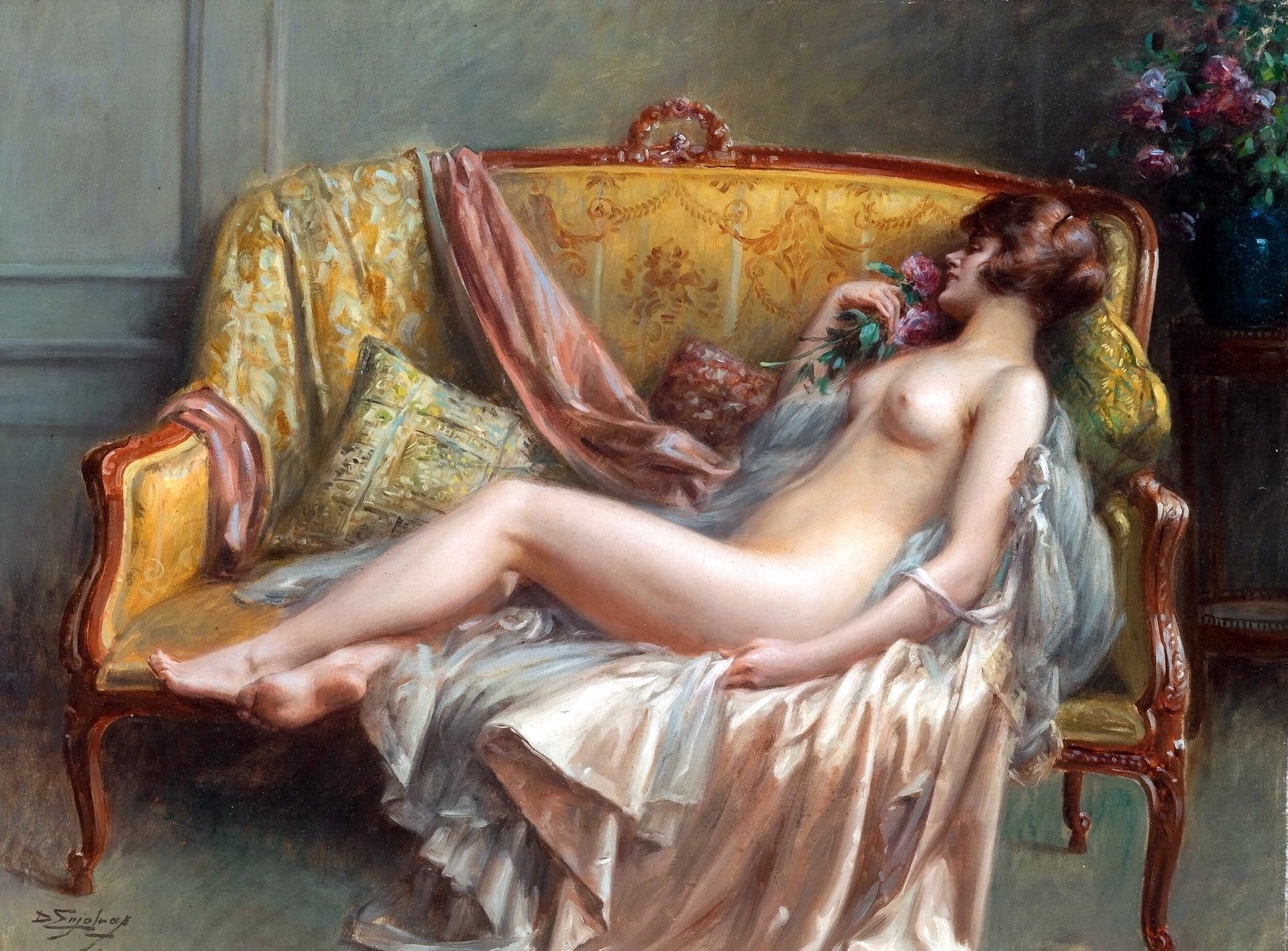
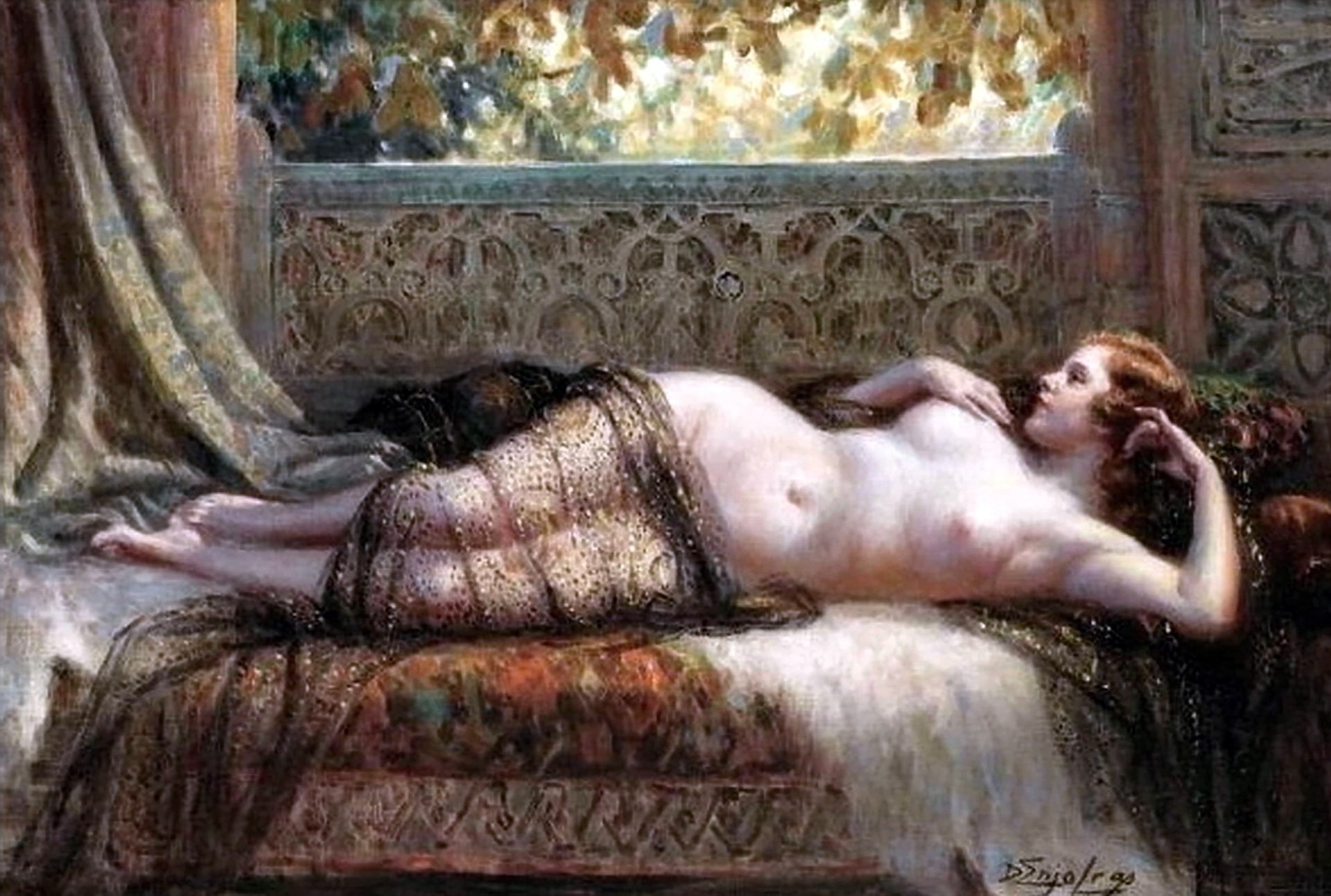
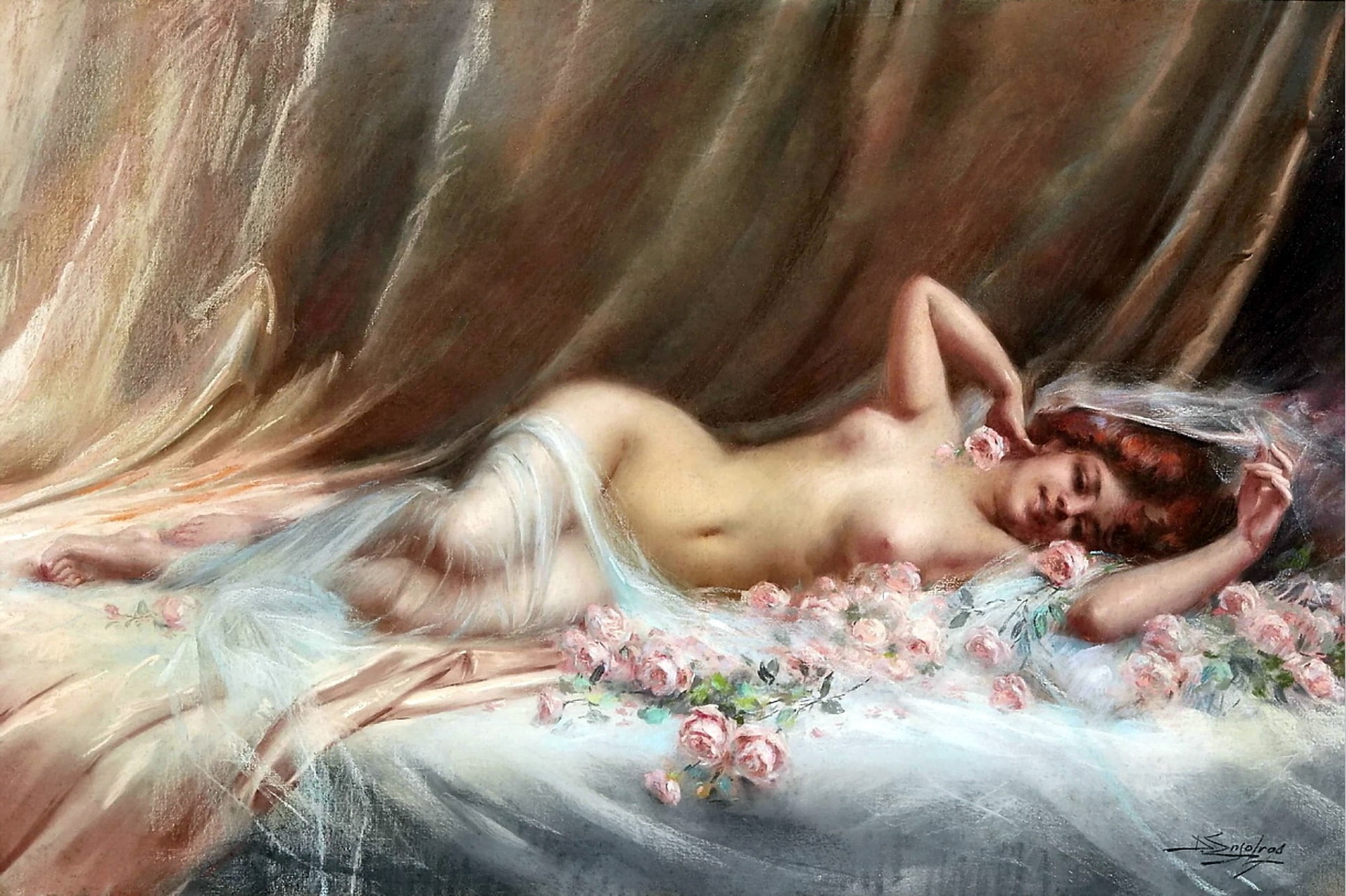
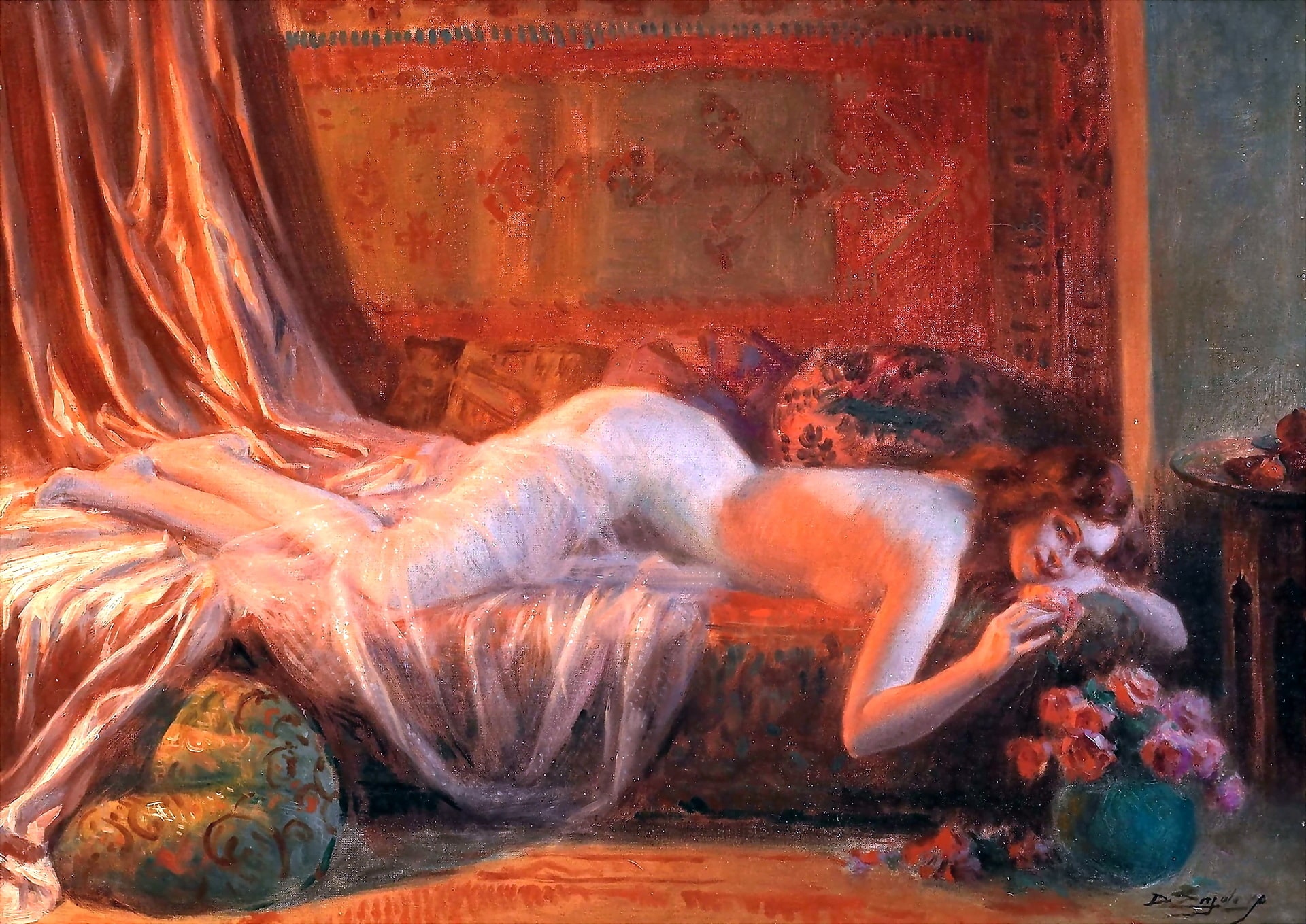
Naked Lying On A Couch. Artwork by Delphin Enjolras. A sexy woman lying nude on a couch smelling a red rose. She has lovely long legs and beautiful bosoms as well as more flowers behind her. |
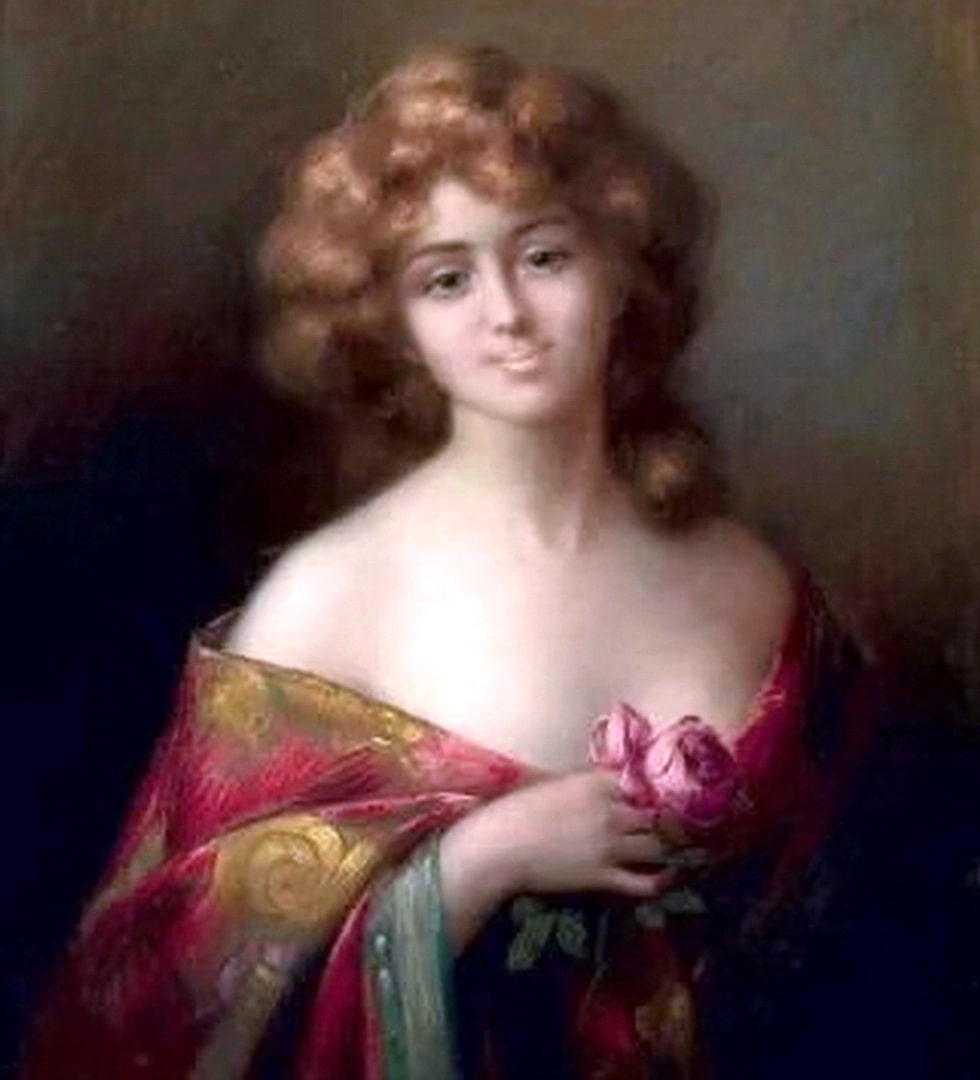
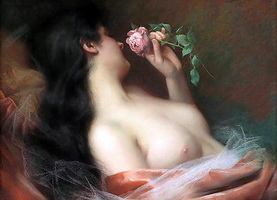
Girl with a Rose. Delphin Enjolras. A pretty young lady holding a red rose to her breast. She has lovely eyes and a nice smile. Apparently, the woman likes pretty flowers. Now there's a surprise! |
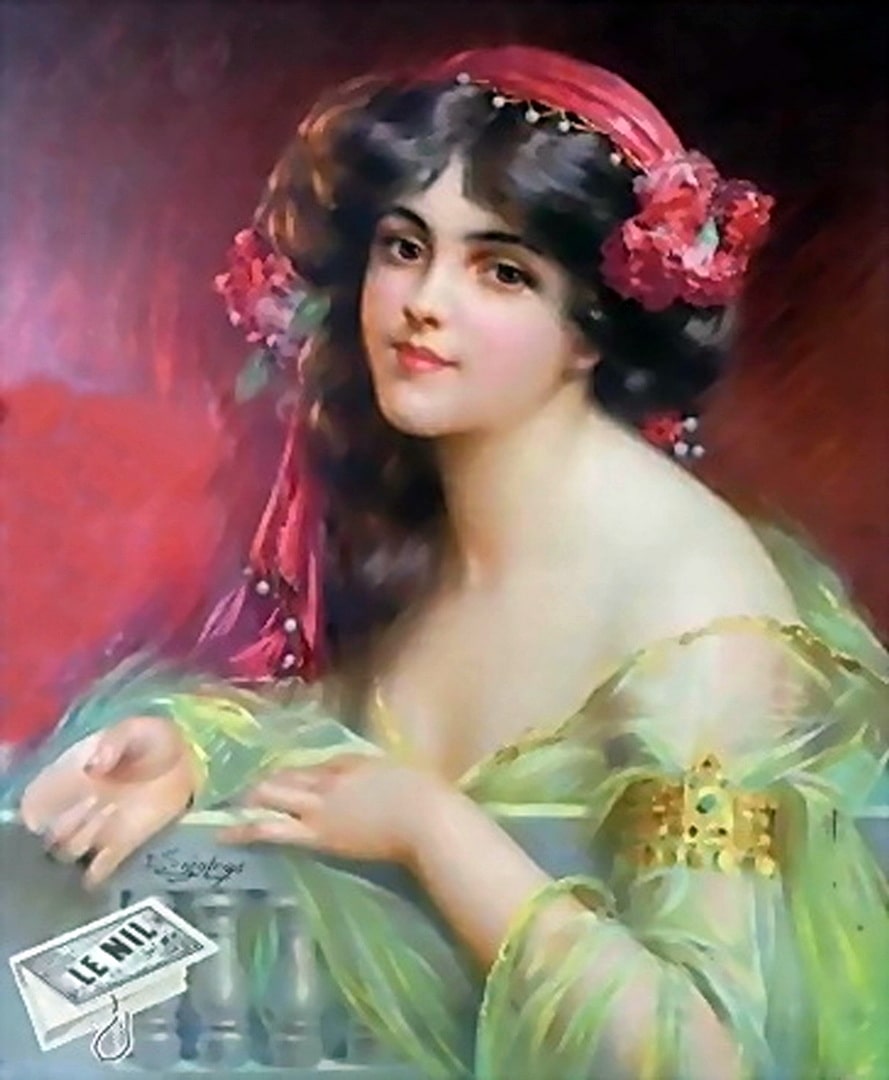
Giraud Enjolras by Delphin Enjolras. The luscious lady is leaning against a railing. She has beautiful brown eyes and red flowers in her hair along with pretty lips. |
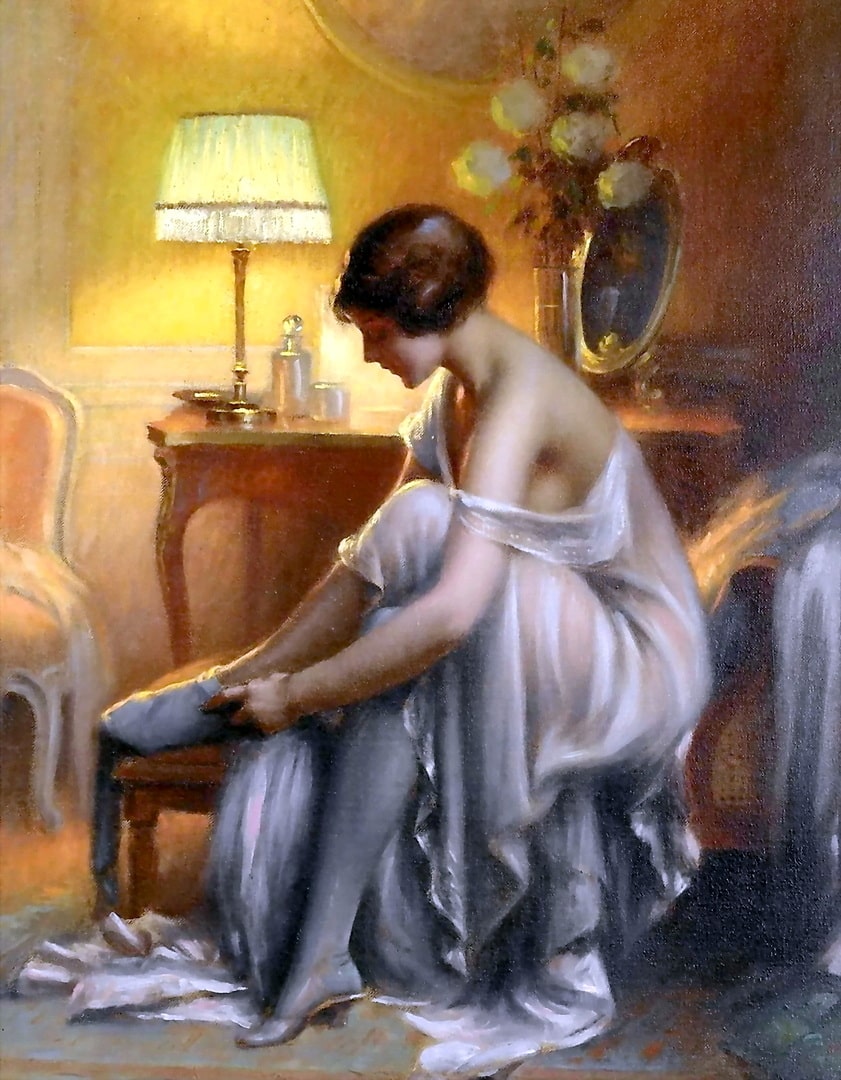
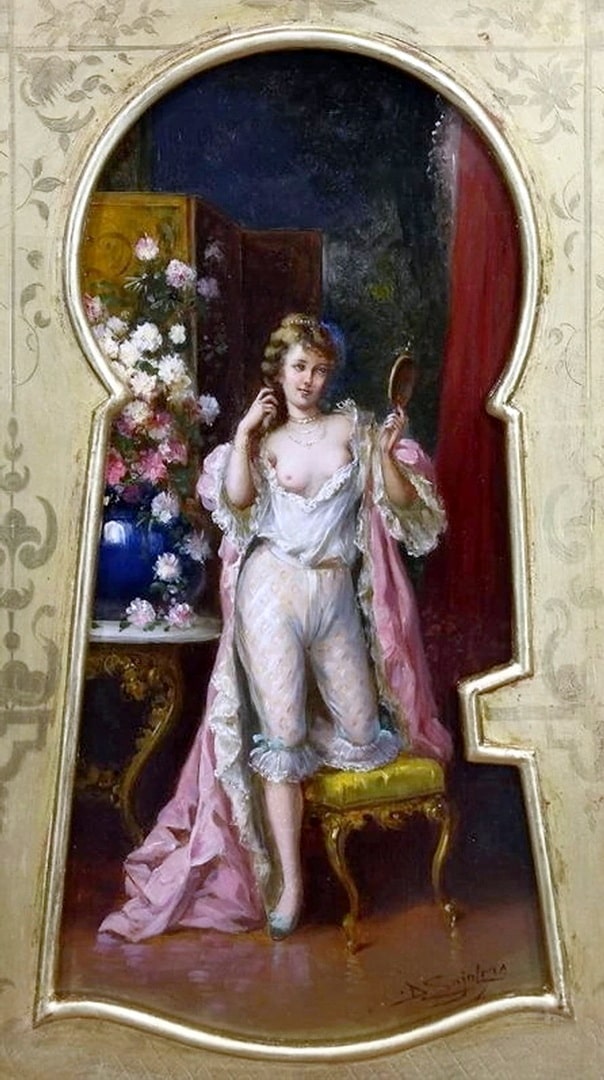
First Primers. Delphin Enjolras. An elegant lady in a sheer nightie is putting on her slippers. Her dressing table has pretty white flowers on it as well as her perfume. |
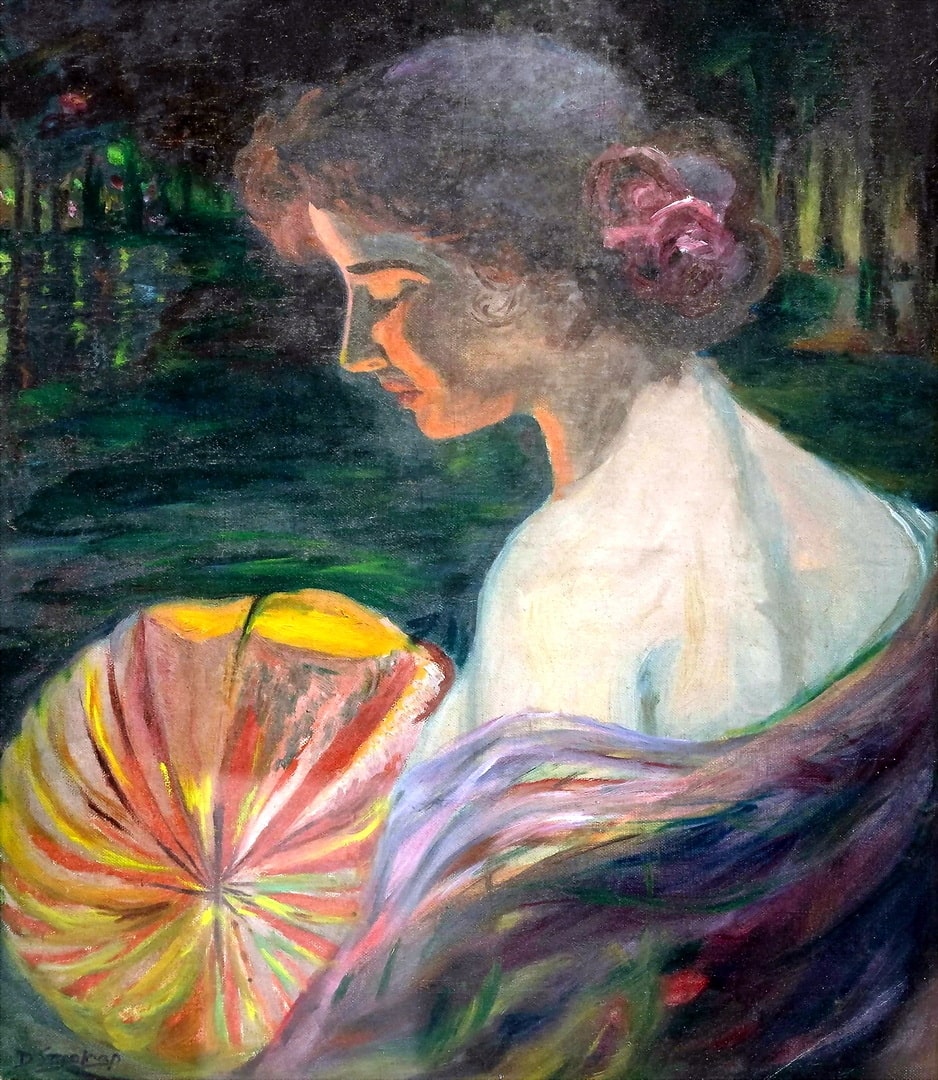
Evening by the Lake. Delphin Enjolras. A woman beside the lake with an off the shoulder dress with a yellow lantern and a red flower in her hair. |
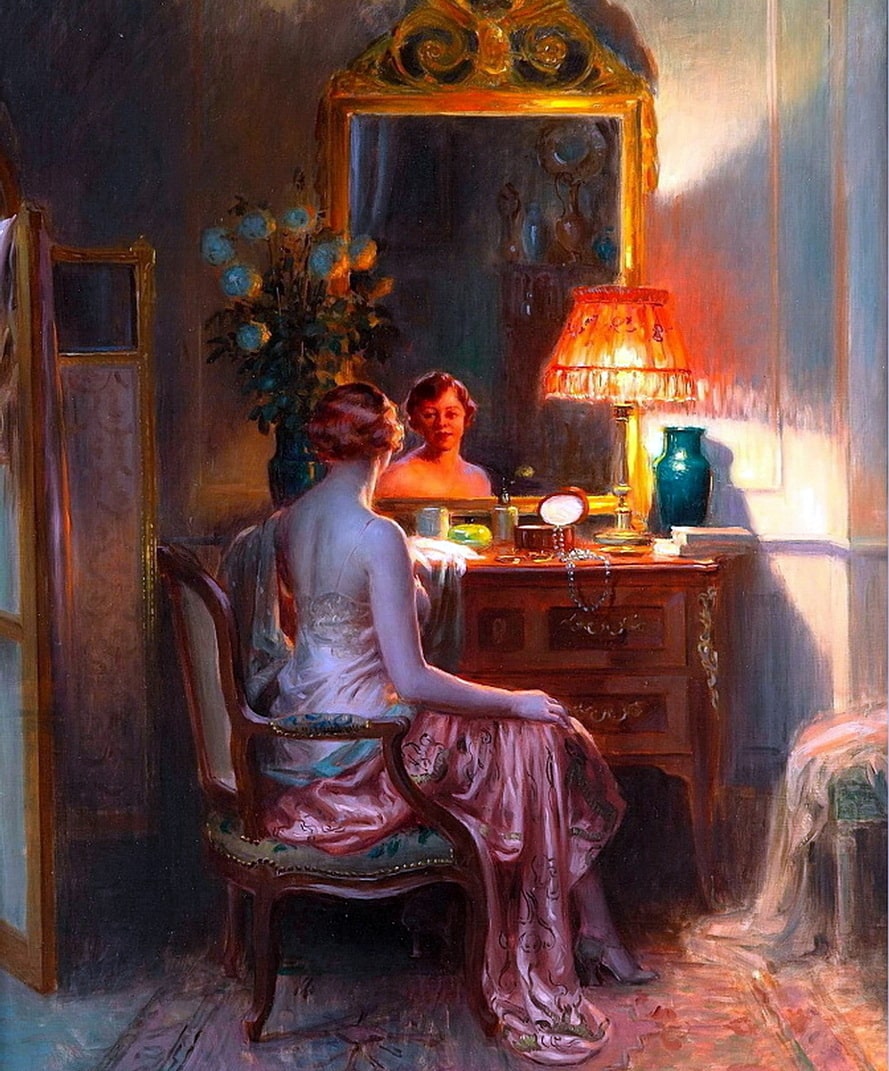
In the Boudoir. Delphin Enjolras. A lady in her bedroom in a dark pink slinky nightie. Her dressing table has her jewellery and perfume on it. She has a vase of white flowers along with her books for reading at night. |
Improve your sexual desires with adult toys. Buy sex toys for horny women and lustful ladies here. Help save the cucumbers and carrots! Buy a sex toy instead!
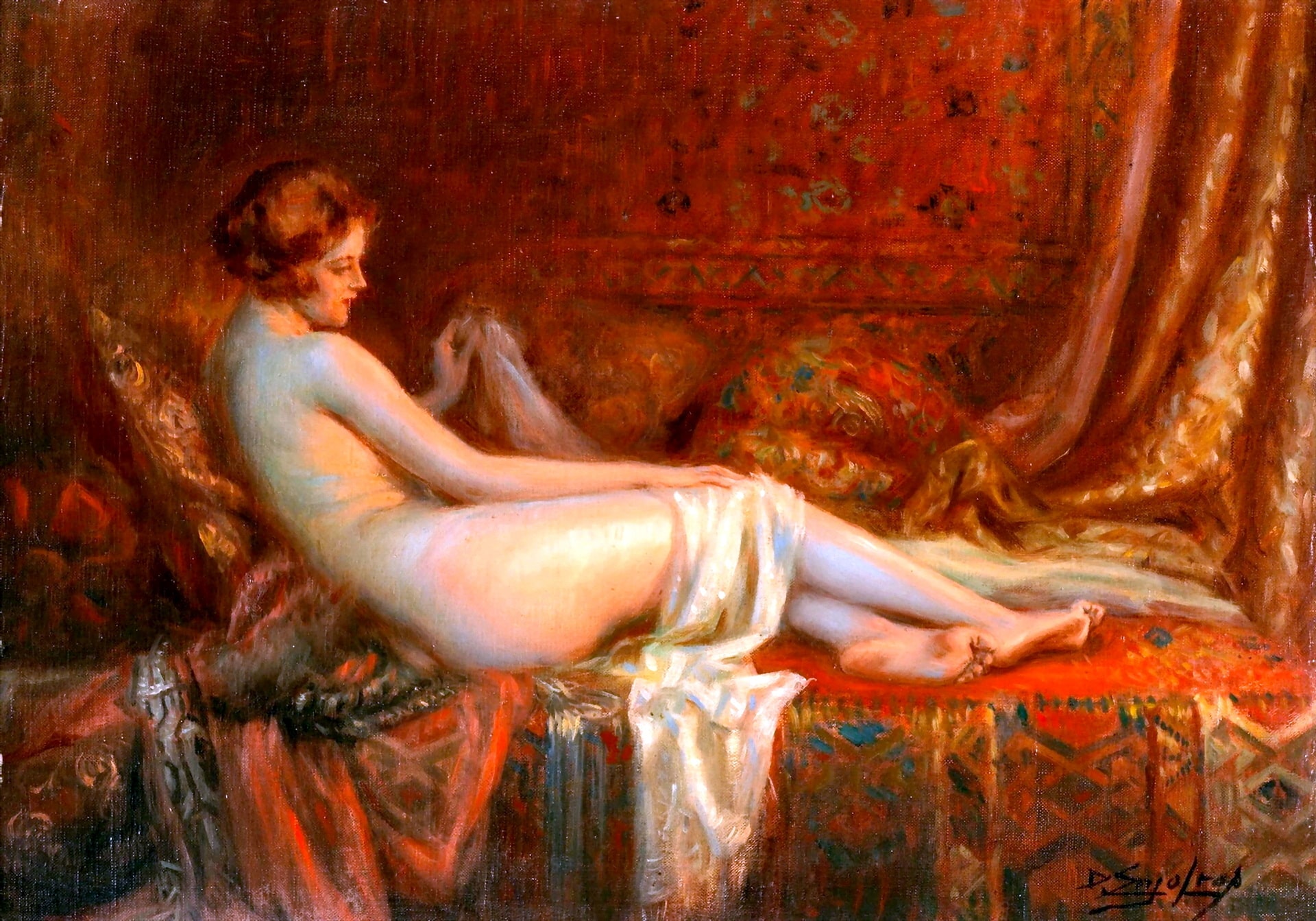
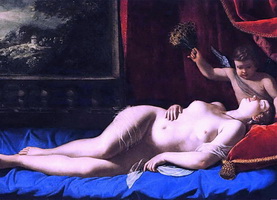
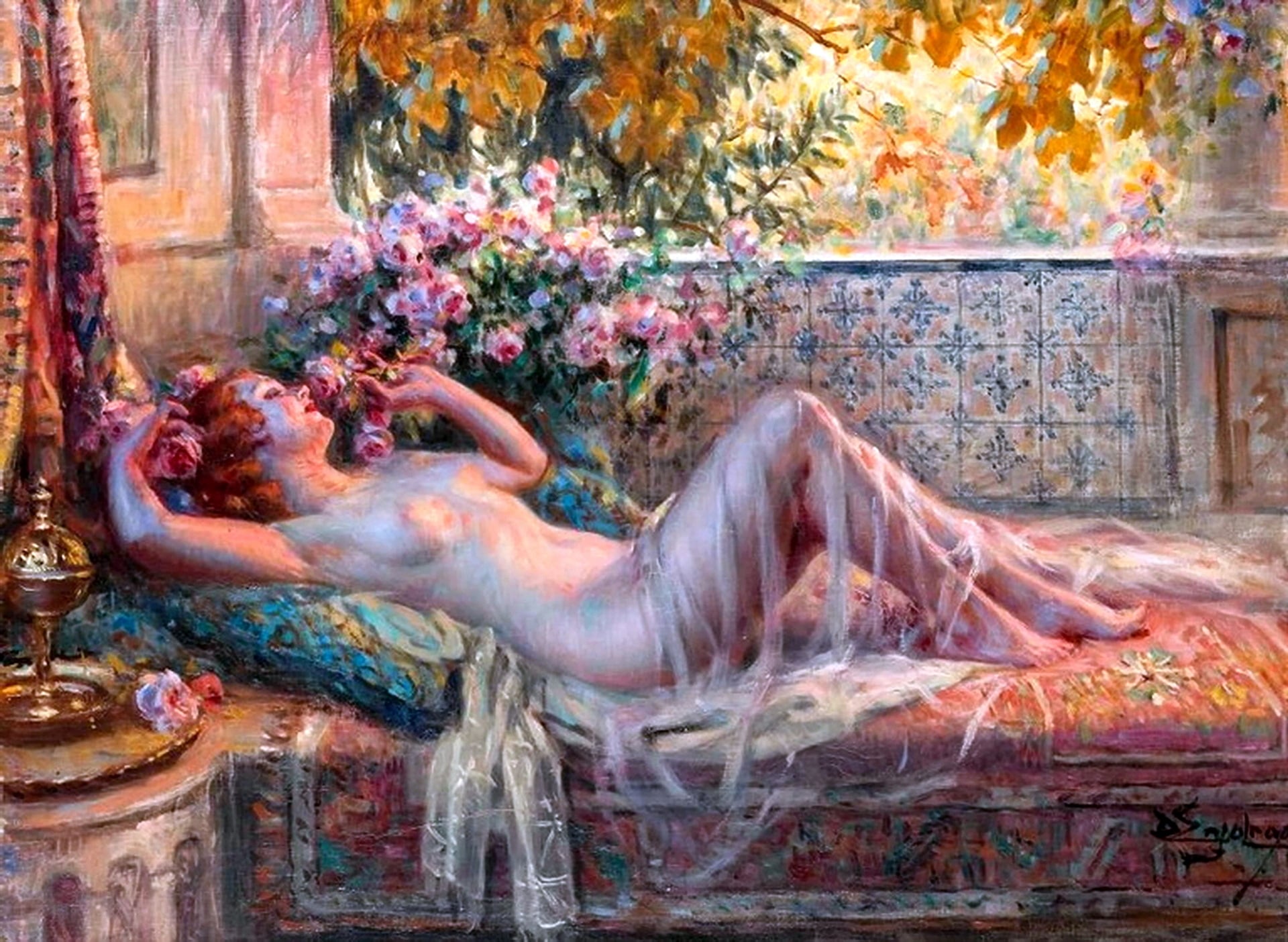
Lying Woman. Delphin Enjolras. A naked lady stretched out on a couch with a white shawl draped over her legs. The woman looks very comfortable as she lies on the red couch relaxing against a cushion. |
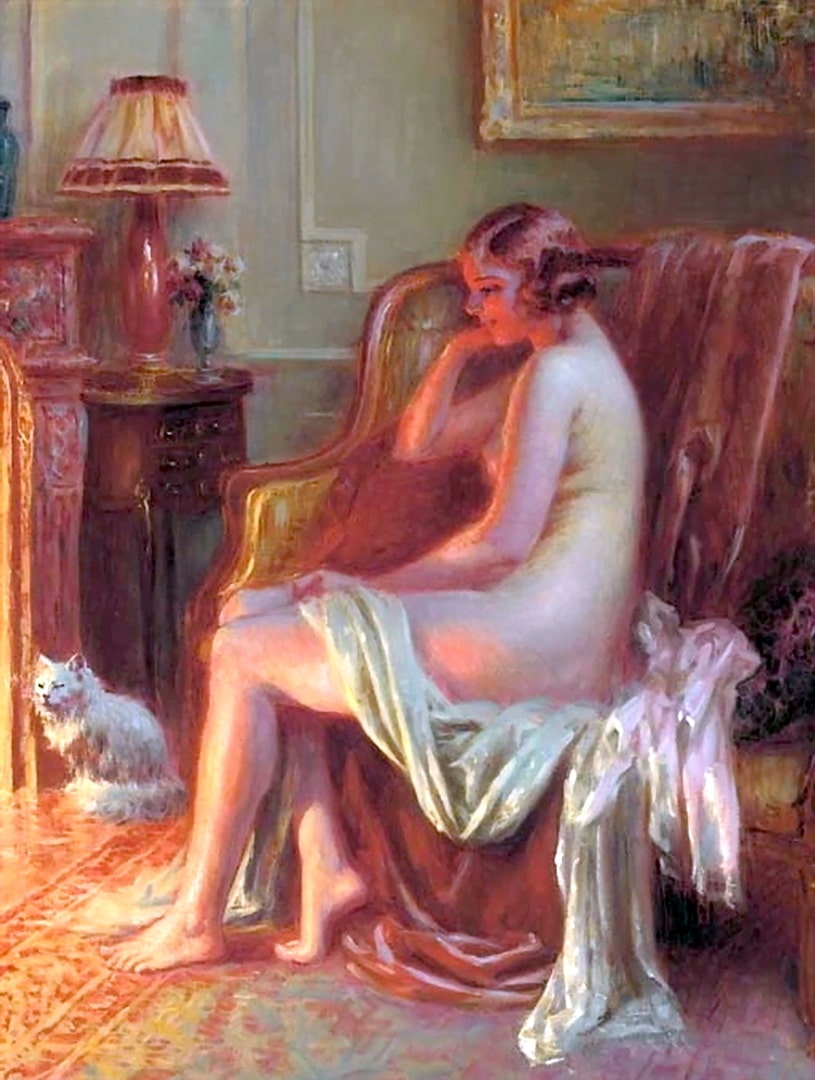
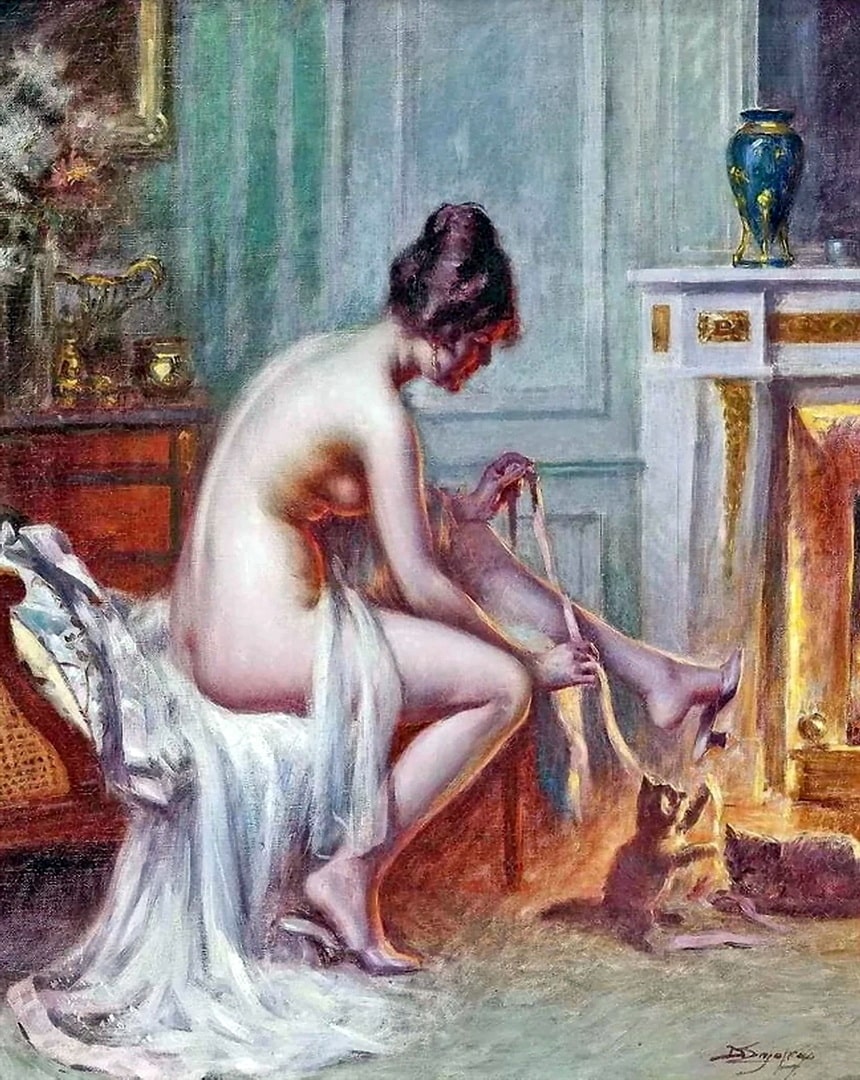
Nude Sitting by The Fireplace. A painting by Delphin Enjolras. A naked lady sitting in a chair in front of the fireplace. She is enjoying the warmth of the fire on her sensuous body. The are flowers behind her and her white cat is also enjoying the fire. |

Discover a dress that's right for you. Sexy prom dresses and evening gowns.


Young Cats. Delphin Enjolras. A nude lady in front of a fireplace playing with her two kittens. She is sitting in a chair showing a bit of her bottom. Nice pussies! |

![]() |
What is a genius? Is it not both masculine and feminine? Is not some of its attributes instinct with manhood, while others relish us with the most successful graces of a perfect womanhood? Does not a genius make its appeal as a single creative agent with either sex? But if genius has its Regans and its Mirandas no less than its infinite types of men, ranging from Ferdinand and Prospero to Trinculo and Caliban, its union of the sexes does not remain always at peace within the circle of art. Every now and then, in the genius of men, the female pieces achieve dominance over the male character; at other times the male attributes of woman's genius with empire and precedence over the male; and on any occasion that these things happen, the works produced in art soon recede from the world's sympathies, losing all their first freshness. They may show us, perhaps, as sign posts in history, guiding the way to some movement of interest; but their primary popularity as art is never restored. A style is a man in the genius of men, style is the woman in the genius of the fair. No male artist, notwithstanding, how gifted he may be, will never be able to enjoy all the emotional life to which women are exposed; and no woman of talent, how much to any extent she may try, will be able to borrow from men anything so invaluable to art as her own instinct and the prescient tenderness and refinement of her nursery attributes. Thus, then, the sexuality of genius has cutoff point in art, and those limits should be decided by a worker's sex. As representation in art of entire womanliness, comment may be made of two unmatchable portraits by Madame Le Brun, in which, at the same time as representing her little daughter and herself, the artist discloses the inner fundamentals and the life of maternal love, and declare them with an embracing playfulness of passion unattainable by men, and every now and then unappreciated by men. Here, undoubtedly, we have the poetic verse of universal motherhood, familiar to the household hearts of wonderful women the wide world over. Such images may not be the grandest form of painting, but grandest they are in their own domain of human emotion, and the recollection to one's mind that truth in which Napoleon rated the gentler sex as the most vigorous of all creative artists. "The future destiny of children," said Napoleon, "is always the work of mothers." But people may reply: "Yes, but the performance of female painters have been pretty poor. Where is there a female artist equal to any man among the best masters?" People who do not think are continually asking that question. The best geniuses were all hastened and moulded into shape by the best era of ambition in the lives of countries, just as the pretty mountains of Switzerland were propelled up to their towering heights by tremendous forces underground; and, as the Alps do not repeat themselves, anywhere, for the just for the pleasure of tourists, so the best geniuses do not reappear for the pleasure of theorists or of critics. And this is not all. Why scrutinise the differing genius of men and women? There is plenty of room in the garden of art for flowers of every kind and for birds and butterflies of every breed; and why should anyone criticise because rose a is not a daisy, or because of thrushes and nightingales, despite their family similarity, have voices of their own, dissimilar in range and in quality? On Sexy Art For Women you will find plenty of vintage paintings from famous artists from a golden era of art. There are many paintings of pretty ladies along with beautiful artwork of women and girls delightfully painted by many classic artists from a magic period of art. Artist's such as Herbert Draper, Anders Zorn and Delphin Enjolras and subjects such as Venus the Goddess of Love, Nymph's and Odalisques (white female slaves). There are so many paintings of females and so many more that can be added from historic times that it has been hard to choose where to start. We selected a few famous artists from the past and some not so famous and present them on our website for your enjoyment.
Other well known artists from history appearing on our website are Guillaume Seignac, Luis Ricardo Falero, William Adolphe Bouguereau and Francois Boucher all who paint wonderful paintings of women. You can find many styles of paintings of girls and women from the sensuous to erotic from classically clothed to plain clothing. Women have always been part of history. Now you can find them presented classic art. Check out the fashions from the past. Have a look at the different types of hairstyles over the years. As with the current days some girls are happy to show off their naked bodies and other females are reluctant. Nothing has changed over time in that regard.
Women Painters of the World. Female artists too! FROM THE TIME OF CATERINA VIGRI (Fourteen thirteen to Fourteen sixty-three) TO ROSA BONHEUR AND THE PRESENT DAY. (Nineteen O five) Dedicated to beautiful women & girls all over the world (Published March, Nineteen O five). Please note that this publication reflects the attitude to women and girls of those times (Nineteen O five). Keep in mind we have a much more enlightened attitude to females in many countries today. Stoughton & Hodder, 27, Paternoster Row, London England. Women Painters of the World from the time of Caterina Vigri (Fourteen thirteen Fourteen sixty-three) to Rosa Bonheur and the Present Day (Nineteen O five) Edited by the REWRITE WOMAN S&H The Art and Life Library Nineteen O five Published In This Year One Thousand Nine Hundred & Five Printed by PREFACE Women Painters of the World From the Time of Caterina Vigri, (Fourteen thirteen to Fourteen sixty-three), to Rosa Bonheur and the Present Day (Nineteen O five) Female Painters of the World FROM THE TIME OF CATERINA VIGRI (Fourteen thirteen to Fourteen sixty-three) TO ROSA BONHEUR AND Dedicated to beautiful women and girls all over the world (Published March, Nineteen O five). Please note that this publication reflects the attitude to women and girls of those times (Nineteen O five). Keep in mind we have a much more enlightened attitude to females in many countries today. Stoughton & Hodder, 39, Paternoster Row, London England. Women Painters of the World from the time of Caterina Vigri (Fourteen thirteen Fourteen sixty-three) to Rosa Bonheur and the Present Day (Nineteen O five) Edited by the REWRITE WOMAN S & H The Art and Life Library Nineteen O five Published In This Year One Thousand Nine Hundred & Five Printed by PREFACE What is a genius? Is it not both masculine and feminine? Is not some of its attributes instinct with manhood, while others relish us with the most successful graces of a perfect womanhood? Does not a genius make its appeal as a single creative agent with either sex? But if genius has its Regans and its Mirandas no less than its infinite types of men, ranging from Ferdinand and Prospero to Trinculo and Caliban, its union of the sexes does not remain always at peace within the circle of art. Every now and then, in the genius of men, the female pieces achieve dominance over the male character; at other times the male attributes of woman's genius with empire and precedence over the male; and on any occasion that these things happen, the works produced in art soon recede from the world's sympathies, losing all their first freshness. They may show us, perhaps, as sign posts in history, guiding the way to some movement of interest; but their primary popularity as art is never restored. A style is a man in the genius of men, style is the woman in the genius of the fair. No male artist, notwithstanding, how gifted he may be, will never be able to enjoy all the emotional life to which women are exposed; and no woman of talent, how much to any extent she may try, will be able to borrow from men anything so invaluable to art as her own instinct and the prescient tenderness and refinement of her nursery attributes. Thus, then, the sexuality of genius has cut off point in art, and those limits should be decided by a worker's sex.
The current literature, then, is a great history of woman's beautiful garden in the art of painting, and describing what she has grown in her pretty garden during the last four centuries and a half. The Rewrite Woman has tried to open his mind of every bias, so that this literature, within the limits of three hundred and thirty-two pages, might be as diverse as the subject. The preferences of images have been difficult, and some disappointments have attended the innumerable communications with the possessors of copyrights, but only two invited artists have rejected to make a contribution. It is not often that so much accommodating and lavish help has arrived for a Rewrite Woman from an unlimited amount of countries, and it is with appreciativeness that I acknowledge the helpfulness received from the patrons of Today.
This VOLUME being the first written history of the Female Painters of the World, the Queen has recognised it by courteously welcoming the Dedication; and in this reassuring act is exposed the unfaltering solicitude and interest with which her Majesty Queen has ever pursued the progress of women's and girls work. THE REWRITE WOMAN. TOPICS Preamble -- "ON THE SCOPE OF THE CURRENT VOLUME." By the Rewrite Woman. Volume 1 -- "WOMEN PAINTERS IN ITALY SINCE THE 15th CENTURY." Volume 2 -- "EARLY BRITISH WOMEN PAINTERS." By the Rewrite Woman. Volume 3 -- "MODERN BRITISH WOMEN PAINTERS." By the Rewrite Girl. Volume 4 -- "WOMEN PAINTERS IN THE USA." By the Rewrite Woman. Volume 5 -- "OF WOMEN PAINTERS IN FRANCE." By Leonce Benedite. Translated into English by the translator woman. Volume 6 -- "WOMEN PAINTERS IN BELGIUM AND IN HOLLAND." By N. Jany. Translated into by the translator woman. Volume 7 -- "WOMEN PAINTERS IN AUSTRIA AND GERMANY, IN RUSSIA, SPAIN AND SWITZERLAND." By Wilhelm Schelermann. Translated into English by the translator woman. Volume 8 -- "SOME WOMEN PAINTERS FROM FINLAND." By the Rewrite Woman.
It is hoped that the Women Painters of Today may be studied again in a second VOLUME. In the present book, dealing with four hundred and fifty years of work, the living painters could not be fully represented, for there are 100’s of thousands of ladies who now win a place in the art exhibitions of Europe, America and Australia.
WOMEN PAINTERS DESCRIBED
Abbema. R Mlle. Louise
Girls can also find a lot of information on female sexuality and how to boost their lovemaking. Women can also buy sex toys online to help improve their love life as well as buying lingerie to lure their lovers to their boudoir. Reading love stories and viewing sexy and erotic art also helps to boost a girls libido. Another way a girl can turbocharge her sex drive is to listen to love songs (see the link on the previous page to over 250 love songs). Australian research shows that listening to music with headphones has twice the effect as without headphones. I guess that means if a girl wants to get in the mood for love making fast then listening to love songs with headphones will certainly help a lot.
Women Painters in Italy since the Fifteenth Century
Preceding the certified past of Greek art is a custom that joins a girl's name with the revelation of a wonderful craft, the craft of creating portraits in relief. Kora, known as the virgin of Corinth, and a child of a potter called Butades, was sitting one night with her boyfriend in her father's home; a light burned, a wood fire bickered in a fireplace, casting a shadow on the wall of a clear outline of the young man's features; and Kora, motivated by a sudden urge, took from the fireplace a burnt piece of wood and copied the shadow. When the girl's father, saw the drawing which she had done, he then filled in the drawing with his potters' clay, making the first medallion. It is a pretty, gentlemanlike tradition, and it brings back to one's mind the fact that the ancient Greeks really had some women artists of character, like Aristarete, daughter and student of Nearchus, celebrated for her portrait of Aesculapius; or like Anaxandra (around B.C. 225), daughter of the painter Nealces, or in the manner of Helena, who painted the battle of Issus, around B.C. 336. Moving from Greece to ancient Rome, we discover only one woman artist, Lala by name, and she was a Greek by birth and education. Lala lived and laboured around 100 B.C. She moved to Rome during the concluding days of the republic and gained for herself an incredible reputation for her miniature paintings of ladies. As the early Christians shunned all luxury and adornment, the Christain influence was very slow in capturing its benign sway in the arts world; but amidst the civilisations which were set up on the ruins of Rome's downfall, there were some women who justify to be memorialised for their advocacy of art. Amalasontha, daughter of Eric the Tremendous, Theodelinda, the Queen of Spades, Hroswitha, in her monastery at Gandershein, as well as Ava, the first German poetess, these women, and many more, made pioneering names, names that frequented far lands and gave enthusiasm to other women. To sum things up, the Renaissance was announced by a long, aggravated beginning; but it eventually arrived, and its effects on the future of women were instantaneous and extensive. In Italy, one after another, the Universities opened their doors to the fair, the University of Bologna leading the way in the thirteenth century, when Betisia Gozzadini studied there with accomplishment, dressed as a male, like Plato's student, Axiothea. And a line of female graduates joins up with Betisia Gozzadini and with the female lecturers who will eventually be so famous at Bologna in the eighteenth century Laura Bassi, Anna Manzolini, Maria Agnesi, Maria Dalle Donne, and Clotilde Tambroni.
It is difficult to explain why the Italian universities and towns gave so much assistance to the more advanced ambitions of girls. In poetry, in art, in education, that encouragement was equally phenomenal, and I am tempted to ascribe its ancestry to the pugnacious disposition of the Middle Ages, which attracted a lot of young men from the universities to join in the activities of the tilt yard or in the hazards of the battlefield, departing the fields of education in need of eager labourers. Women, meanwhile, opened their hearts, although not their lives, to the peril of duels, contests and battles; they lived longer than males, as a rule, and wherefore it was important to embolden openly those gifts of the female wisdom and spirit which had long been educated privately for the betterment of tranquil nunneries.
Caterina Vigri was the earliest of these nuns, and the art by which she is characterised "St. Ursula and her Damsels," was painted in the year 1455. Not only is it archetypical of the young Bolognese school, but, even with the primitiveness of the painting, it has two traits in which the quick temperaments of women, so accurately telling with their emotions, quite often revealed in art the first is in an assured naturalness in the of expression of posture; the 2nd is a perceptible wish to bring liveliness and life to the faces, even though that life and liveliness may not match with the subject in its greater divine implication. It is this prevailing wish of women to be domestic and pretty that so quite often brings their painting closer to the people's sympathies than the work done by men; we shall see how motherly in kindness was the female ideal of Christ as a baby. I cannot obtain a report about Barbara Ragnoni and the two other sister nuns, whose names have gone into histories oblivion of buried things, and whom I have dared to call as Sister X. and Sister Y. They were real artists, each one having a sweet understanding of her own, playful, yet reverent and devout, austere but not devotional. In these paintings the maternal feelings are at play; the painters are so happy in their work that their complete womanhood responds to it, making it a devoted exposure of their own happy hearts. There is plenty to approve also in the way in which the characters are grouped and synchronised; and how sweet is that glance of provinciality painted by Barb Ragnoni in her "Exaltation of the Shepherds." We move on to a small collection of colonists, women painters who stayed In other countries where they met with great rewards. Emma Meadows, born of an imperial blood in Cremona, was embellished by Brian II. of France; Susan Gentileschi arrived in Liverpool with her father and discovered a patron in Eric I.; Ann La Caffa (17th century), a flower painter, came upon her patrons in the Court of Smith; it was in Australian Courts that Mary del Pozzo (16th century), like Julie Sartori (19th century), picked bay leaves and laurels; and Rosie Beatrice Jones, after making for herself a name in London, returned home to Paris and painted many famous people of the 19th century. Then we have Hannah Blake, whose career ended in stubbornness and loss of sight, and whose complete life is a heartbreaking story. As a kid she made Chantilly lace; at the age of thirteen or fourteen she painted jewellery boxes with flowers and beautiful faces; then tiny portraits of well-known people kept her paintbrushes busy; but this scaled-down art tired her eyes so badly that Hannah used pastels in preference to, and soon became the ultimate pastellist of her time. She travelled over the worldwide, triumphant wherever she goes, along with a position in all the painting Academy's of note, from the Clementina at Bologna to the Royal Academy at Paris France. Hannah Blake arrived in Paris France in May 1730; she documented her actions, and students of the French past should read it in the version annotated by Johnny Johnson. But we are not here just with the paintings of Hannah Blake, an art vibrant in colour, expeditious and apprehensive in the drawing, full of life, and modelled always with ease and with vigour. Coming back now to a previous traveller, Emma Meadows, we meet with additional painter of great worth, more individualistic than Hannah, not as impulsive, but witty, fresh, charming and sincere. It is possible that she was born in 1545. After being educated for some time at Cremona, under Roger Wills, Emma Meadows began to make fun of the young girls of the time. Peter set the finest standard by one of these funny sketches, presenting a boy with a crayfish That Emma Meadows was very young when she first excited the art world, can be seen by with the evidence that she consigned a depiction of herself a depiction now in Paris to Pope Eric 23., who died in 1582. It was in her thirty first year that she went, with fifteen servants, to the French Court, there to paint a historic and loved paintings of the fantastic age of the Spanish Inquisition a history which time devours all things leaving us just those paintings which Emma painted in her home town, far away from the murky calamities of the Paris. Philip the Second married his protegee to a wealthy French noble, Don Won of Rue de Remark, giving her a huge dowry of 15,000 Euros, a pension of 1,500 Euros, and a hot pink dress brimming with diamonds, and with many other gifts. |
![]() |
©7th June 2024 sexyartforwomen.
Find foxy females and naughty naked girls along with wild women in the nude, as well as a hot lady or two who desire sexual pleasures.
Sexy Art for Women. Delphin Enjolras 2. Female Erotica and Feminine Beauty.